# 5 DIY Tips to Prevent Foggy Windows in Your Plano Home
Living in Plano, Texas, offers the best of both worlds: the charm of a historic city and the vibrancy of a modern hub. From the beautiful homes in the Willow Bend neighborhood to the bustling shops at Legacy West, there's always a great view to enjoy. But what happens when that view is obscured by a persistent layer of fog on your windows?
Window condensation is a common issue for homeowners, especially in a climate like ours in Collin County, where hot, humid summers meet cooler indoor temperatures. This fog isn't just an aesthetic nuisance; it can also signal underlying issues that may lead to more significant problems like mold growth and wood rot. Before you consider a full window replacement, there are several DIY strategies you can try to mitigate the problem.
Why Are My Windows Fogging Up? A Plano Homeowner's Guide
Window fog is essentially condensation. It occurs when there's a significant temperature difference between the inside and outside surfaces of the glass. In Plano, this often happens during our sweltering summers when your air conditioning is working hard to keep your home cool. The warm, moist outdoor air comes into contact with the cold glass, causing water vapor to condense into visible fog.
This can happen on the outside of your windows (a good sign your windows are well-insulated!) or on the inside. However, if you notice fog, moisture, or mineral stains between the panes of your double-pane windows, this is a clear sign of a broken seal. When a window seal fails, the insulating gas (usually argon or krypton) leaks out and is replaced by regular air, which contains moisture. This trapped moisture fogs up the glass from the inside, a problem that DIY solutions cannot fix.
5 Practical DIY Tips to Combat Window Condensation
For condensation forming on the inside or outside of your glass, you have several options. Here are five simple tips you can implement today to improve visibility and control moisture levels in your Plano home.
1. Improve Indoor Air Circulation
Stagnant air traps humidity. By improving the airflow inside your home, you can help moisture dissipate more effectively.
Use Ceiling Fans: Run your ceiling fans, even in the winter. The gentle air movement helps to even out the temperature of the glass surface. Open Windows: On less humid days, especially in the spring and fall, open your windows for a few hours to air out your home. This is a great way to reduce indoor humidity naturally.
2. Manage Indoor Humidity Levels
Your daily activities contribute a surprising amount of moisture to your indoor air. Cooking, showering, and even breathing add humidity.
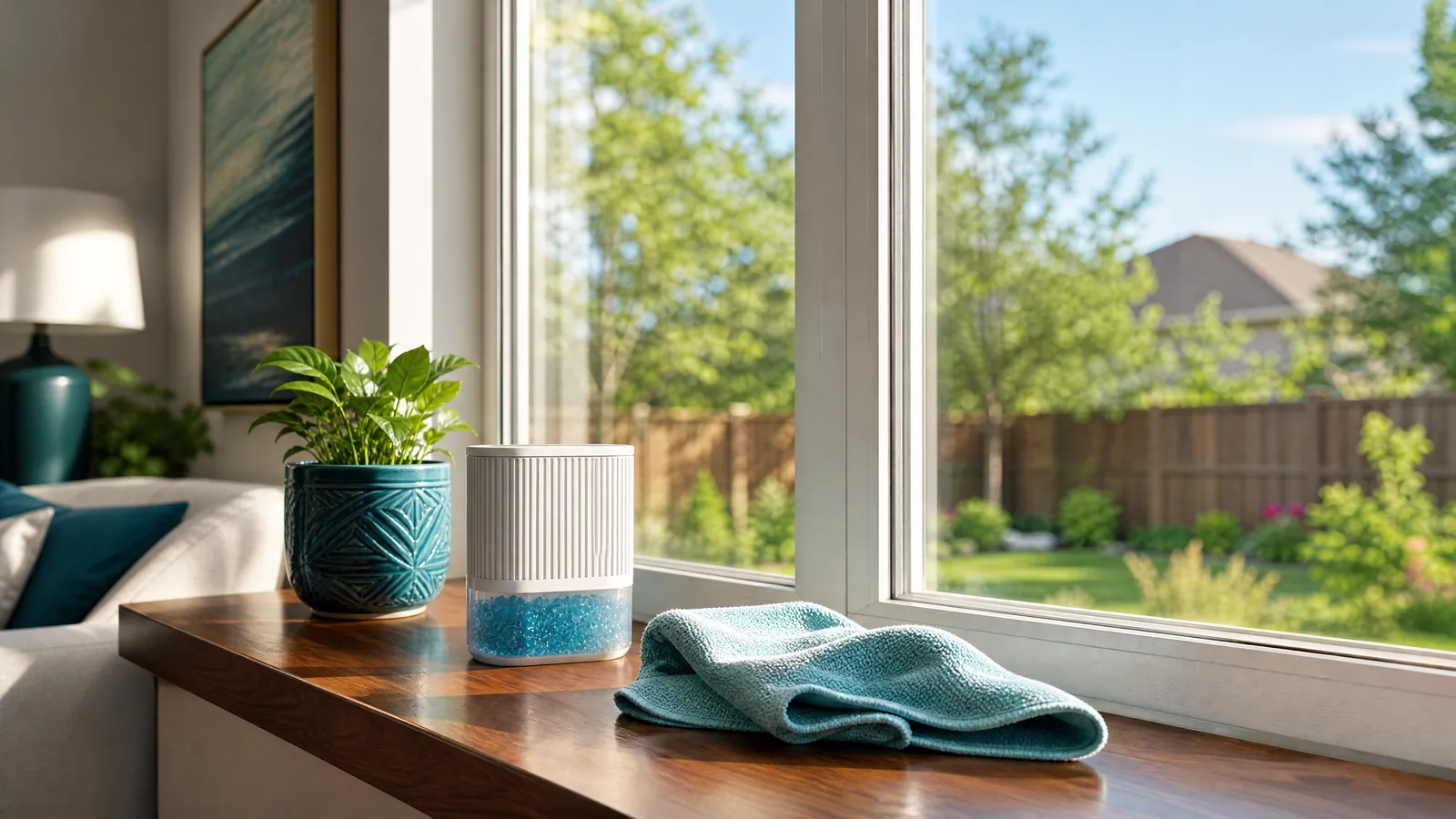
Use Exhaust Fans: Always run the exhaust fan in your kitchen when cooking and in your bathroom during and after a shower. Let it run for 15-20 minutes after you finish to vent moist air outside. Invest in a Dehumidifier: For homes that are consistently humid, a portable or whole-home dehumidifier can make a significant difference. This is particularly useful for homes near green spaces like the Arbor Hills Nature Preserve, where local humidity can be higher.
3. Check Your Window Seals and Weatherstripping
Minor drafts can bring in humid air from the outside, contributing to condensation. Take some time to inspect your windows.
Visual Inspection: Look for cracked or peeling weatherstripping around your window frames. The Smoke Test: On a breezy day, carefully hold a lit incense stick near the edges of your windows. If the smoke flickers or is drawn inward, you have a leak. Applying new weatherstripping or caulk is an easy and affordable DIY fix.
4. Absorb Excess Moisture
For minor, localized condensation, you can use products designed to absorb moisture from the air.
DIY Moisture Absorbers: Fill a sock or small bag with cat litter or silica gel packets and place it on the windowsill. These materials are desiccants and will naturally draw moisture from the surrounding air. Commercial Products: You can find various moisture-absorbing products at local home improvement stores.
5. Adjust Your Thermostat
A drastic temperature difference between your indoor and outdoor environment is the primary driver of condensation. While you want to stay comfortable, a small adjustment can help.
Gradual Changes: Avoid making large, sudden changes to your thermostat setting. Slight Increase: Raising the indoor temperature by just a degree or two can sometimes be enough to prevent condensation from forming on the glass.
When DIY Isn't Enough: Calling the Plano Experts
While these DIY tips can be effective for managing minor condensation, they won't solve the problem of a failed window seal. If you see moisture trapped between the glass panes, it's time to call a professional. This is a sign that your double-pane window's insulating properties are compromised, leading to reduced energy efficiency and permanently obstructed views.
Many homeowners in Plano and nearby cities like Frisco and Allen believe a foggy window means they need a costly full window replacement. However, at Apex Windows & Glass, we specialize in a much more affordable solution. We can replace just the glass unit, restoring your window's clarity and efficiency while saving you 50-70% compared to the cost of a full frame replacement.
Don't let foggy windows detract from your beautiful Plano home. For a permanent solution to fog between the panes, contact Apex Windows & Glass today. We offer a 10-Year IGU manufacturer warranty + Apex 1-Year workmanship warranty on our glass replacement services. Call us at (214) 263-3008 for a free, no-obligation estimate!
Your Plano home deserves clear, energy-efficient windows. Request your free foggy glass assessment and discover how much you'll save with our glass-only approach.
Our seal failure repair service covers 50+ cities in Dallas-Fort Worth.
Need Foggy Glass Replacement in Your Area?
We provide expert foggy glass replacement and window repair across the Dallas-Fort Worth metroplex. Click your city below for local pricing, neighborhoods served, and FAQs:
About the Author
Alvin Paulson
Co-Owner & Lead Technician, Apex Windows & Glass
Alvin Paulson co-founded Apex Windows & Glass and brings over 30 years of hands-on expertise in foggy glass replacement, insulated glass unit (IGU) repair, and energy-efficient window upgrades. Born and raised in North Texas, Alvin has personally assessed and repaired thousands of windows across the Dallas-Fort Worth metroplex — from historic McKinney homes to new-build subdivisions in Frisco and Prosper. He is a licensed glazier and holds certifications in Low-E glass installation and argon gas window systems. Alvin's philosophy is simple: replace only what's broken, save the homeowner money, and back every job with a 10-Year IGU manufacturer warranty + Apex 1-Year workmanship warranty.