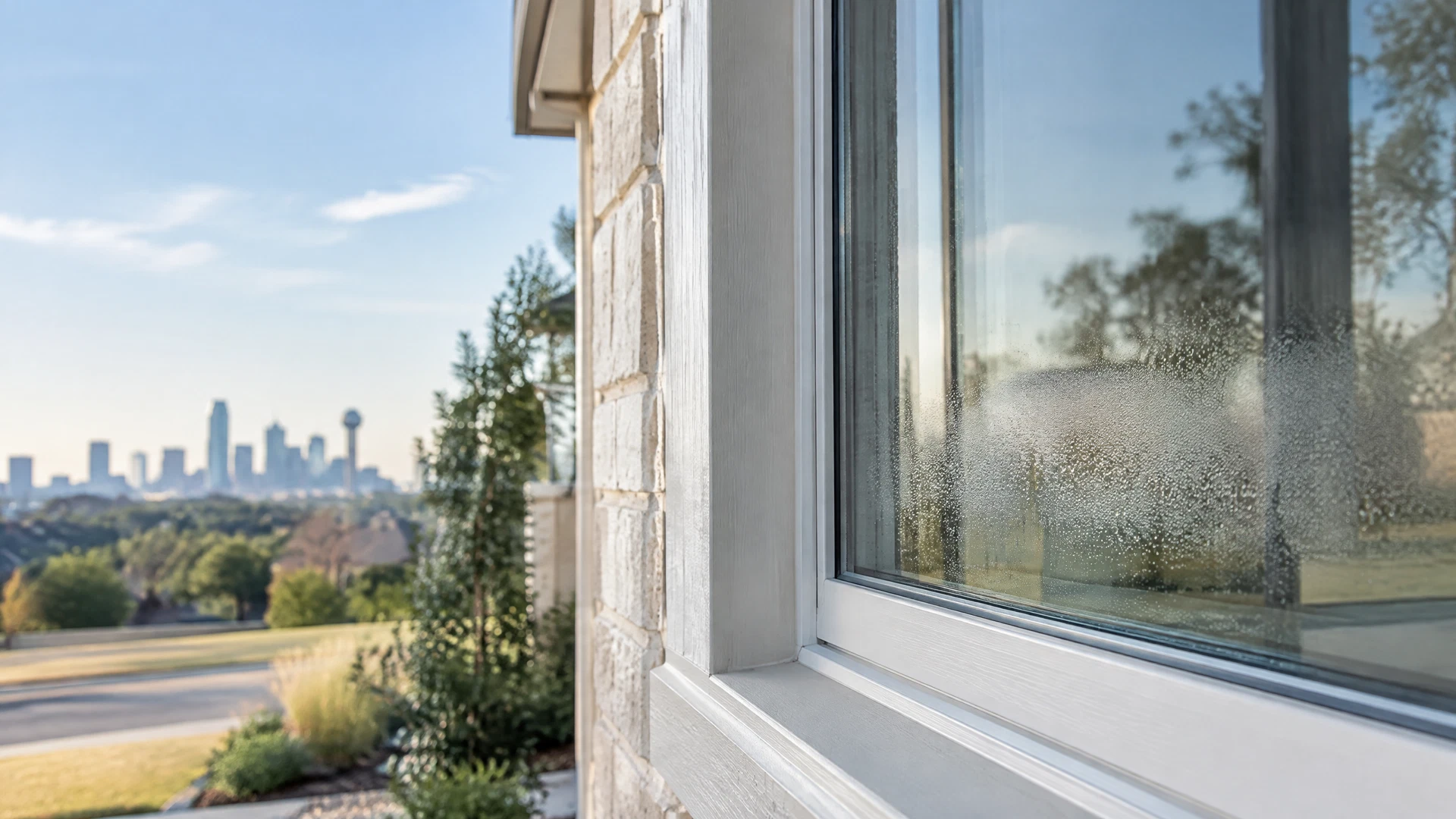
Dallas homeowners face unique property maintenance challenges. The combination of intense North Texas heat and expansive clay soil creates a dynamic environment where building materials are constantly under stress. A common issue is the deterioration of window performance. However, what looks like a broken window can be one of two very different problems: a failed insulated glass unit (IGU) seal or window frame movement caused by foundation shifts. Distinguishing between these is critical because the repair paths and costs vary significantly.
The Dallas Foundation Factor and Window Integrity
The soil in Dallas is primarily composed of expansive clay, which expands when wet and shrinks during scorching summers. This constant heaving and settling puts immense pressure on a home’s foundation. As the foundation moves, the framing of the house moves with it. When a home shifts, window openings can become racked or pulled out of square. This structural movement directly impacts the window frames. You might notice that a window that once glided easily now sticks or requires force to open. This movement creates visible gaps between the window frame and the surrounding brick or siding, allowing unconditioned air to leak into the home.
Identifying a Failed Insulated Glass Unit (IGU) Seal
A failed seal is a localized issue specifically related to the glass. Modern Dallas homes typically use double-pane windows, where two sheets of glass are separated by a spacer and sealed to create an insulating pocket of air or gas. This assembly is known as an Insulated Glass Unit (IGU). Over time, the seal that holds these panes together can degrade. In Dallas, the primary culprit is often solar pumping. As the Texas sun beats down, the air between the panes expands, putting pressure on the seals. At night, the air cools and contracts. This cycle eventually causes the seal to develop microscopic fractures. Once the seal is breached, moisture-laden air enters the space between the panes, resulting in a hazy appearance that cannot be wiped away from either side of the glass. Signs include persistent fogging, mineral deposits inside the IGU, and distorted reflections.
Spotting Window Frame Movement and Racking
While a failed seal affects glass clarity, frame movement affects the integrity of the window’s installation. Because Dallas foundations are active, it is common for the house to pull away from the window unit or for the unit to be twisted within the opening. If you are investigating a window in your Dallas home, look for physical separation. A tell-tale sign of movement is a gap where the window frame meets the interior drywall or the exterior masonry. Unlike a failed seal, which is purely a glass issue, frame movement often leads to drafts that you can feel when the window is closed. Indicators include sticking sashes, cracked drywall at the corners of the frame, and visible separation from the home’s siding or brickwork.
Diagnostic Checklist for Dallas Homeowners
To help you decide which professional to call, use the following table to compare the symptoms you are seeing in your home.
| Symptom | Failed Seal | Frame Movement |
|---|---|---|
| Fogging between panes | Yes | No |
| Drafts around the frame | No | Yes |
| Difficulty opening | No | Yes |
| Gaps in exterior brick | No | Yes |
| Haze that won't wipe off | Yes | No |
| Sticking locks | No | Yes |
If your windows are clear but difficult to operate, the issue is likely structural. If they operate perfectly but look foggy, you are probably dealing with a failed seal. For more details, you can learn how to tell if a window seal is broken to confirm your findings.
Why the Distinction Matters for Your Repair Budget
A failed seal can often be addressed through glass-only replacement. This involves removing the old IGU and installing a new, factory-sealed unit into the existing frame. This is a cost-effective way to restore clarity and energy efficiency without the expense of a full window replacement. However, if the frame has been damaged by foundation movement, replacing the glass may not solve the problem. If a frame is severely out of square, a new glass unit might not fit properly, or the stress of the warped frame could cause the new seal to fail prematurely.
Assessing Serviceability Before Glass Replacement
Before proceeding with any repair, a qualified technician must assess the serviceability of the existing window system. Glass-only insulated glass unit replacement can be considered only when the existing frame, sash, hardware, glazing system, and opening are serviceable. In Dallas, this assessment includes checking the condition of the glazing bead, the strip that holds the glass in place. A professional will also look for signs of water infiltration that might have damaged the framing behind the walls. By taking a holistic view, you ensure your investment in new glass isn't undermined by structural issues.
Can foundation movement cause a window seal to fail?
Yes, significant foundation movement can put physical stress on the window frame, which squeezes or twists the glass unit. This pressure can compromise the primary and secondary seals of the IGU, leading to a premature loss of the insulating gas and the entry of moisture. While solar pumping is the most common cause of seal failure in Texas, structural racking is a frequent secondary factor.
How do I tell if the fog is between the panes or just on the surface?
The simplest test is to try and wipe the condensation away with a cloth. If the moisture is on the interior surface, it is usually a sign of high indoor humidity. If it is on the exterior, it is often due to dew point changes. If you wipe both sides and the haze remains visible, the moisture is trapped inside the sealed unit, indicating a permanent seal failure.
Is it possible to fix a window frame that has shifted without replacing the whole window?
In some cases, a window can be re-squared by adjusting the shims that hold the window in place. However, this is only possible if the frame itself hasn't been permanently warped and if the foundation movement has been stabilized. If the frame is severely twisted, a full-frame replacement is usually the only way to ensure a weather-tight seal and proper operation.
When should I call a glass specialist versus a foundation repair company?
If the primary issue is cosmetic and the window operates well, a glass specialist is your most suitable first call. If you notice multiple windows sticking, large cracks in your drywall, or gaps in your exterior brickwork, you should have a foundation professional assess the home’s structure. Often, these two professionals work in tandem to ensure a home is both structurally sound and energy-efficient.
Need Foggy Glass Replacement in Your Area?
We provide expert foggy glass replacement and window repair across the Dallas-Fort Worth metroplex. Click your city below for local pricing, neighborhoods served, and FAQs:
About the Author
Alvin Paulson
Co-Owner & Lead Technician, Apex Windows & Glass
Alvin Paulson co-founded Apex Windows & Glass and brings over 30 years of hands-on expertise in foggy glass replacement, insulated glass unit (IGU) repair, and energy-efficient window upgrades. Born and raised in North Texas, Alvin has personally assessed and repaired thousands of windows across the Dallas-Fort Worth metroplex — from historic McKinney homes to new-build subdivisions in Frisco and Prosper. He is a licensed glazier and holds certifications in Low-E glass installation and argon gas window systems. Alvin's philosophy is simple: replace only what's broken, save the homeowner money, and back every job with a 10-year warranty.