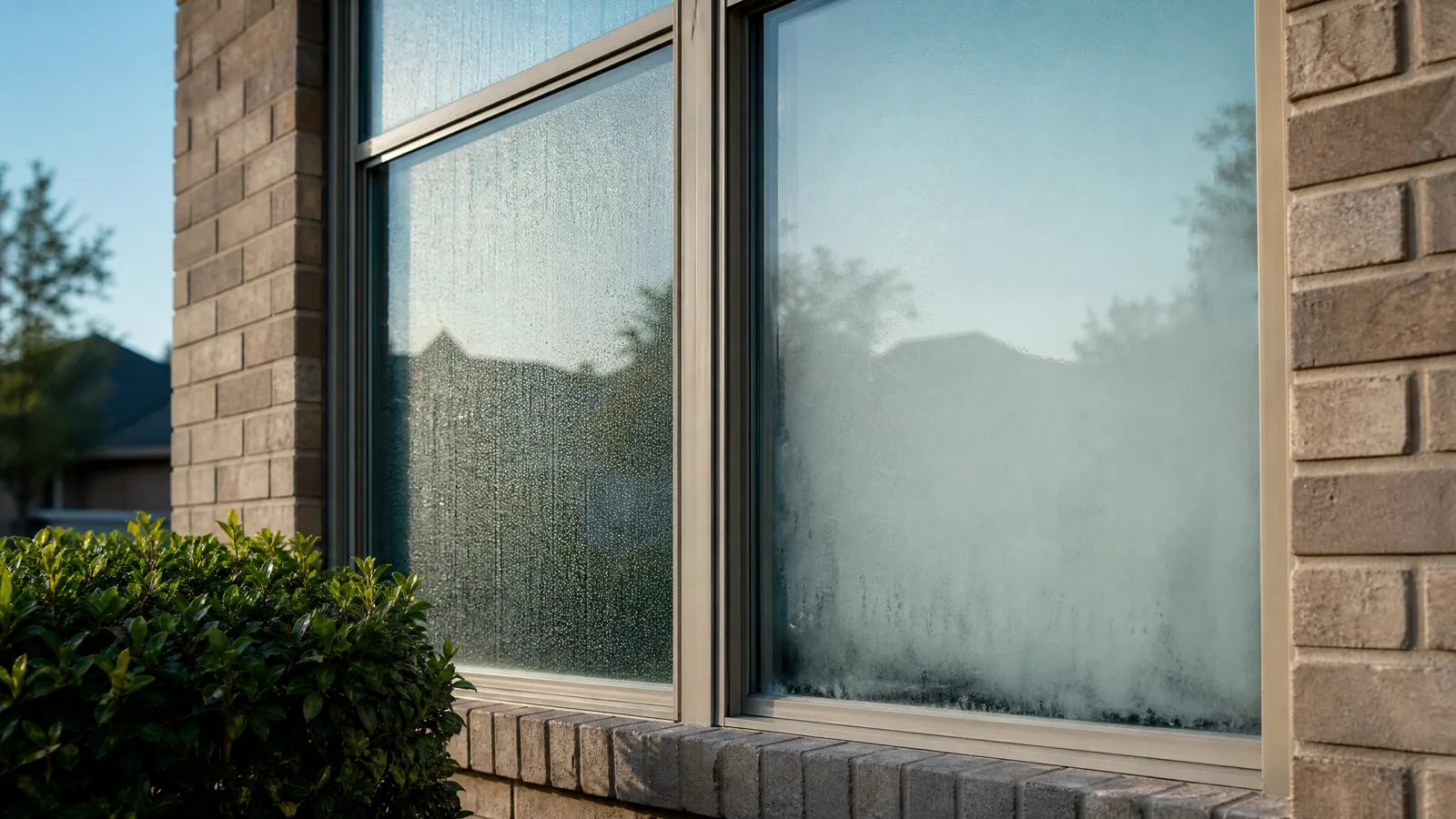
Seeing moisture on the outside of your windows can be alarming, especially when you are worried about the cost of a broken window seal. However, for Dallas–Fort Worth homeowners, exterior condensation is often a completely normal occurrence during our hot, humid summers. It can even be a sign that your energy-efficient windows are doing exactly what they were designed to do.
But how can you tell the difference between harmless exterior fog and a failed window seal that requires professional attention? In this guide, we will break down what causes exterior condensation, why it is usually nothing to worry about, and how to identify the true signs of a broken window seal so you know exactly when to call Apex Windows for a glass-only replacement.
Is It Exterior Condensation or a Failed Window Seal?
The first step in diagnosing window moisture is determining exactly where the condensation is located. Condensation can form on the inside of the glass, the outside of the glass, or trapped between the panes of a double-pane window.
Exterior condensation forms on the outermost pane of glass, the side facing your yard or street. This moisture can be wiped away with a finger or a towel from the outside. In contrast, when a window seal fails, the moisture is trapped between the two panes of glass. If you cannot wipe the fog away from the inside or the outside of your home, you are likely dealing with a broken seal.
What Causes Exterior Condensation on Windows in Texas?
Exterior condensation is a simple matter of science and weather. It occurs when the temperature of the window glass drops below the dew point of the outside air. In North Texas, this typically happens during the summer when your air conditioning is running at full blast, cooling the glass, while the warm, humid air outside hits the cold surface.
Just like a cold glass of sweet tea sweats on a hot summer day, your windows sweat when warm, moisture-laden air comes into contact with the cool glass. This is most common in the early morning hours and usually evaporates as the sun rises and warms the glass.
Why Exterior Condensation Actually Means Your Windows Are Working
It might seem counterintuitive, but exterior condensation is often a sign of high-quality, energy-efficient windows. Older, single-pane windows or inefficient double-pane windows allow heat to pass through easily. The outer pane of glass warms up, preventing condensation from forming.
Modern, energy-efficient windows, especially those with Low-E coatings and argon gas fills, are excellent insulators. They keep the cool, air-conditioned air inside your home from reaching the outer pane of glass. Because the outer pane stays cool, it is more susceptible to exterior condensation. So, if you see fog on the outside of your new windows, it means they are successfully blocking heat transfer and keeping your home comfortable.
How to Tell the Difference Between Condensation and a Broken Seal
If you are unsure whether you are dealing with exterior condensation or a broken window seal, there are a few simple ways to tell the difference. Here is a quick comparison to help you diagnose the issue:
| Feature | Exterior Condensation | Broken Window Seal |
|---|---|---|
| Location of Moisture | Outside surface of the glass | Trapped between the panes |
| Can It Be Wiped Away? | Yes, from the outside | No, it cannot be wiped away |
| When It Appears | Hot, humid mornings | Varies, often permanent or intermittent |
| Impact on Efficiency | Sign of good insulation | Loss of insulating properties |
| Required Action | None (harmless) | Professional glass replacement |
When You Should Worry About Window Condensation
While exterior condensation is harmless, other types of window moisture should raise red flags. Condensation on the inside of your windows (the side facing your living room) indicates high indoor humidity, which can lead to mold, mildew, and damage to your window frames or drywall.
However, the most concerning type of moisture is condensation trapped between the panes. This is a clear sign that the airtight seal protecting your insulated glass unit (IGU) has failed. When the seal breaks, the insulating gas escapes, and moisture-laden air is drawn in. Over time, this moisture causes permanent fogging, hard water stains, and a significant drop in your window's energy efficiency. If you see this type of fog, it is time to look into what causes window seal failure in Dallas-Fort Worth.
What to Do If Your Window Seal Has Failed
If you have determined that the moisture is between the panes, you are dealing with a broken seal. The good news is that you do not need to replace the entire window. If your window frames are still in good condition, Apex Windows can perform a glass-only replacement. We simply remove the failed insulated glass unit and install a brand-new, energy-efficient IGU in your existing frame.
This approach saves you up to 70% compared to the cost of a full window replacement, while fully restoring the clarity and energy efficiency of your windows. Plus, our replacements come with a 10-Year IGU manufacturer warranty + Apex 1-Year workmanship warranty for your peace of mind. (Please verify warranty details with the manufacturer or applicable authority.)
FAQ
Is condensation on the outside of windows normal?
Yes, exterior condensation is completely normal, especially in hot, humid climates like Dallas–Fort Worth. It typically occurs in the early morning when the cool glass of your air-conditioned home meets warm, moist outside air. It is harmless and usually evaporates as the day warms up.
Does exterior condensation mean my windows are bad?
No, in fact, it often means the opposite. Exterior condensation is frequently a sign that your windows are highly energy-efficient. They are doing such a good job of keeping the cool air inside that the outer pane remains cold enough to trigger condensation.
How can I stop condensation on the outside of my windows?
Because exterior condensation is a natural weather phenomenon and a sign of good insulation, you cannot completely stop it without raising the temperature inside your home or waiting for the weather to change. Opening blinds or curtains can sometimes help warm the glass slightly, but the moisture will naturally evaporate as the sun rises.
What does a broken window seal look like?
A broken window seal typically looks like fog, haze, or condensation that is trapped directly between the two panes of glass. Unlike exterior condensation, you cannot wipe it away from the inside or the outside. Over time, it may also develop into permanent hard water stains or a milky discoloration between the panes.
Are you dealing with foggy windows that you cannot wipe clean? It might be time for a professional assessment. Call Apex Windows today at (214) 263-3008 to schedule your glass-only replacement and restore the clear view in your DFW home. For more information on different types of window moisture, check out our guide on window condensation inside vs outside vs between panes and learn the signs of a broken window seal in DFW.
Need Foggy Glass Replacement in Your Area?
We provide expert foggy glass replacement and window repair across the Dallas-Fort Worth metroplex. Click your city below for local pricing, neighborhoods served, and FAQs:
About the Author
Alvin Paulson
Co-Owner & Lead Technician, Apex Windows & Glass
Alvin Paulson co-founded Apex Windows & Glass and brings over 30 years of hands-on expertise in foggy glass replacement, insulated glass unit (IGU) repair, and energy-efficient window upgrades. Born and raised in North Texas, Alvin has personally assessed and repaired thousands of windows across the Dallas-Fort Worth metroplex — from historic McKinney homes to new-build subdivisions in Frisco and Prosper. He is a licensed glazier and holds certifications in Low-E glass installation and argon gas window systems. Alvin's philosophy is simple: replace only what's broken, save the homeowner money, and back every job with a 10-Year IGU manufacturer warranty + Apex 1-Year workmanship warranty.