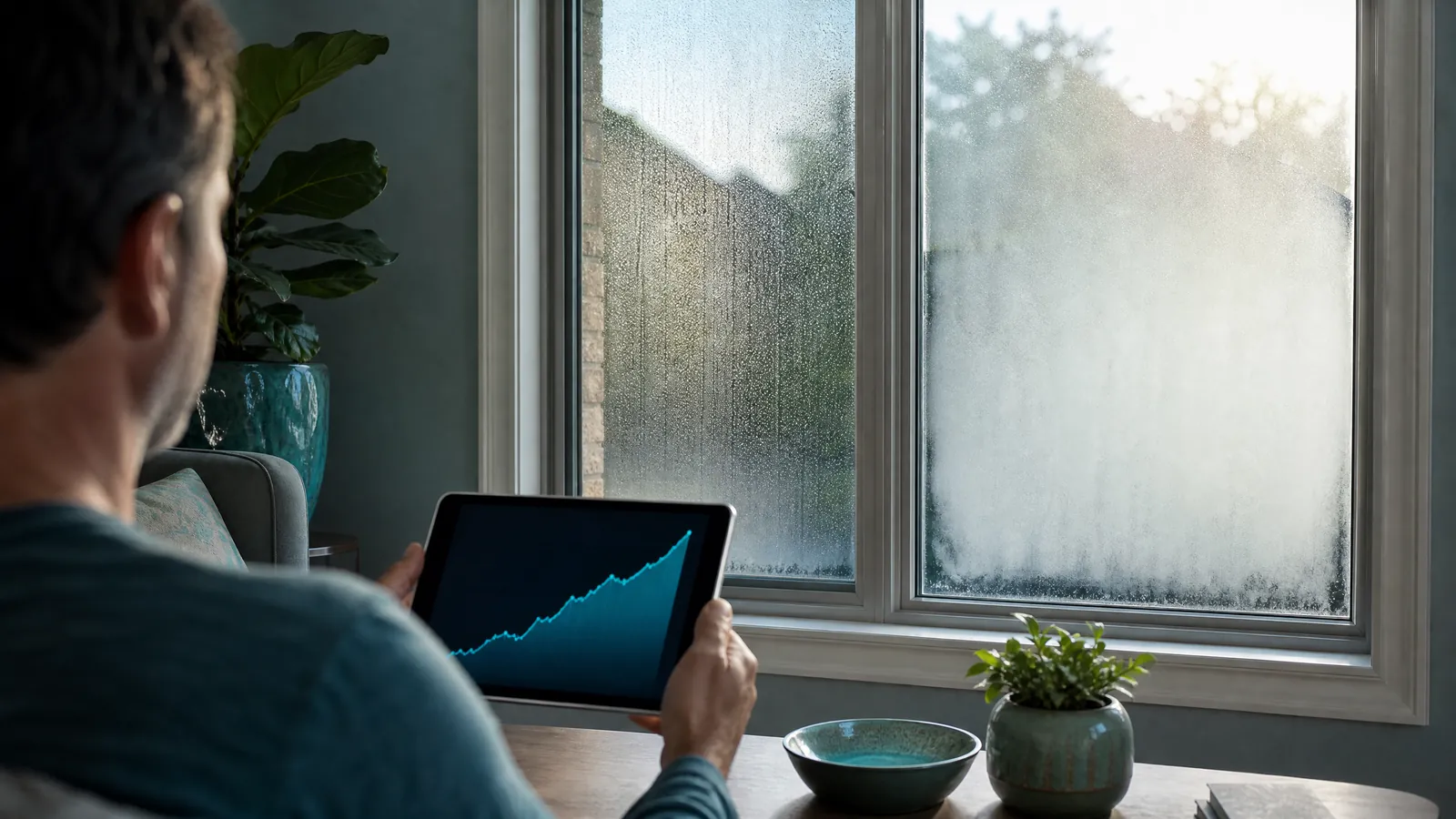
# Foggy Windows and Energy Bills — How Much Extra Are You Paying?
If you have noticed condensation trapped between the panes of your double-pane windows, you might think of it primarily as a cosmetic issue. After all, foggy glass obstructs your view, blocks natural light, and makes your home look older and less maintained than it actually is. However, that milky, clouded appearance is actually a visual indicator of a much more expensive problem: a failed window seal.
When a window seal fails, it does more than just let moisture in; it lets your home's energy efficiency out. For homeowners in the Dallas-Fort Worth metroplex, where summer temperatures regularly soar into the triple digits and winter nights can bring unexpected freezes, energy efficiency is not just a buzzword—it is a financial necessity. But exactly how much is that foggy window costing you on your monthly utility bills? Let's break down the hidden costs of failed window seals, the strain they put on your HVAC system, and why addressing the issue sooner rather than later makes excellent financial sense.
The Science Behind the Fog: What Exactly Failed?
To understand the energy cost of a foggy window, it helps to know how modern double-pane windows are constructed. Today's insulated glass units (IGUs) consist of two panes of glass separated by a spacer bar. The space between these panes is typically filled with an inert, dense gas, such as argon or krypton. This gas acts as an invisible blanket of insulation, slowing down the transfer of heat. The entire unit is then sealed tight with industrial-grade sealants to keep the gas inside and the outside air out.
Over time, windows are subjected to a phenomenon known as "solar pumping." During the heat of a Texas summer day, the gas inside the window expands, pushing outward on the glass and the seals. As the temperature drops at night, the gas cools and contracts, pulling inward. This daily cycle of expansion and contraction puts immense stress on the window seals. Eventually, the seal can weaken, crack, and break.
When this happens, the insulating argon gas escapes into the atmosphere, and regular, moisture-laden outside air gets sucked into the space between the panes. When the temperature changes, this trapped moisture condenses on the inside of the glass, creating that familiar foggy look. But the real issue isn't the moisture you can see; it's the missing argon gas you can't see. Without it, your window has lost a significant portion of its insulating power.
The Hidden Cost: Lost R-Value and Thermal Transfer
In the world of insulation and building materials, thermal effectiveness is measured by "R-value"—the capacity of an insulating material to resist heat flow. The higher the R-value, the better the insulation. A standard single-pane window has an R-value of about 1, meaning it offers very little resistance to heat transfer. A high-quality double-pane window filled with argon gas can have an R-value of 3 or 4, making it highly effective at keeping the outside weather where it belongs.
When the seal fails and the argon gas escapes, the R-value of that window drops significantly, often reverting closer to the efficiency of a single-pane window. In the intense Texas climate, this means heat transfer happens much more rapidly. During the summer, the relentless sun beats down on your home, and that heat easily penetrates the compromised window, warming up your living space. In the winter, the warmth you are paying to generate inside your home escapes right out through the glass.
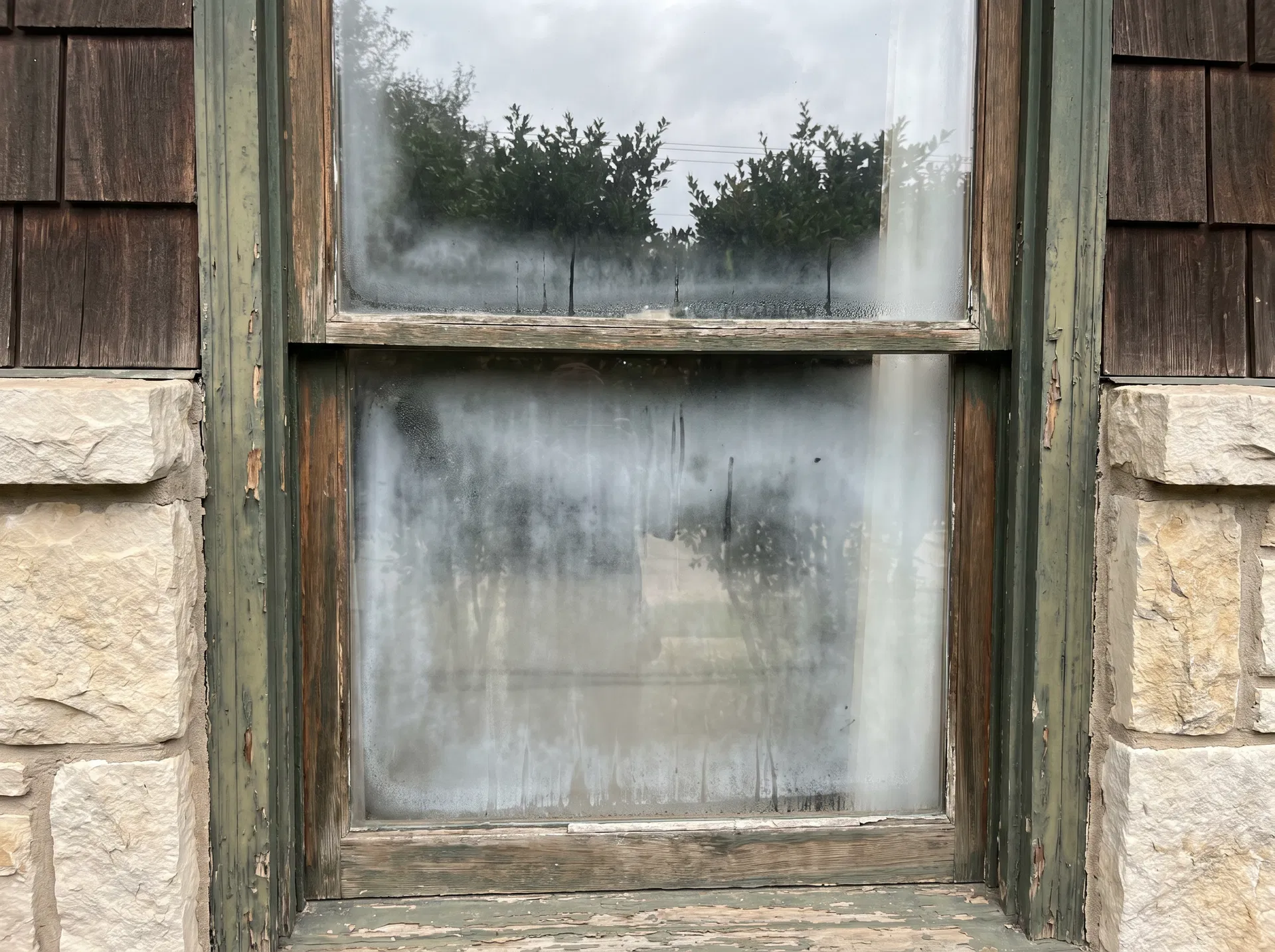
A failed window seal not only ruins your view but also allows heat to easily transfer into your home, driving up energy costs.
HVAC Strain: The Domino Effect of Inefficient Windows
The loss of R-value creates a domino effect throughout your home, and the first appliance to feel the impact is your heating, ventilation, and air conditioning (HVAC) system.
When heat easily enters your home through a foggy window, your air conditioner has to work overtime to maintain a comfortable indoor temperature. The thermostat registers the rising heat and triggers the AC to turn on more frequently and run for longer periods. This constant cycling puts immense strain on the HVAC unit. Not only does this drive up your monthly electricity bill, but it also accelerates the wear and tear on your system's mechanical components.
An HVAC system that is constantly running to compensate for drafty, inefficient windows will require more frequent maintenance, filter changes, and is significantly more likely to suffer a premature breakdown. Considering that a new HVAC system can cost anywhere from Pricing depends on the selected scope, dimensions, product, access, and installation conditions; see pricing and request a written quote. or more, the indirect costs of ignoring foggy windows can be staggering. For Fort Worth homeowners noticing higher utility bills, the culprit is often hiding in plain sight right on their walls.
Identifying Which Windows Are Costing You the Most
Not all foggy windows impact your energy bill equally. The financial drain depends heavily on the window's location and size. Large picture windows or sliding glass doors with failed seals will let in substantially more heat than a small bathroom window.
Furthermore, the direction the window faces plays a crucial role. In Texas, south-facing and west-facing windows receive the most intense, direct sunlight during the hottest parts of the day. If a west-facing window has a failed seal, it will act like a magnifying glass, pumping heat directly into your living room or bedroom all afternoon. Prioritizing the repair of large, sun-facing windows will yield the most immediate and noticeable improvements in your home's energy efficiency.
Crunching the Numbers: How Much Extra Are You Paying?
So, what does this mean in actual dollars and cents? While the exact amount varies based on the size of the window, the direction it faces, and the overall efficiency of your home, energy experts have run the numbers to provide a clear picture.
According to the U.S. Department of Energy, inefficient windows can account for 25% to 30% of residential heating and cooling energy use. If you have multiple windows with failed seals, the financial impact compounds quickly.
In the Texas climate, a single failed double-pane window can add an estimated Pricing depends on the selected scope, dimensions, product, access, and installation conditions; see pricing and request a written quote. per year to your energy bills, depending on its size and sun exposure. If you have a home with five or six foggy windows—a common scenario, as windows installed at the same time tend to fail around the same time—you could be paying an extra Pricing depends on the selected scope, dimensions, product, access, and installation conditions; see pricing and request a written quote. annually just in wasted energy. Over a five-year period, that is up to $1,500 literally flying out the window. When you factor in the potential cost of premature HVAC repairs, the true cost of ignoring foggy windows becomes impossible to justify.
The Project-specific value depends on the selected scope and conditions
When faced with foggy windows, many homeowners assume they need to replace the entire window—frame, sash, and all. Full window replacement is a massive, expensive, and disruptive undertaking, often costing Pricing depends on the selected scope, dimensions, product, access, and installation conditions; see pricing and request a written quote. or more per window. At that price point, the energy savings alone would take decades to pay for the new windows, making it a poor return on investment if the frames are still in good condition.
However, there is a much more cost-effective solution: foggy glass repair. Instead of ripping out the entire window frame and disturbing your home's siding and drywall, a specialized technician can simply remove the failed insulated glass unit and replace it with a brand-new, factory-sealed, argon-filled unit.
This targeted approach restores the window's original R-value and energy efficiency at a fraction of the cost of a full replacement. Because the repair is so much more affordable, the Project-specific value depends on the selected scope and conditions. In many cases, the energy savings will pay for the glass replacement in just a few short years, while immediately improving the comfort, appearance, and property value of your home.
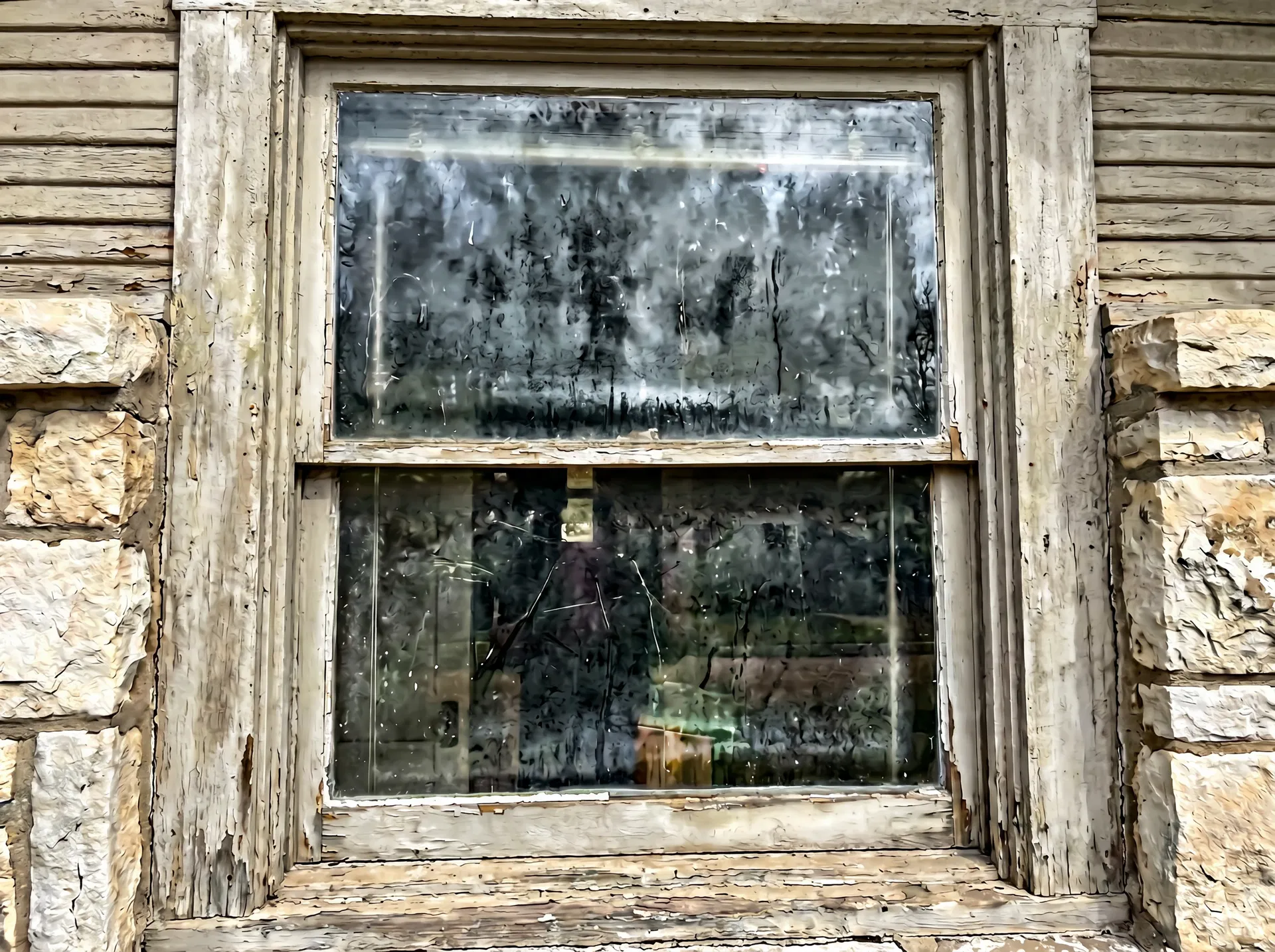
Replacing the failed glass unit restores both the clarity of your view and the energy efficiency of your home, paying for itself over time.
Stop Paying for Wasted Energy
Foggy windows are a clear sign that your home is leaking energy. Every month you wait to address the issue is another month of unnecessarily high utility bills and added strain on your HVAC system. By understanding the true cost of failed window seals, you can make an informed decision that benefits both your wallet and your home's comfort.
Don't let the Texas heat dictate your energy costs. If you are tired of looking through cloudy glass and paying higher utility bills, it is time to take action. Contact Apex Windows TX today at (214) 263-3008 to schedule an assessment and learn how our targeted glass replacement services can restore your windows' efficiency and clarity.
Need Foggy Glass Replacement in Your Area?
We provide expert foggy glass replacement and window repair across the Dallas-Fort Worth metroplex. Click your city below for local pricing, neighborhoods served, and FAQs:
About the Author
Alvin Paulson
Co-Owner & Lead Technician, Apex Windows & Glass
Alvin Paulson co-founded Apex Windows & Glass. The company brings 30+ years of combined leadership experience to foggy glass replacement, insulated glass unit (IGU) repair, and energy-efficient window upgrades across Dallas-Fort Worth. Alvin's philosophy is simple: replace only what's broken, save the homeowner money, and explain the written product and workmanship coverage for the selected scope.