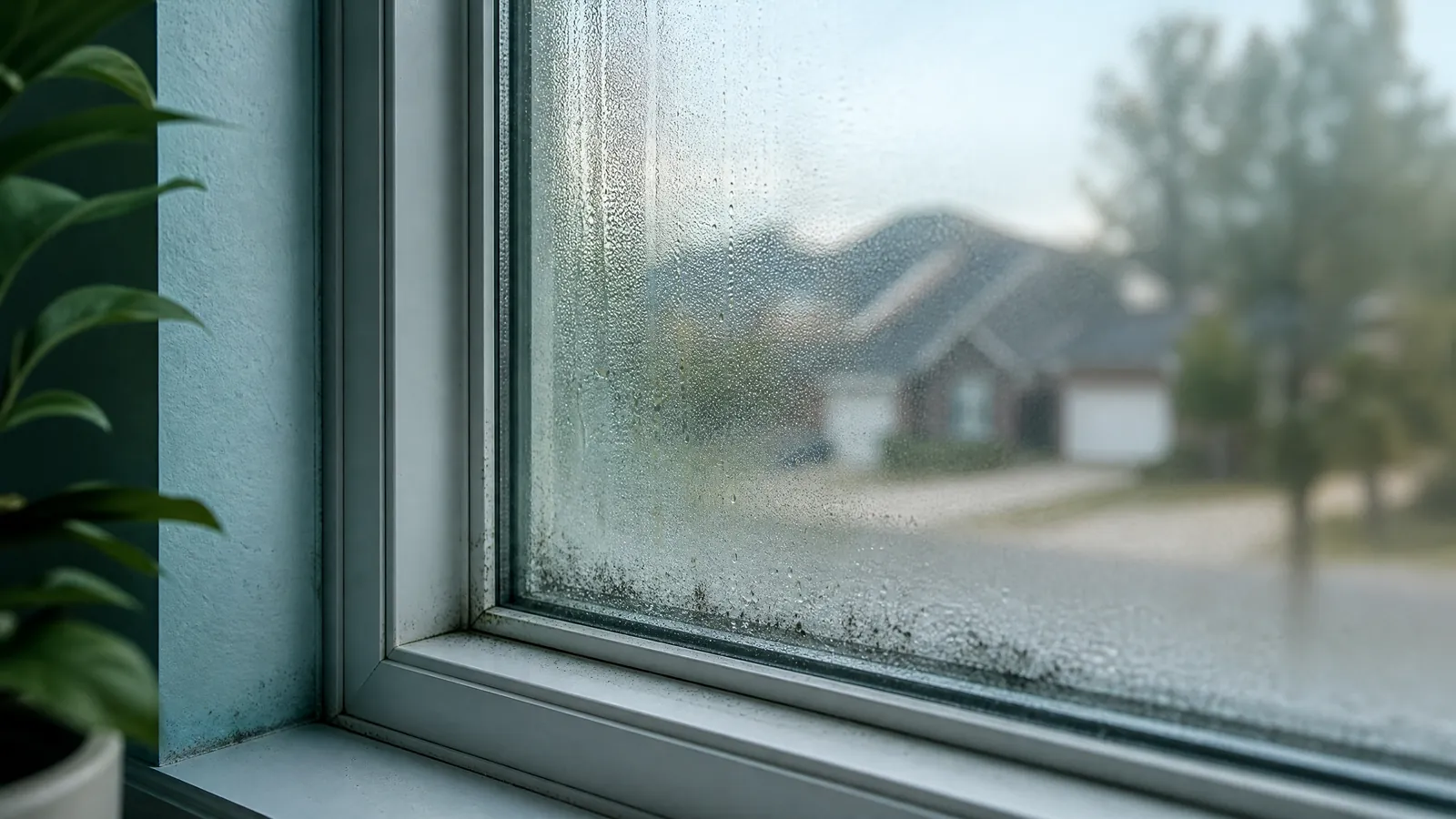
Most homeowners think of foggy windows as an aesthetic problem. But in DFW's humid climate, a failed window seal can create conditions that lead to mold growth, turning a cosmetic issue into a health concern.
How Foggy Windows Lead to Mold
When a double-pane window's seal fails, moisture enters the space between the panes. In wood-framed windows, the moisture that enters through a failed seal can migrate into the wooden frame. A failed seal also reduces the window's insulating value, causing the interior glass surface to become colder in winter and more condensation to form on the inside of the glass. This moisture runs down the glass and pools on the window sill, and repeated condensation can saturate the paint, caulk, and eventually the drywall below the window.
Signs of Mold Around Windows
Look for black, green, or gray spots on the window sill or surrounding wall, musty smell near windows especially in the morning, paint bubbling or peeling on the sill or wall below the window, and soft or spongy texture in the drywall near the window.
What to Do
Replace the foggy glass unit to eliminate the ongoing moisture infiltration. Clean small areas of surface mold on painted surfaces with a diluted bleach solution. If mold has penetrated the drywall or is extensive (more than 10 square feet), consult a mold remediation professional. Consider a whole-home dehumidifier if your home consistently runs above 50% relative humidity. Apex Windows can replace your foggy glass units and assess the condition of surrounding frames. Call (214) 263-3008 for a free inspection.
Whether you're in Dallas, Fort Worth, Plano, or anywhere in between — we're near you. Get your free foggy glass replacement estimate today.
Window Repair & Glass Replacement Near You
We repair and replace window glass across Dallas-Fort Worth. Pick your city for local pricing, neighborhoods and FAQs: