
# Foggy Windows in Rental Properties — A Landlord's Guide
Managing a rental property comes with a never-ending list of maintenance tasks, from fixing leaky faucets and servicing HVAC units to replacing worn-out carpets. However, one issue that often catches landlords off guard is the sudden appearance of foggy, cloudy, or condensation-filled windows. While it might seem like a minor cosmetic flaw at first glance, foggy glass can lead to tenant complaints, decreased property value, and higher energy bills.
For Dallas landlords managing rental property maintenance, understanding the causes, implications, and solutions for foggy windows is crucial for keeping tenants happy, maintaining high occupancy rates, and protecting your long-term investment.
What Causes Foggy Windows in Rental Properties?
Foggy windows are almost always the result of a failed seal in double-pane insulated glass units (IGUs). These modern windows are designed with two panes of glass separated by a spacer and filled with an insulating gas, such as argon or krypton. The edges are tightly sealed to keep the insulating gas inside and the outside moisture out.
Over time, exposure to extreme Texas heat, fluctuating temperatures, high humidity, and general wear and tear can cause the window seal to degrade and eventually fail. This process is known as "solar pumping." As the sun heats the window during the day, the gas inside expands, pushing against the seals. At night, the window cools and contracts. This constant expansion and contraction weakens the seal over the years.
When the seal finally breaks, the insulating gas escapes, and moisture-laden air from outside seeps in. As temperatures change, this trapped moisture condenses on the inside of the glass, creating that cloudy, foggy appearance that cannot be wiped away from the inside or the outside.
Are Foggy Windows a Habitability Issue in Texas?
When a tenant complains about a foggy window, the first question many landlords ask is whether they are legally obligated to fix it immediately. In Texas, landlords are required to provide a safe and habitable living environment under the implied warranty of habitability.
While a foggy window is generally not considered a direct threat to a tenant's health or safety—meaning it may not strictly violate basic habitability standards—it can still cause significant problems that affect the quality of the rental unit:
1. Decreased Energy Efficiency
Double-pane windows are specifically designed to insulate the home. When the seal fails, the window loses its insulating properties. This can lead to drafts, uneven indoor temperatures, and a significant increase in heating and cooling costs. If tenants are responsible for paying their own utility bills, they may become frustrated by the sudden spike in costs, leading to dissatisfaction and potential turnover. If you cover the utilities as part of the lease, those extra costs will eat directly into your profit margins month after month.
2. Potential for Mold and Mildew
The moisture trapped between the panes of glass can create a breeding ground for mold and mildew. While the mold is usually contained within the window unit itself, it can still be unsightly and concerning for health-conscious tenants. In severe cases, excess condensation can drip down onto the window sill, potentially causing wood rot, peeling paint, or interior water damage over time, which will be much more expensive to repair.
3. Reduced Curb Appeal and Rental Value
First impressions matter immensely in the competitive rental market. Foggy, cloudy windows make a property look neglected, aged, and poorly maintained. If you are trying to attract new tenants, host open houses, or justify a rent increase upon lease renewal, foggy windows can be a major deterrent. Prospective renters may assume that if the windows are in disrepair, other unseen maintenance issues are lurking behind the walls.
Handling Tenant Complaints About Foggy Glass
When a tenant reports a foggy window, it is important to address the issue promptly and professionally. Ignoring the problem can lead to strained landlord-tenant relationships, negative online reviews, and a lack of care from the tenant toward the property.
- Acknowledge the Issue: Let the tenant know that you have received their complaint and are looking into it. Explain that foggy windows are a common issue caused by a broken seal due to age and weather, not by anything they did wrong.
- Assess the Damage: Inspect the window to confirm that the seal has indeed failed. Check for any signs of water damage, wood rot, or mold around the window frame and sill.
- Communicate the Plan: Inform the tenant of your plan to repair or replace the glass. Give them a realistic timeline for when the work will be completed, and assure them that the repair process will be minimally invasive.
Cost-Effective Repair Strategies for Landlords
Many landlords assume that a foggy window means the entire window unit—frame, sash, and all—needs to be ripped out and replaced. This misconception often leads to delayed repairs due to the high cost of full window replacement. Fortunately, there is a much more cost-effective and efficient solution.
Glass Replacement vs. Full Window Replacement
Instead of replacing the entire window, you can opt for professional foggy glass repair, which involves Apex provides glass-only repair and replacement where appropriate, as well as full-window replacement and other window and glass services. The recommended scope follows an on-site assessment..
This approach offers several significant advantages for landlords and property managers:
- Lower Cost: Apex provides glass-only repair and replacement where appropriate, as well as full-window replacement and other window and glass services. The recommended scope follows an on-site assessment..
- Faster Turnaround: Glass replacement is a relatively quick process. The new glass is measured, custom-manufactured, and installed in a matter of days. The actual installation usually takes the written project schedule, minimizing disruption for your tenants.
- Preserved Aesthetics: Because the original frame remains in place, you don't have to worry about matching the new window to the rest of the property, painting new trim, or dealing with exterior stucco or siding repairs.
Bulk Repair Strategies for Multi-Unit Properties
If you own a multi-family property, an apartment complex, or several single-family homes in the same neighborhood, you may find that multiple windows are failing at the same time. This is common, as windows installed during the same construction phase tend to have similar lifespans.
When dealing with multiple foggy windows, consider a bulk repair strategy. Many glass replacement companies offer volume discounts for replacing several IGUs at once. Proactively inspecting all the windows on your properties and addressing failing seals in batches can save you time, reduce trip charges, and prevent future tenant complaints before they happen.
The Difference Professional Glass Replacement Makes
To truly understand the impact of addressing foggy windows, consider the visual transformation. A cloudy window can make an entire room feel dark, dingy, and depressing, while clear glass restores natural light and a clean, welcoming appearance.
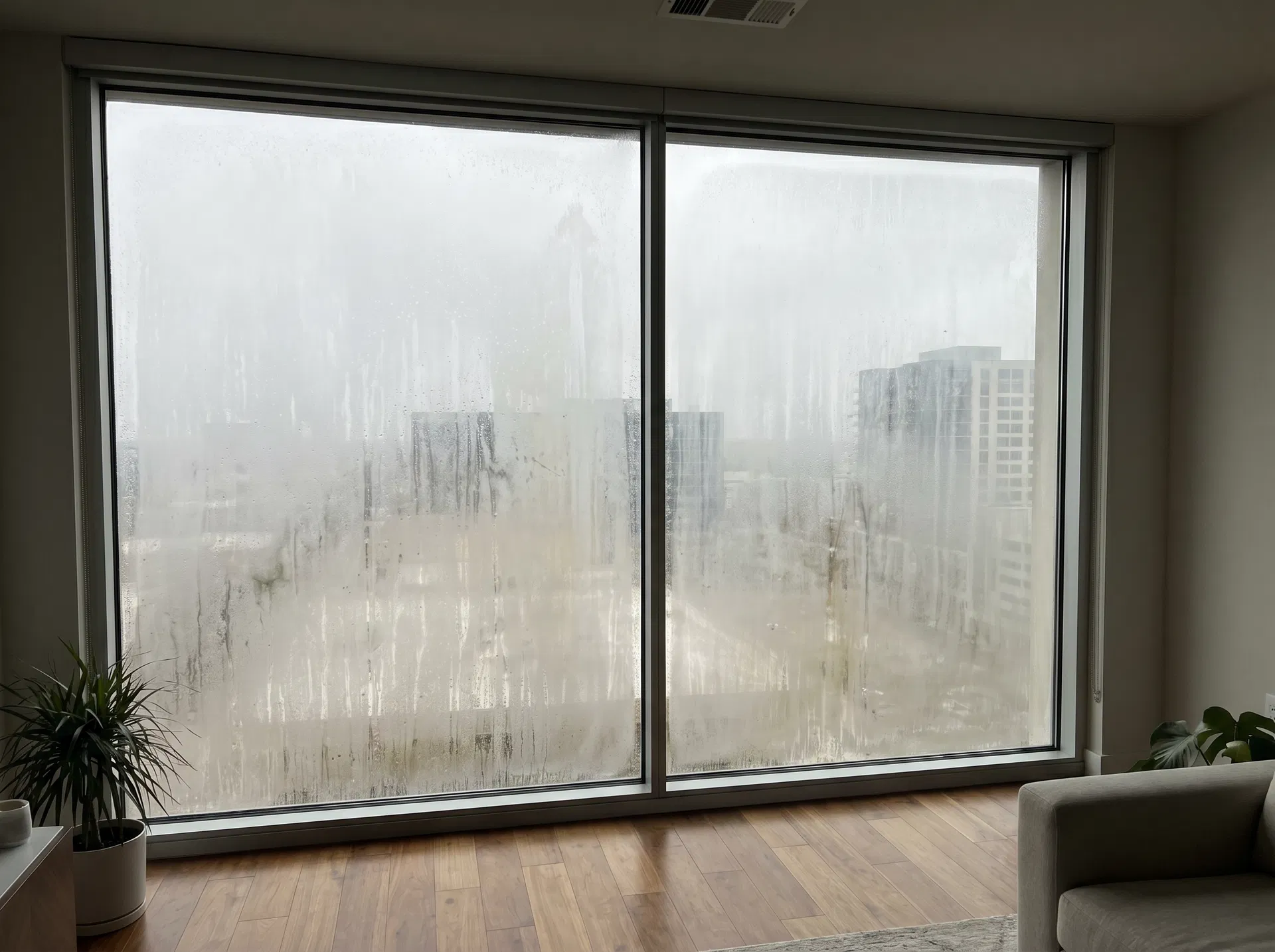
Before: A failed window seal leaves the glass cloudy and obstructs the view, making the rental property look poorly maintained and reducing natural light.

After: Replacing the insulated glass unit restores clarity, improves energy efficiency, and instantly enhances the property's interior and exterior appeal.
Proactive Maintenance Tips for Landlords
While window seals will eventually fail due to age and weather exposure, there are a few proactive steps landlords can take to extend the life of their windows and catch issues early:
- Annual Inspections: Include a visual inspection of all windows during your annual or semi-annual property walkthroughs. Look for early signs of condensation between the panes, especially during the spring and fall when temperature fluctuations are most extreme.
- Maintain Caulking and Weatherstripping: Ensure that the exterior caulking around the window frames is intact and not cracking. While this won't prevent a seal failure, it will keep water from seeping into the walls and causing structural damage.
- Educate Tenants: Encourage tenants to report any window issues, including drafts, difficulty opening or closing, or visible condensation, as soon as they notice them. A proactive tenant is your best defense against escalating maintenance costs.
Keep Your Rental Properties in Top Condition
Foggy windows may not be a structural emergency, but they are a significant maintenance issue that landlords shouldn't ignore. By understanding the causes and opting for cost-effective glass replacement rather than full window replacement, you can maintain your property's value, keep your tenants comfortable, and protect your bottom line.
If you're dealing with foggy windows at your rental properties, don't wait for tenant complaints to pile up or for energy bills to skyrocket. Contact Apex Windows TX today at (214) 263-3008 to schedule a professional assessment and get your windows looking clear and performing efficiently once again.
Need Foggy Glass Replacement in Your Area?
We provide expert foggy glass replacement and window repair across the Dallas-Fort Worth metroplex. Click your city below for local pricing, neighborhoods served, and FAQs:
About the Author
Alvin Paulson
Co-Owner & Lead Technician, Apex Windows & Glass
Alvin Paulson co-founded Apex Windows & Glass. The company brings 30+ years of combined leadership experience to foggy glass replacement, insulated glass unit (IGU) repair, and energy-efficient window upgrades across Dallas-Fort Worth. Alvin's philosophy is simple: replace only what's broken, save the homeowner money, and explain the written product and workmanship coverage for the selected scope.