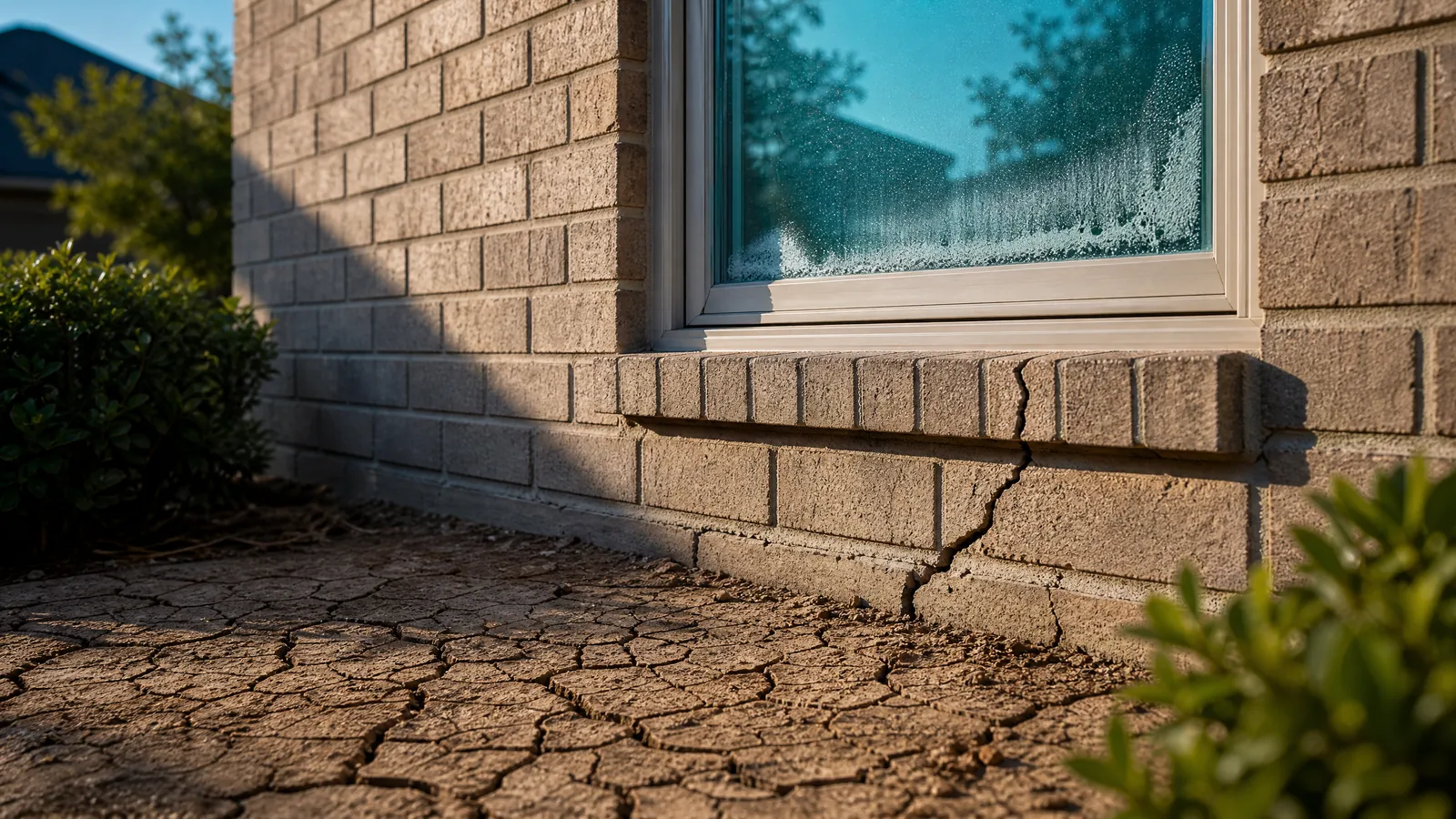
# How Foundation Settling Causes Window Seal Failure in DFW
If you have lived in the Dallas-Fort Worth metroplex for any length of time, you are likely familiar with the constant battle against foundation settling. The unique soil composition in North Texas is notorious for causing structural movement, leading to cracked drywall, sticking doors, and uneven floors. However, there is another common, yet frequently overlooked, consequence of foundation shifting: window seal failure.
When homeowners notice condensation trapped between the panes of their double-pane windows, they often assume the windows are simply old or defective. While age is certainly a factor in many cases, foundation movement is a leading culprit behind premature seal failure in DFW homes. Understanding the connection between expansive clay soil, frame stress, and foggy glass can help you identify the root cause of your window problems and find the right solution.
The Challenge of North Texas Expansive Clay Soil
The primary driver of foundation movement in the DFW area is the presence of expansive clay soil. This type of soil acts much like a sponge. During the wet spring months or periods of heavy rainfall, the clay absorbs water and expands significantly, pushing upward and outward against your home's foundation. Conversely, during the scorching, dry Texas summers, the soil loses moisture, shrinks, and pulls away from the foundation, causing the structure to settle downward.
This continuous cycle of heaving and settling places immense stress on the entire structural framework of a house. Over time, the rigid materials that make up your home—including the wood framing, brick veneer, and window assemblies—are forced to flex and shift. Because windows are fixed elements installed within the walls, any movement in the surrounding structure directly impacts the window frames.
How Structural Movement Stresses Window Frames
Modern energy-efficient windows consist of an insulated glass unit (IGU), which features two or more panes of glass separated by a spacer and sealed airtight. This unit is then housed within a window frame made of vinyl, wood, or aluminum. The entire assembly is designed to remain perfectly square and plumb.
When a home's foundation settles unevenly, the walls can shift out of square, a process known as "racking." As the wall framing twists or tilts, it exerts uneven pressure on the window frame. The window frame, in turn, transfers this mechanical stress directly to the insulated glass unit.
Glass is inherently rigid and cannot bend to accommodate the shifting frame. Instead, the stress is absorbed by the weakest point in the assembly: the perimeter seal of the IGU. The constant pressure, twisting, and torquing can cause the flexible sealant that binds the glass panes to the spacer to stretch, crack, or break entirely. Once this seal is compromised, the airtight environment is lost.
The Mechanics of Seal Failure and Foggy Glass
When the perimeter seal of an insulated glass unit breaks, the window loses its insulating properties. The inert gas (such as argon or krypton) that was originally pumped between the panes escapes into the atmosphere. More importantly, ambient air containing moisture is drawn into the space between the glass panes.
As temperatures fluctuate throughout the day—a common occurrence in North Texas—the trapped moisture condenses on the inside surfaces of the glass. This results in the cloudy, foggy, or milky appearance that obscures your view and ruins the aesthetic appeal of your windows. Over time, the continuous presence of moisture can even lead to permanent mineral deposits or a phenomenon known as "glass etching," which cannot be cleaned away.
Identifying Foundation-Related Failure vs. Age-Related Failure
It is important to distinguish between window seal failure caused by foundation settling and failure caused by natural aging. While both result in foggy glass, the underlying causes and accompanying symptoms differ.
Signs of Foundation-Related Window Problems
- Diagonal Cracks: Look for diagonal cracks in the drywall or brickwork radiating from the corners of the window frame. This is a classic indicator of structural racking.
- Operational Issues: If the window is difficult to open, close, or lock, the frame has likely shifted out of square.
- Uneven Gaps: Check the reveal (the gap) between the window sash and the frame. If the gap is wider at the top than at the bottom, the frame is distorted.
- Premature Failure: If relatively new windows (under ten years old) are experiencing seal failure, foundation stress is a highly probable cause.
Signs of Age-Related Window Failure
- Uniform Fogging: The condensation appears evenly across multiple windows of the same age, regardless of their location in the house.
- Degraded Weatherstripping: The rubber or felt weatherstripping around the window is brittle, cracked, or missing.
- No Structural Symptoms: The windows operate smoothly, and there are no visible cracks in the surrounding walls or brickwork.
- Older Windows: The windows are fifteen to twenty years old, which is the typical lifespan of a standard insulated glass unit seal.
Real-World Impact: A DFW Case Study
Consider the experience of many Arlington homeowners on expansive clay soil. Arlington, like much of the mid-cities area, features soil conditions that are particularly prone to extreme shrinking and swelling. Homeowners in this area frequently encounter foggy windows on the sides of their homes that experience the most severe foundation movement, typically the south and west-facing walls where the soil dries out fastest in the summer sun.
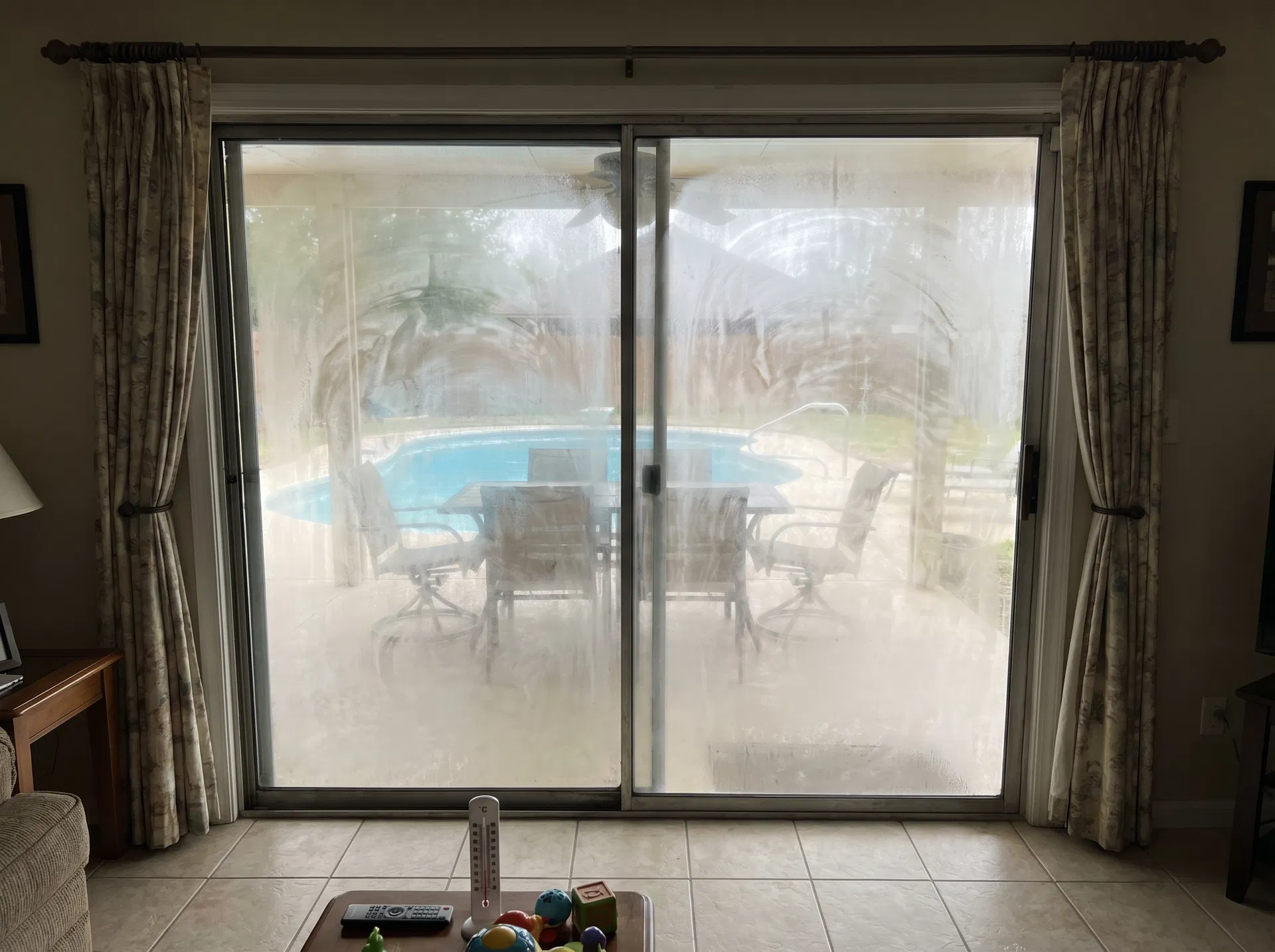
Before: A window suffering from severe seal failure and condensation due to frame stress.
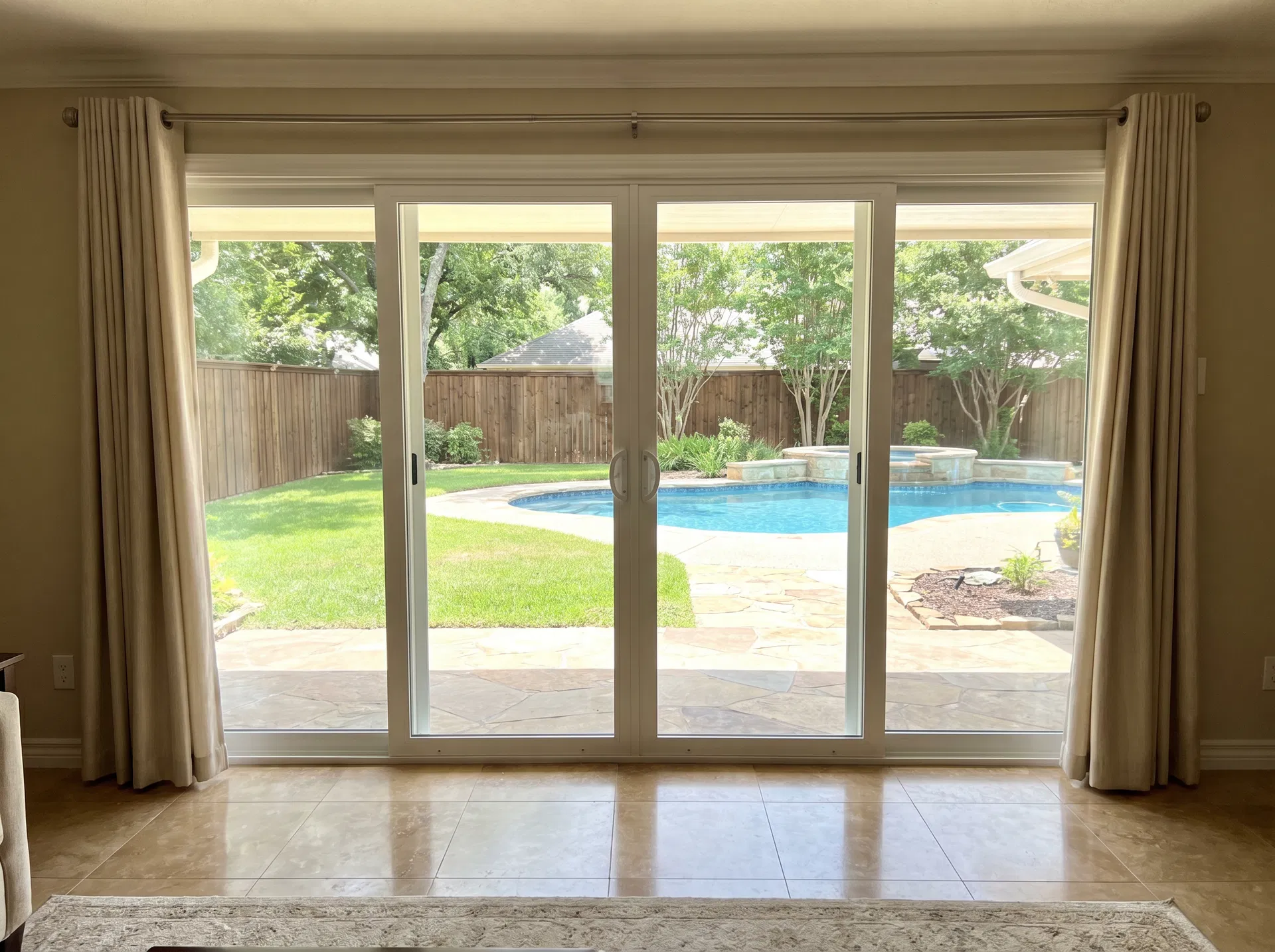
After: The view restored with a new insulated glass unit, properly installed to accommodate minor settling.
In these situations, the stress on the window frames is undeniable. Replacing the entire window is often unnecessary and expensive, especially if the frame itself is still structurally sound despite being slightly out of square. The most effective and economical solution is to replace the affected glass unit while ensuring the new unit is installed with appropriate shimming to relieve the pressure.
Addressing the Problem: Glass Replacement and Prevention
Once a window seal has failed, there is no way to repair the seal or permanently remove the moisture from between the panes. The only effective solution is to replace the insulated glass unit. By utilizing professional foggy glass repair services, you can have a new, custom-measured IGU installed directly into your existing window frame. This process restores the clarity and energy efficiency of your window at a fraction of the cost of full window replacement.
Furthermore, when a professional installer replaces the glass, they can assess the frame for squareness. If the frame has shifted due to foundation settling, the installer can carefully shim the new glass unit to ensure it sits evenly within the frame, reducing the likelihood of future stress-induced seal failure.
While you cannot change the soil beneath your home, you can take proactive steps to minimize foundation movement and protect your windows:
- Maintain Consistent Moisture: Implement a foundation watering program during dry summer months using soaker hoses placed around the perimeter of your home. This helps prevent the clay soil from shrinking excessively.
- Ensure Proper Drainage: Make sure your gutters are clean and that downspouts direct water at least five feet away from your foundation. Grade the soil around your home so that water flows away from the structure, preventing pooling during heavy rains.
- Monitor Large Trees: Trees planted too close to the house can draw massive amounts of moisture from the soil, exacerbating foundation settling. Consider installing root barriers if necessary.
Conclusion
Foundation settling is an unavoidable reality for many homeowners in the Dallas-Fort Worth area. While cracked drywall and sticking doors are the most obvious symptoms, the hidden stress placed on window frames is a major contributor to premature seal failure and foggy glass. By understanding this connection and taking steps to manage foundation movement, you can protect your home's structural integrity and the longevity of your windows.
If you are dealing with foggy, condensation-filled windows caused by foundation stress or natural aging, you do not have to live with a compromised view. Contact Apex Windows TX today at (214) 263-3008 to schedule a consultation and learn how our targeted glass replacement services can restore your windows efficiently and affordably.
Need Foggy Glass Replacement in Your Area?
We provide expert foggy glass replacement and window repair across the Dallas-Fort Worth metroplex. Click your city below for local pricing, neighborhoods served, and FAQs:
About the Author
Alvin Paulson
Co-Owner & Lead Technician, Apex Windows & Glass
Alvin Paulson co-founded Apex Windows & Glass. The company brings 30+ years of combined leadership experience to foggy glass replacement, insulated glass unit (IGU) repair, and energy-efficient window upgrades across Dallas-Fort Worth. Alvin's philosophy is simple: replace only what's broken, save the homeowner money, and explain the written product and workmanship coverage for the selected scope.