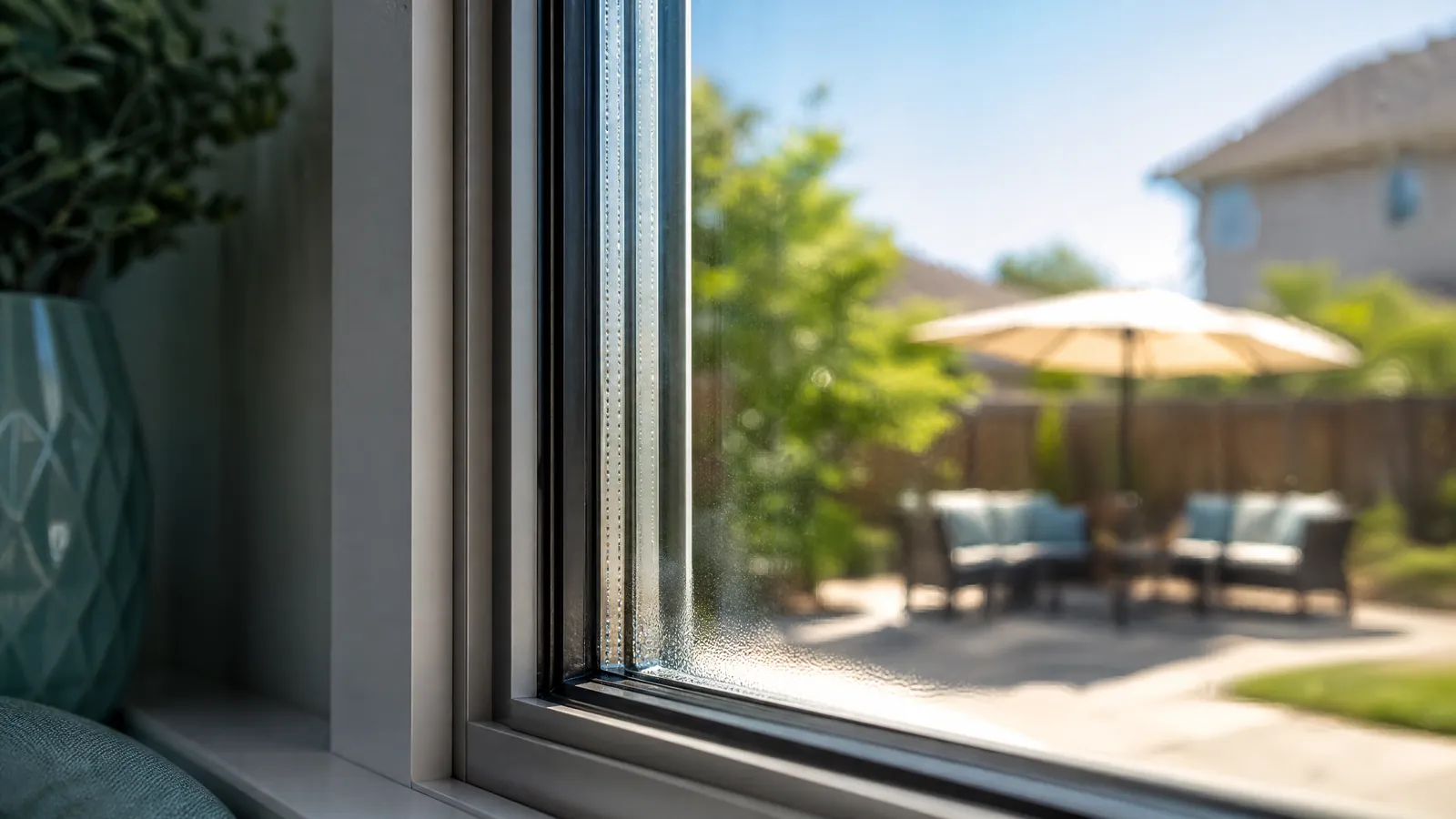
# How Long Do Window Seals Last in Texas Heat?
Double-pane windows are a standard feature in modern homes, designed to provide superior insulation, reduce noise, and keep your living spaces comfortable. At the heart of these windows is the insulated glass unit (IGU), which relies on a specialized seal to trap a layer of insulating gas between the panes. However, if you live in the Dallas-Fort Worth metroplex, you already know that the local climate can be incredibly demanding on your home's exterior. The relentless summer sun, high humidity, and sudden temperature drops can take a significant toll on building materials.
For homeowners in our region, a common question arises: exactly how long do window seals last in the intense Texas heat? Understanding the lifespan of your window seals, the factors that contribute to their degradation, and the early warning signs of failure can help you maintain your home's energy efficiency and visual appeal.
The Typical Lifespan of Window Seals in Texas
Under ideal conditions, the seals on high-quality double-pane windows are engineered to last anywhere from 20 to 25 years. However, the reality of the Texas climate often paints a different picture. In the Dallas-Fort Worth area, the typical lifespan of window seals is generally reduced to about 15 to 20 years.
This reduction in longevity is not necessarily a reflection of poor manufacturing, but rather a testament to the extreme environmental stress these components endure year after year. The sealant material, usually a flexible polyisobutylene or silicone compound, is designed to expand and contract. Yet, when subjected to the prolonged, blistering heat of a Texas summer, the material gradually loses its elasticity, dries out, and eventually cracks, allowing the insulating gas to escape and moisture to enter.
How the Texas Climate Accelerates Window Seal Failure
The environment plays the most significant role in determining how long your windows will remain structurally sound and energy-efficient. Several specific climate factors contribute to premature seal failure in our region.
The Phenomenon of Solar Pumping
One of the primary culprits behind window seal degradation is a process known as solar pumping. During a typical Texas summer day, the sun beats down on the glass, causing the trapped air or gas inside the insulated glass unit to heat up and expand. This expansion puts immense outward pressure on the window seal. As the sun sets and the temperature drops during the night, the gas cools and contracts, creating a vacuum effect that pulls the glass panes inward. This daily cycle of expansion and contraction acts like a bellows, constantly stressing the seal. Over thousands of cycles, the seal inevitably weakens and breaks.
High Ultraviolet (UV) Exposure
The intense UV radiation from the Texas sun does more than just fade your furniture and carpets; it also degrades the chemical structure of the window sealants. Prolonged exposure to direct sunlight causes the flexible seal materials to become brittle and hard. Once the seal loses its flexibility, it can no longer accommodate the natural thermal expansion of the glass, leading to micro-tears and eventual failure.
Extreme Temperature Fluctuations
While Texas is known for its heat, the state also experiences sudden and dramatic temperature shifts, particularly during the spring and fall. A strong cold front can drop temperatures by thirty degrees in a matter of hours. These rapid thermal shocks force the glass and the frame materials to contract at different rates, placing sudden, severe mechanical stress on the window seals.
Factors That Shorten Your Window Seal's Lifespan
Beyond the general climate, several specific factors related to your home's design and the windows themselves can further shorten the lifespan of your window seals.
South and West-Facing Exposures
Not all windows on your home experience the same level of environmental stress. Windows located on the south and west-facing sides of your house take the absolute brunt of the harsh afternoon sun. These windows consistently reach higher surface temperatures than those on the north or east sides, accelerating the solar pumping process and UV degradation. It is very common for homeowners to notice that the seals on the back of their house have failed, while the front windows remain perfectly intact.
Dark-Colored Window Frames
The color of your window frames can significantly impact the temperature of the glass unit. Dark-colored frames, such as bronze, black, or dark brown, absorb substantially more solar heat than white or light-colored frames. This absorbed heat is directly transferred to the edge of the insulated glass unit where the seal is located, effectively baking the sealant material and accelerating its deterioration.
Poor Initial Installation
Even the highest quality windows will fail prematurely if they are not installed correctly. If the window frame is not perfectly square, or if the installers failed to leave adequate space for thermal expansion, the glass unit will be subjected to unnatural twisting and pressure. Over time, this mechanical stress will rupture the seal, regardless of the weather conditions outside.
When to Start Checking Your Windows
Given the 15 to 20-year average lifespan in Texas, it is wise to start paying closer attention to your windows as your home ages. If your house was built in the early to mid-2000s and still has its original windows, you are currently in the prime window for seal failure.
You should begin conducting visual inspections of your windows at least twice a year, ideally during the spring and fall when temperature differences between the inside and outside of your home are most pronounced. Look for the telltale signs of a broken seal: a hazy or milky appearance on the glass, condensation trapped between the panes that you cannot wipe away, or a distorted reflection.
The Impact of Failed Window Seals
When a window seal fails, the window loses its primary insulating properties. The inert gas (like argon or krypton) escapes, and ambient air carrying moisture is drawn into the space between the panes. When the temperature of the glass drops below the dew point, this trapped moisture condenses, resulting in foggy glass.
Not only does this obscure your view and make your home look unkempt, but it also means your HVAC system has to work harder to maintain a comfortable indoor temperature, leading to higher energy bills.
To illustrate the dramatic difference a repair can make, take a look at this transformation:
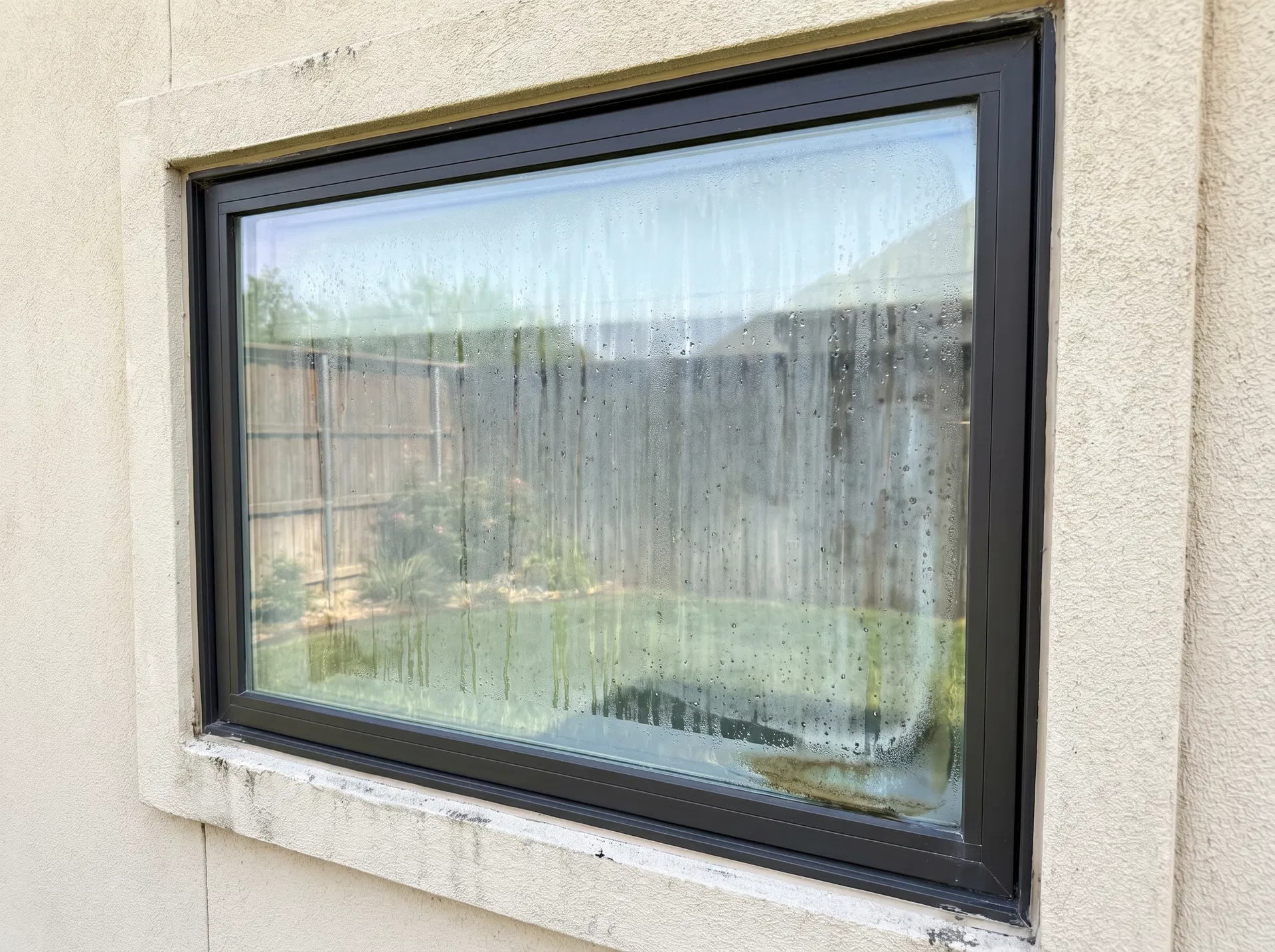
A window with a severely failed seal, completely obscuring the view with trapped moisture and mineral deposits.
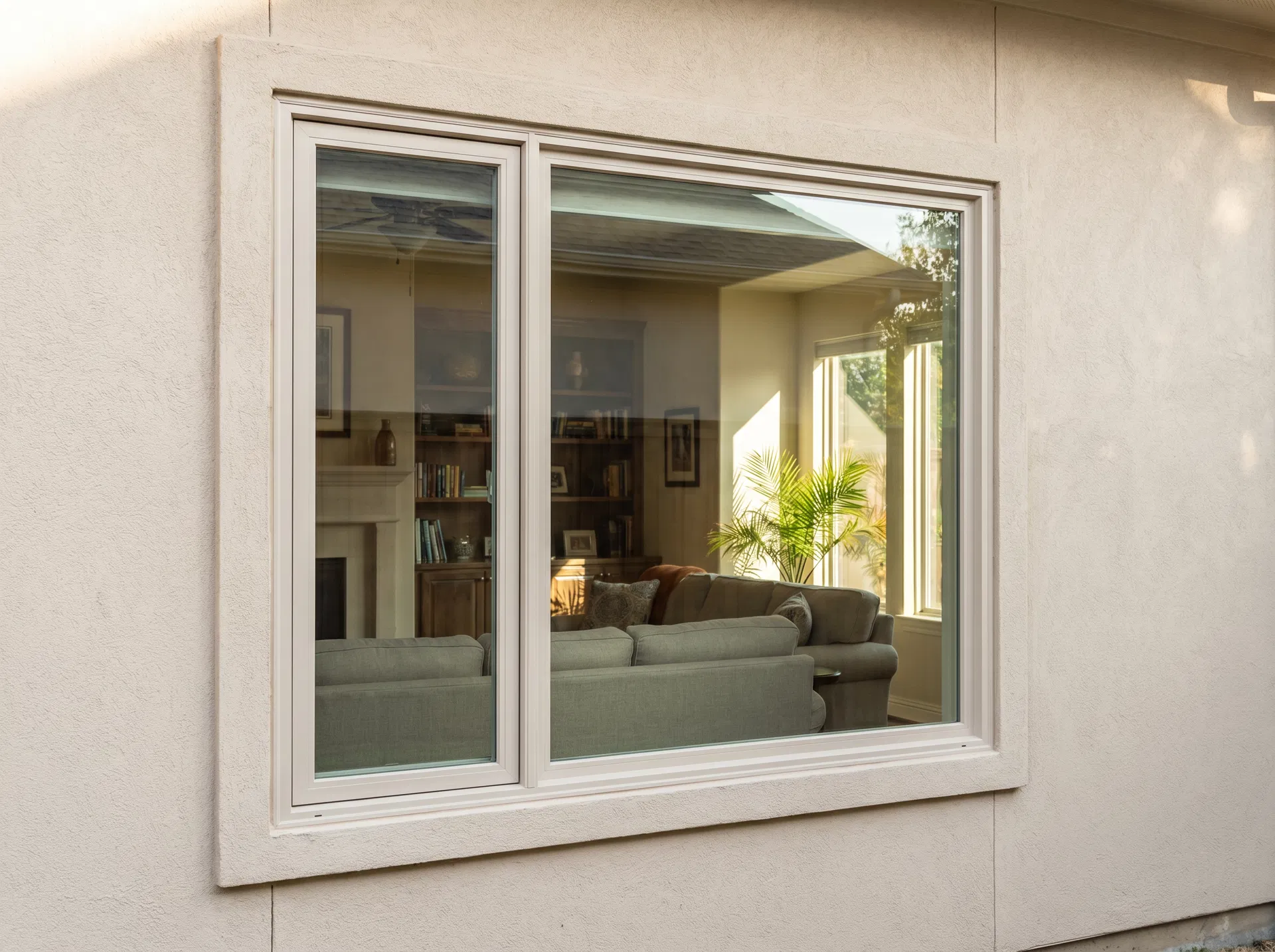
The same window after professional glass replacement, restoring clarity and energy efficiency.
Practical Advice for Texas Homeowners
While you cannot change the weather, there are practical steps you can take to maximize the lifespan of your window seals and maintain your home's efficiency:
- Maintain Proper Drainage: Ensure that the weep holes at the bottom of your window frames are clear of dirt, dead insects, and debris. These holes allow water to drain away from the glass unit. If they become clogged, water can pool around the seal, accelerating its breakdown.
- Manage Interior Humidity: High indoor humidity can exacerbate condensation issues. Use exhaust fans in your kitchen and bathrooms, and ensure your home is adequately ventilated.
- Plant Shade Trees: If you have vulnerable south or west-facing windows, consider planting deciduous trees or installing exterior shading devices like awnings or solar screens. Blocking the direct sunlight before it hits the glass can significantly reduce thermal stress.
- Schedule Professional Assessments: Don't wait for your windows to become completely opaque before taking action. Plano homeowners can schedule a free window inspection to have an expert evaluate the condition of their seals and identify potential issues early on.
What to Do When Your Window Seals Fail
Discovering that your window seals have failed can be frustrating, but it does not necessarily mean you need to undertake a massive, expensive home renovation. Many homeowners mistakenly believe that a foggy window requires a complete window replacement, involving tearing out the frame, repairing drywall, and repainting.
Fortunately, this is rarely the case. The most cost-effective and practical solution is targeted glass replacement. By utilizing professional foggy glass repair services, you can have just the insulated glass unit replaced while leaving your existing window frame completely intact. This process restores the clarity, insulation, and aesthetic appeal of your window at a fraction of the cost of a full replacement.
Conclusion
Living in Texas means accepting the harsh realities of the climate, and your home's exterior bears the brunt of that environment. While window seals in the Dallas-Fort Worth area typically last between 15 and 20 years, factors like sun exposure, frame color, and installation quality can all influence their actual lifespan. By understanding the causes of seal failure and knowing what signs to look for, you can make informed decisions about maintaining your home.
If you have noticed condensation between your window panes, a hazy view, or a sudden spike in your energy bills, it is time to have your windows evaluated by a professional. Don't let failed seals compromise your home's comfort and curb appeal. Contact Apex Windows TX today at (214) 263-3008 to discuss your glass replacement options and restore the clarity to your view.
Need Foggy Glass Replacement in Your Area?
We provide expert foggy glass replacement and window repair across the Dallas-Fort Worth metroplex. Click your city below for local pricing, neighborhoods served, and FAQs:
About the Author
Alvin Paulson
Co-Owner & Lead Technician, Apex Windows & Glass
Alvin Paulson co-founded Apex Windows & Glass. The company brings 30+ years of combined leadership experience to foggy glass replacement, insulated glass unit (IGU) repair, and energy-efficient window upgrades across Dallas-Fort Worth. Alvin's philosophy is simple: replace only what's broken, save the homeowner money, and explain the written product and workmanship coverage for the selected scope.