
If you have lived in Texas for any length of time, you know that the weather can be incredibly unpredictable. It is not uncommon to wake up to a chilly 40-degree morning, only to find yourself running the air conditioner when the afternoon high reaches 85 degrees. While we humans can simply add or remove layers of clothing to adapt to these wild temperature swings, our homes do not have that luxury. One of the most vulnerable components of your home during these extreme shifts is your double-pane windows.
The constant expansion and contraction caused by daily temperature fluctuations is known as thermal cycling. Over time, this relentless process wreaks havoc on the structural integrity of your insulated glass units, eventually leading to seal failure and the dreaded foggy window syndrome. Understanding how thermal cycling destroys window seals can help you better maintain your home and recognize when it is time to seek professional intervention.
What is Thermal Cycling?
To understand thermal cycling, it is helpful to first understand how modern windows are constructed. Most homes today feature double-pane windows, also known as insulated glass units (IGUs). These windows consist of two panes of glass separated by a spacer. The space between the panes is typically filled with an inert gas, such as argon or krypton, or simply dehydrated air. The entire unit is then sealed tightly around the edges to prevent the gas from escaping and to keep outside moisture from entering. This design is highly effective at insulating your home, keeping the heat out during the summer and the warmth in during the winter.
However, the gas or air trapped between the panes is subject to the laws of physics. When the temperature rises, the gas expands, increasing the pressure inside the window unit. This expansion pushes the two panes of glass slightly outward, causing them to bow. Conversely, when the temperature drops, the gas cools and contracts, creating a negative pressure that pulls the panes of glass slightly inward. This continuous cycle of expansion and contraction is thermal cycling.
The Phenomenon of Thermal Pumping
When thermal cycling occurs day after day, year after year, it creates a phenomenon known in the window industry as "thermal pumping." You can think of your double-pane windows as a pair of lungs, constantly breathing in and out as the temperature changes.
During the heat of the day, the window "exhales" as the expanding gas pushes against the seals. During the cool of the night, the window "inhales" as the contracting gas pulls the seals inward. While the flexible sealants used in manufacturing are designed to accommodate this movement, they are not invincible. Over time, the constant stress of thermal pumping weakens the seals. Eventually, the seals develop microscopic cracks or lose their adhesion to the glass.
Why Texas Weather is the Ultimate Stress Test
Thermal pumping happens everywhere, but the climate in the Dallas-Fort Worth metroplex provides the ultimate stress test for window seals. In many parts of the country, temperature changes are relatively gradual. In Texas, however, rapid and extreme temperature swings are a regular occurrence.
During the spring and fall, a single day can see a temperature variance of 40 to 60 degrees. In the summer, the intense Texas sun beats down on the glass, raising the temperature of the window unit far above the ambient air temperature. The glass itself can easily reach temperatures exceeding 120 degrees. Then, a sudden afternoon thunderstorm can drop the temperature rapidly, causing the window to contract violently. This extreme thermal shock accelerates the degradation of the window seals.
The Vulnerability of South and West-Facing Windows
Not all windows in your home experience thermal cycling equally. The orientation of your home plays a massive role in how much stress your windows endure. Windows that face south and west receive the brunt of the afternoon sun, meaning they experience the most extreme temperature spikes.
Because they get so much hotter than windows on the north or east sides of the house, the thermal pumping effect is significantly magnified. It is very common for homeowners to notice that the windows on the back of their house are completely fogged up, while the windows on the front are perfectly clear. For example, Carrollton homeowners with south-facing windows often notice this issue sooner than others in their neighborhood simply due to the intense, prolonged solar exposure their homes receive.
The Anatomy of a Window Seal Failure
When the constant stress of thermal pumping finally causes the seal to fail, the window loses its ability to keep the outside environment at bay. The failure usually starts small, with microscopic gaps forming in the sealant.
When the window "inhales" during a cool evening, it no longer just pulls against the seal; it actually sucks in ambient outside air. This outside air carries moisture with it. The silica desiccant hidden inside the window's spacer bar is designed to absorb small amounts of moisture, but it has a limited capacity. Once the desiccant becomes fully saturated, the moisture has nowhere else to go.
When the sun hits the window the next morning, the trapped moisture vaporizes. As the window cools down again, that vapor condenses into liquid water droplets on the inside surfaces of the glass. This is why your windows look foggy or hazy. Over time, the cycle of condensation and evaporation leaves behind mineral deposits, etching the glass and creating a permanent milky stain that cannot be wiped away.
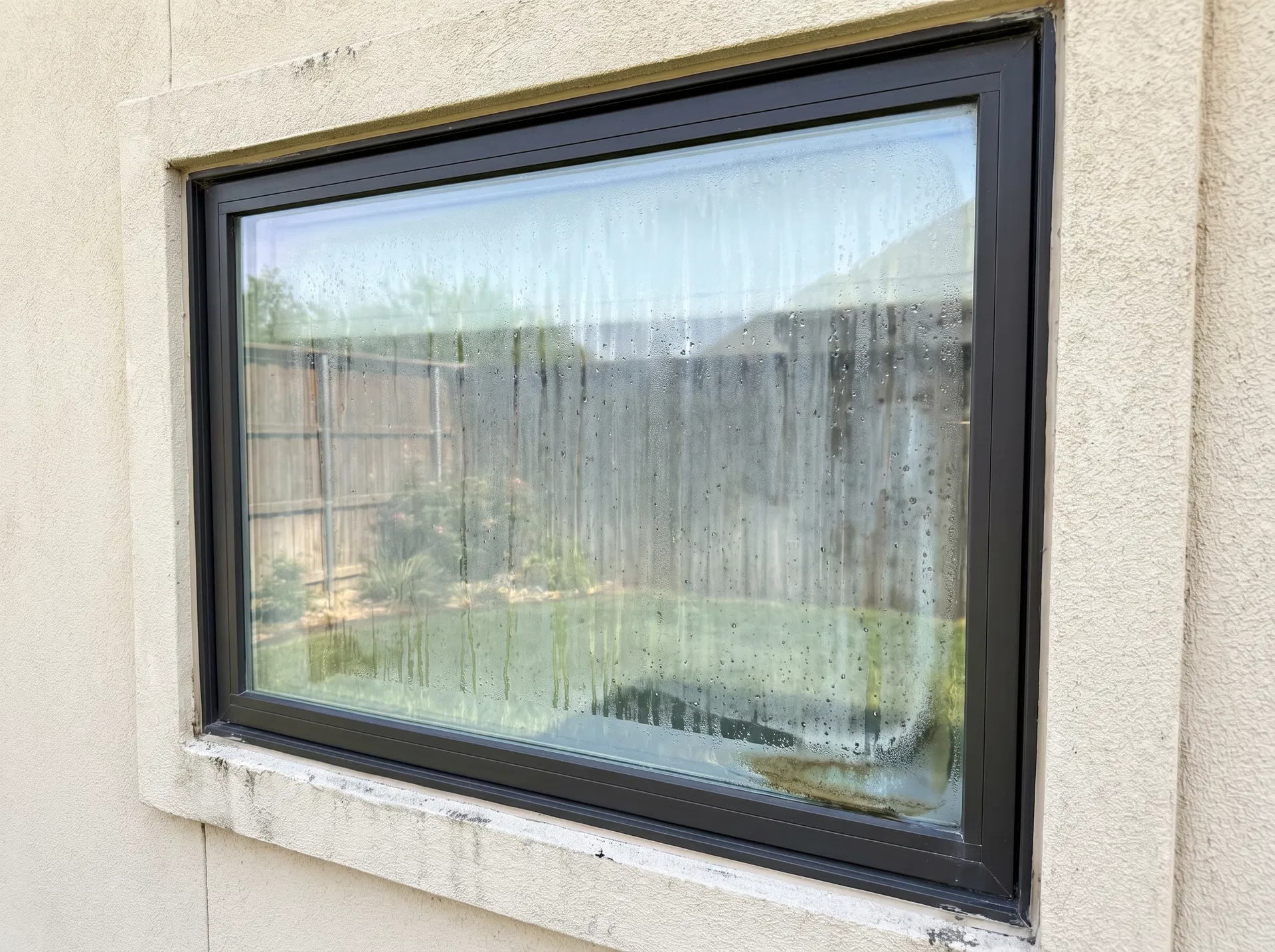
Before: A window suffering from severe seal failure and condensation buildup.
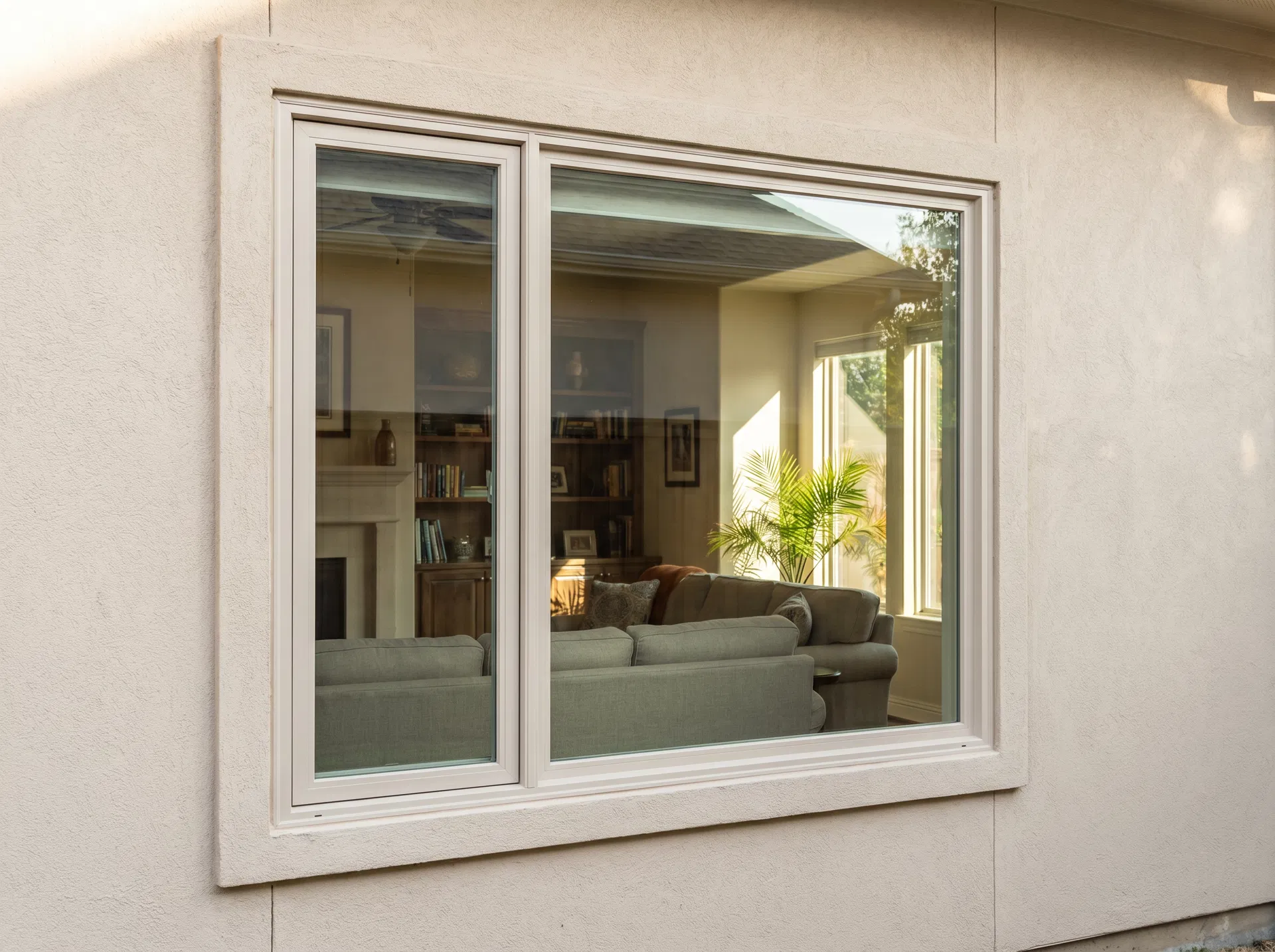
After: The same window restored to perfect clarity after professional glass replacement.
Can You Prevent Thermal Pumping?
Because thermal pumping is a natural physical reaction to temperature changes, you cannot stop it entirely. However, there are practical steps you can take to mitigate the extreme temperature swings that accelerate seal failure.
Provide Exterior Shading
The most effective way to reduce thermal stress on your windows is to keep the direct sun off the glass. Planting deciduous trees on the south and west sides of your property can provide excellent natural shade during the hottest months of the year, while still allowing sunlight through during the winter when the leaves have fallen. Installing exterior awnings, solar screens, or pergolas can also drastically reduce the amount of solar heat gain your windows experience.
Ensure Proper Indoor Ventilation
While you cannot control the weather outside, you can manage the environment inside your home. Ensure that your HVAC vents are not blowing directly onto your windows. Blasting cold air-conditioning directly onto a window that is baking in the 100-degree sun creates a massive temperature differential between the inner and outer panes, putting immense stress on the seals.
Be Mindful of Window Treatments
Heavy, dark-colored curtains or blackout blinds installed too close to the glass can trap heat between the window and the window treatment. This essentially turns the space into a small oven, superheating the inner pane of glass and accelerating thermal pumping. Ensure there is adequate airflow around your window treatments, and consider using lighter colors that reflect heat rather than absorbing it.
What to Do When the Seal Fails
Despite your best efforts, the extreme Texas climate means that most double-pane window seals will eventually fail. The lifespan of a typical window seal is anywhere from 10 to 20 years, depending on the quality of the manufacturing and the environmental conditions it faces.
When you start noticing condensation, fog, or a hazy film between your panes of glass, it is important to understand your options. Many homeowners mistakenly believe that a foggy window means they need to tear out the entire window frame and install a brand-new window. This is a costly and disruptive misconception.
In almost all cases, the frame of the window is perfectly fine. The only part that has failed is the insulated glass unit itself. You can save a significant amount of time and money by opting for targeted foggy glass repair. This process involves carefully removing the failed glass unit from your existing window frame and installing a brand-new, factory-sealed glass unit in its place. This restores the insulating properties of the window and brings back your clear view, all without the hassle of a full window replacement.
Conclusion
Thermal cycling is an unavoidable reality of living in the Dallas-Fort Worth metroplex. The wild temperature swings that define Texas weather put our homes through a rigorous daily stress test, and our double-pane windows bear the brunt of that burden. By understanding the mechanics of thermal pumping and recognizing why south and west-facing windows are particularly vulnerable, you can take proactive steps to protect your windows and extend their lifespan.
If the Texas heat has already taken its toll on your windows, leaving you with foggy, hazy, or moisture-filled glass, you do not have to live with a ruined view. Replacing the failed glass unit is a straightforward, cost-effective solution that restores both the beauty and the energy efficiency of your home.
If you are dealing with foggy windows and want to explore your glass replacement options, reach out to the experts. Call us today at (214) 263-3008 to learn more about how we can help you restore your view and improve your home's energy efficiency.
Need Foggy Glass Replacement in Your Area?
We provide expert foggy glass replacement and window repair across the Dallas-Fort Worth metroplex. Click your city below for local pricing, neighborhoods served, and FAQs:
About the Author
Alvin Paulson
Co-Owner & Lead Technician, Apex Windows & Glass
Alvin Paulson co-founded Apex Windows & Glass. The company brings 30+ years of combined leadership experience to foggy glass replacement, insulated glass unit (IGU) repair, and energy-efficient window upgrades across Dallas-Fort Worth. Alvin's philosophy is simple: replace only what's broken, save the homeowner money, and explain the written product and workmanship coverage for the selected scope.