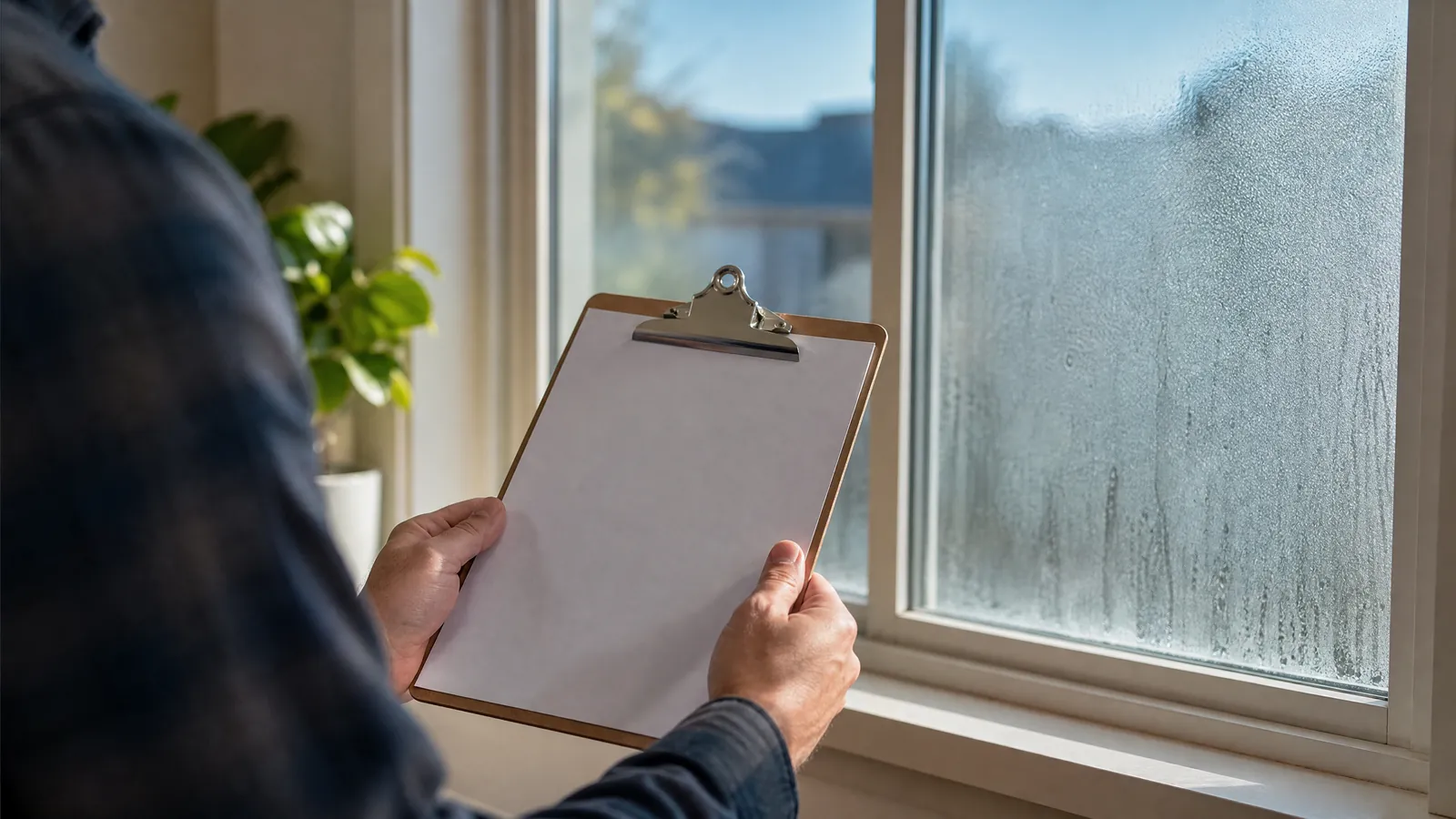
When homeowners notice condensation trapped between their window panes, the first question they ask is how to repair a foggy window. The technical answer to how to repair foggy window glass is straightforward: you do not actually repair the glass itself. Instead, the process involves replacing the failed insulated glass unit (IGU) while keeping your existing window frame intact. This targeted approach restores the thermal performance and visual clarity of the window without the disruption and expense of a full window replacement.
However, knowing the technical solution is only half the battle. The real variable in how to repair foggy window issues is who performs the work. The glass replacement industry is highly fragmented, ranging from highly skilled glaziers to general contractors who occasionally swap out a pane. The quality of the replacement unit, the precision of the measurements, and the care taken during installation will determine whether your new glass lasts for decades or fails again in a few years.
To ensure you receive a durable, high-quality repair, you must vet the professionals you invite into your home. The way to find out if a company is qualified to handle how to repair fogged windows is by asking specific, operational questions. Below are the twelve critical questions you should ask any glass replacement company before you hire them, along with what a good answer sounds like and what should raise a red flag.
12 Questions to Ask Before Hiring a Glass Replacement Company
1. Do you replace just the glass unit or only sell whole windows?
What a good answer sounds like: "We specialize in insulated glass unit replacement. We will remove the failed glass and install a new sealed unit into your existing frame. We also offer whole home window replacement if your frames are structurally failing, but we always evaluate the glass-only option first."
What should worry you: "We do not replace just the glass. Once the seal fails, the whole window is ruined and you need to buy a completely new window system."
2. Who fabricates the insulated glass unit and where?
What a good answer sounds like: "Our units are manufactured by a dedicated regional glass fabrication facility using automated sealing lines. They are built in a climate-controlled environment to ensure the primary and secondary seals cure perfectly."
What should worry you: "We build the units ourselves in the back of our shop," or "We order them from overseas and they take eight weeks to arrive."
3. What Low-E coating do you use and what is the SHGC/U-factor?
What a good answer sounds like: "We use a high-performance Low-E3 coating, such as Cardinal LoE³-366 or an equivalent, which provides an SHGC of around 0.20 and a U-factor that meets or exceeds current energy codes for our region."
What should worry you: "It is just standard energy-efficient glass," or "We use whatever the factory sends us."
4. Is the unit argon filled and how is fill verified?
What a good answer sounds like: "Yes, our units are argon-filled. The manufacturer uses a specialized gas filling process and verifies the fill rate, typically 90 percent or higher, using electronic sensors before the final seal is applied."
What should worry you: "Argon does not really matter," or "We just assume it is filled because we ordered it that way."
5. How do you determine whether my opening requires tempered glass?
What a good answer sounds like: "We follow the International Residential Code (IRC). We check the distance from the floor, the proximity to doors, and the size of the glass. If the window is within 24 inches of a door or less than 18 inches from the floor, we will specify tempered glass."
What should worry you: "You only need tempered glass if you want to pay extra for it," or "We just replace whatever was there before without checking the current code."
6. How do you measure and who is responsible if the unit comes back the wrong size?
What a good answer sounds like: "Our technicians take exact measurements down to the sixteenth of an inch, accounting for the required bite and clearance within the frame. If a unit is manufactured incorrectly or measured wrong, we take full responsibility, reorder the glass at our expense, and reschedule the installation."
What should worry you: "We just measure the visible glass and guess the rest," or "If it does not fit, we can usually force it or use extra caulk."
7. What exactly does your warranty cover, and for how long: glass, seal, argon retention, labor?
What a good answer sounds like: "We provide a 10-Year IGU manufacturer warranty and an Apex 1-Year workmanship warranty on both materials and workmanship. This covers seal failure, visual obstruction from moisture, and the labor required to replace the unit if it fails within that decade."
What should worry you: "The manufacturer offers a lifetime warranty, but you have to pay us for the labor to swap it out," or "We guarantee it for a year."
8. Are you licensed and do you carry general liability and workers compensation?
What a good answer sounds like: "Yes, we are fully licensed and insured. We carry general liability insurance to protect your property and workers' compensation to cover our technicians. We can provide a certificate of insurance upon request."
What should worry you: "We are very careful, so we do not need all that expensive insurance," or dodging the question entirely.
9. Will my window still match on grids, tint, obscure glass, and spacer color?
What a good answer sounds like: "We carefully document the specifications of your existing windows. We match the grid profile, pattern, and color, as well as any specific glass tints or obscure patterns. We also ensure the spacer bar color matches your current units."
What should worry you: "We only carry white grids," or "The new glass might look a little different, but no one will notice."
10. Do you handle second-story and hard-access windows in-house?
What a good answer sounds like: "Yes, our in-house technicians are trained and equipped to handle second-story and hard-access installations safely. We use the proper ladders, scaffolding, and safety gear to complete the job without relying on subcontractors."
What should worry you: "We will have to hire someone else to do the high windows," or "We just do the ground floor."
11. What is your written estimate policy and are there trip or measurement fees?
What a good answer sounds like: "We provide a free, detailed written estimate after an on-site inspection. There are no hidden trip charges or measurement fees. The price on the estimate is the price you pay. Standard-size glass-only IGU replacement is typically $150 to $350 per window, while large picture windows and patio door glass run higher. Full window replacement typically runs $400 to $1,200+ per window, and whole home projects commonly run from several thousand to $20,000+ depending on count and product tier. A written estimate is required for exact pricing."
What should worry you: "We charge a $100 fee just to come out and measure," or "We can just give you a rough guess over the phone."
12. What happens if a pane breaks during removal?
What a good answer sounds like: "If the old glass breaks during removal, our technicians are trained to contain the breakage. We use protective drop cloths, wear safety gear, and thoroughly vacuum the area, including the window track and the surrounding floor, to ensure no shards are left behind."
What should worry you: "That rarely happens, but if it does, we just sweep it up as best we can."
Evaluating the Answers: Red Flags vs. Green Lights
When you ask these questions, pay attention not just to the technical details, but to the confidence and transparency of the answers. Here is a quick reference guide to help you evaluate the responses.
| Topic | Red-Flag Answer | Green-Light Answer |
|---|---|---|
| Scope of Work | Pushes full window replacement for a simple seal failure. | Evaluates the frame and recommends IGU replacement if appropriate. |
| Warranty | Vague terms, covers materials only, or lasts less than 5 years. | Clear, written 10-Year IGU manufacturer warranty + Apex 1-Year workmanship warranty covering both materials and labor. |
| Measurements | Guesses dimensions or relies solely on homeowner measurements. | Takes precise, professional measurements down to the sixteenth of an inch. |
| Insurance | Cannot produce a certificate of insurance or claims it is unnecessary. | Readily provides proof of general liability and workers' compensation. |
| Pricing | Refuses to provide a written estimate or charges hidden measurement fees. | Provides a free, detailed written estimate after an on-site inspection. |
Local Service and Professional Standards
Choosing the right company to handle your window glass replacement is essential for the long-term comfort and efficiency of your home. At Apex Windows & Glass, we pride ourselves on providing transparent, expert service across the Dallas-Fort Worth metroplex. Whether you need a single foggy window repaired or are considering a larger project, our experienced technicians are ready to help. We proudly serve homeowners in Dallas, Fort Worth, Plano, McKinney, and Arlington, delivering high-quality insulated glass units with precision installation.
Schedule Your Window Assessment Today
Do not let foggy windows obscure your view or compromise your home's energy efficiency. If you are ready to work with a team that can answer all of these questions with confidence and expertise, contact Apex Windows & Glass. We specialize in targeted insulated glass unit replacement, saving you money while restoring your windows to their original clarity.
Call us today at (214) 263-3008 to schedule your free on-site assessment and written estimate, or visit our foggy glass repair page to learn more about our process and how we can help you achieve clear, efficient windows.
Frequently Asked Questions About Foggy Window Repair
Can a foggy window be repaired without replacing the glass?
No, a foggy window cannot be permanently repaired without replacing the glass. The fog is caused by moisture entering the window after the factory seal has failed. The only effective, long-term solution is to replace the entire insulated glass unit.
How long does it take to replace an insulated glass unit?
The actual installation process typically takes 30 to 60 minutes per window. However, because each unit must be custom-manufactured to fit your specific frame, there is usually a lead time of one to two weeks from the day the measurements are taken until the glass is ready for installation.
Will replacing the glass fix drafts around the window frame?
Replacing the insulated glass unit will restore the thermal performance of the glass itself, but it will not fix drafts that are coming from around the window frame. If the frame is warped, poorly insulated, or improperly caulked, those issues must be addressed separately, or a full window replacement may be necessary.
Is it worth replacing the glass in older windows?
If the window frames are still structurally sound and operate correctly, replacing the glass is highly cost-effective. It restores the window's efficiency and appearance for a fraction of the cost of a full replacement. However, if the frames are rotting or severely degraded, full replacement is the better investment.
Does homeowners insurance cover foggy window repair?
Homeowners insurance typically does not cover foggy windows caused by normal wear and tear or age-related seal failure. Insurance usually only covers glass replacement if the damage was caused by a covered peril, such as a severe storm, hail, or a break-in.
Can I replace an insulated glass unit myself?
While it is technically possible for a highly skilled DIYer, it is not recommended. Precise measurement, handling heavy and fragile glass, and ensuring a proper, watertight installation require specialized tools and experience. Mistakes can lead to leaks, broken glass, and voided warranties.
Need Foggy Glass Replacement in Your Area?
We provide expert foggy glass replacement and window repair across the Dallas-Fort Worth metroplex. Click your city below for local pricing, neighborhoods served, and FAQs:
About the Author
Alvin Paulson
Co-Owner & Lead Technician, Apex Windows & Glass
Alvin Paulson co-founded Apex Windows & Glass and brings over 30 years of hands-on expertise in foggy glass replacement, insulated glass unit (IGU) repair, and energy-efficient window upgrades. Born and raised in North Texas, Alvin has personally assessed and repaired thousands of windows across the Dallas-Fort Worth metroplex — from historic McKinney homes to new-build subdivisions in Frisco and Prosper. He is a licensed glazier and holds certifications in Low-E glass installation and argon gas window systems. Alvin's philosophy is simple: replace only what's broken, save the homeowner money, and back every job with a 10-Year IGU manufacturer warranty + Apex 1-Year workmanship warranty.