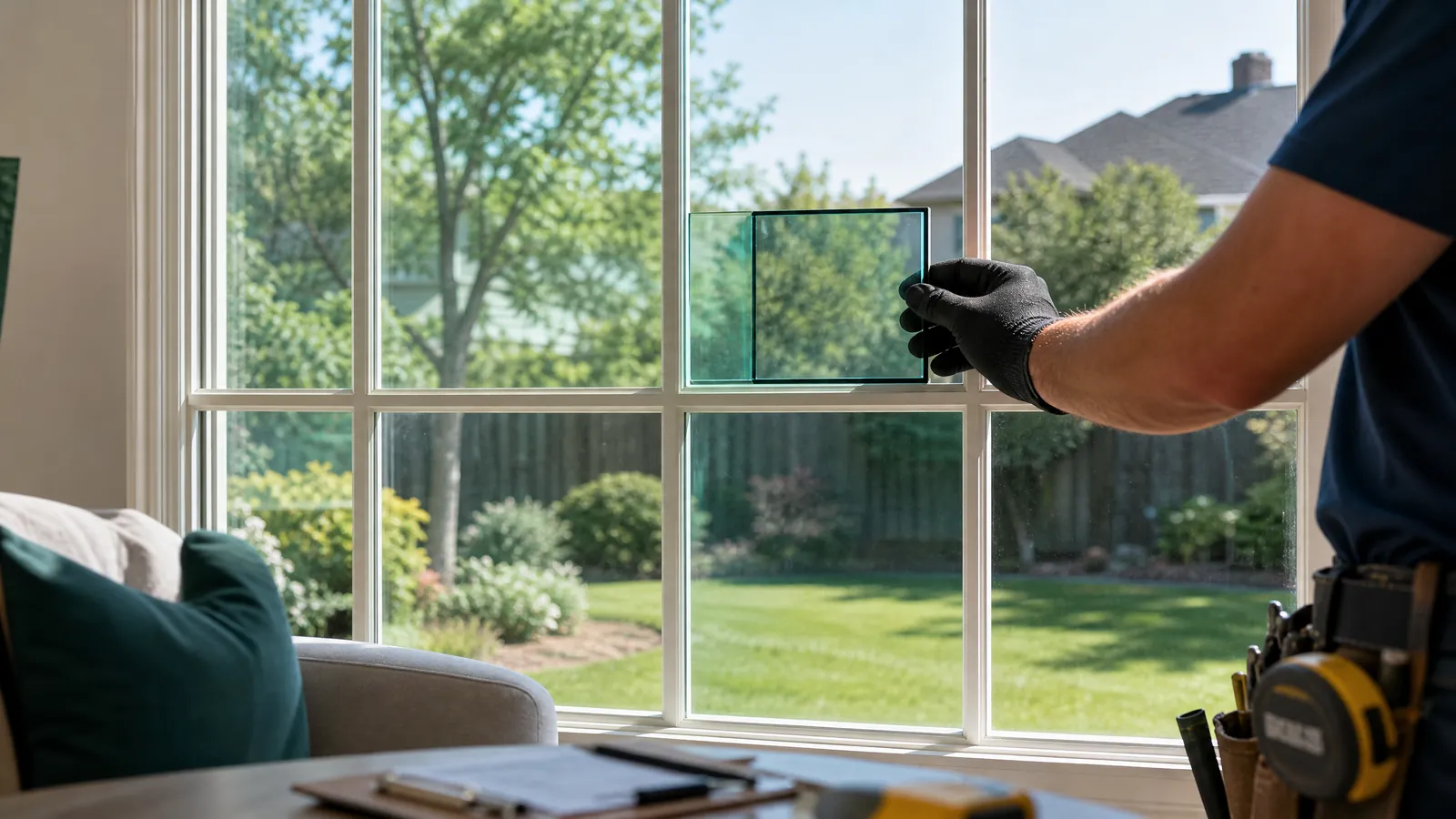
When a single window pane becomes foggy, cracked, or shattered, many homeowners in the Dallas–Fort Worth area hesitate to schedule a repair. The most common concern is whether the new glass will stick out like a sore thumb against the rest of the house. You might worry that the replacement glass will lack the subtle tint of your original windows, that the decorative grids will not align properly, or that a modern energy-efficient coating will create a mismatched, greenish reflection when viewed from the street.
The good news is that you do not need to replace every window in your home just to fix one failing seal. By replacing only the insulated glass unit (IGU) while keeping your existing frame intact with window replacement in Dallas TX or targeted repair, you can restore clarity and energy efficiency while saving up to 70% compared to a full window replacement. In this guide, we will explore how professional window repair ensures that your new glass perfectly matches your home's existing tint, Low-E color, and grid patterns.
The Challenge of Matching a Single Window Pane
Windows are complex systems made of multiple components, and the glass itself is rarely just plain, clear material. Most modern homes feature double-pane insulated glass units that include specific coatings, gas fills, and sometimes decorative elements trapped between the panes. When one of these units fails and requires replacement, simply cutting a piece of clear glass and putting it into the frame will not yield a seamless look.
Matching a single window pane requires a detailed understanding of the original window's specifications. A professional must identify the overall thickness of the insulated glass unit, the type and thickness of the individual glass panes, the specific spacer system used, and any specialized coatings applied to the glass surfaces. If any of these elements are mismatched, the new window will reflect light differently, transmit a different amount of visible daylight, and potentially clash with the aesthetic of the surrounding windows.
Why Low-E Glass Has a Color or Tint
One of the most common reasons a replacement window might look different from the original is the presence of a Low-E (low-emissivity) coating. Low-E glass is highly recommended for Texas homes because it reflects solar heat during our scorching summers while allowing visible light to pass through. However, this microscopic metallic coating is not completely invisible.
Depending on the manufacturer and the specific type of coating used, Low-E glass often exhibits a subtle hue. Some coatings have a faint greenish tint, while others might lean slightly blue or gray. This color becomes especially noticeable when viewed from the exterior of the home at certain angles or under specific lighting conditions. If you replace a broken pane that had a Low-E coating with standard clear glass, the new window will look significantly brighter and lack the subtle reflection of its neighbors. Conversely, if you upgrade an older clear window with a modern Low-E pane, the new glass will appear slightly darker and more reflective.
Matching Window Grids and Muntins
Many homes in the DFW area feature decorative grids, also known as muntins or grilles, that divide the window into smaller visual panes. In modern double-pane windows, these grids are often installed between the two panes of glass. This design makes the windows much easier to clean while preserving a traditional, divided-light aesthetic.
When replacing a foggy or broken insulated glass unit, matching the internal grids is a critical step in maintaining the home's architectural consistency. Grids come in various materials, profiles, and colors. Some are flat, while others have a contoured or sculpted profile. They can be white, tan, bronze, or even feature a faux woodgrain finish. A professional glass replacement service will carefully measure the dimensions, profile, and exact layout of your existing grids to ensure the new unit is manufactured with a perfectly matching grid pattern. If the exact grid profile is no longer manufactured, professionals can often salvage the existing grids from your old window and install them inside the new insulated glass unit during the fabrication process.
The Risk of Mixing Clear and Energy-Efficient Glass
Homeowners sometimes consider upgrading to energy-efficient glass one window at a time as their older seals fail. While this approach can spread out the cost of home improvement, it carries a significant aesthetic risk. Mixing clear glass and Low-E glass on the same side of your house will almost certainly result in a mismatched appearance.
From the inside, the room may have uneven lighting, as the clear glass will allow more visible light to enter than the Low-E glass. From the outside, the difference is even more pronounced. The clear windows will look like dark, transparent holes in the facade, while the Low-E windows will reflect the sky and surrounding landscape. If you decide to upgrade to energy-efficient glass, it is highly recommended to replace all the window panes on a given side of the house simultaneously to ensure a uniform appearance from the street.
How Professionals Ensure a Seamless Match
Achieving a perfect match requires more than just measuring the width and height of the glass. When you contact a professional service like Apex Windows TX for foggy window repair in Dallas TX, the process begins with a comprehensive on-site assessment. Our technicians do not just measure the physical dimensions of the failing insulated glass unit; they also analyze the glass itself.
We use specialized tools to determine the exact thickness of the glass panes and the spacer system. We also identify the presence and specific location of any Low-E coatings. By determining whether the coating is on the second or third surface of the insulated glass unit, we can ensure the replacement glass reflects light exactly like the original. Furthermore, we take detailed notes and photographs of any internal grids to guarantee the replacement unit features the exact same profile, color, and pattern. By focusing exclusively on replacing the insulated glass unit while retaining your existing window frame, provided it is in good condition, we ensure a seamless integration that preserves your home's original look.
When to Consider Replacing Multiple Panes
While matching a single pane is entirely possible, there are situations where it makes sense to replace multiple insulated glass units at once. If you live in an older home with first-generation double-pane windows, the original glass may have faded, scratched, or deteriorated over time. In these cases, even a perfectly manufactured replacement pane might look slightly different simply because it is brand new.
Additionally, if several windows on the same side of your house are showing early signs of seal failure—which you can check using our guide on how to tell if your window seal is broken—it is often more cost-effective to replace them all in one service call. Replacing multiple panes simultaneously guarantees a perfectly uniform appearance and allows you to upgrade that entire elevation to modern, energy-efficient Low-E glass without creating a mismatched exterior.
Frequently Asked Questions
Will my new window glass look exactly like the old ones?
Yes, when handled by a professional, your new window glass will closely match your existing windows. We carefully measure the glass thickness, identify any Low-E coatings or tints, and replicate the spacer color to ensure the replacement insulated glass unit blends seamlessly with the rest of your home.
Can you match the grids between the glass?
Absolutely. We can match the color, profile (flat or contoured), and exact layout of the grids between your glass panes. In some cases, if the original grid style is discontinued, we can carefully remove the grids from your failing window and reuse them inside the new custom-built glass unit.
Why does my new window look slightly greener?
If your new window looks slightly greener than your older clear windows, it is likely because the new glass features a Low-E coating. These energy-efficient coatings contain microscopic layers of metal that reflect heat, which can impart a faint green or blue hue when viewed from the outside.
Is it cheaper to match the glass or replace the whole window?
It is significantly cheaper to match and replace just the glass. By replacing only the insulated glass unit and keeping your existing window frame, you can save up to 70% compared to the cost of a full window replacement. This approach fixes the problem efficiently without requiring invasive construction work on your home's exterior.
If you have a foggy, broken, or failing window and are worried about mismatched glass, do not hesitate to reach out for professional help. Apex Windows TX specializes in precision glass-only replacement for Dallas–Fort Worth homeowners, ensuring a perfect aesthetic match and restoring your home's energy efficiency. We back our work with a 10-Year IGU manufacturer warranty + Apex 1-Year workmanship warranty, subject to the written terms and conditions, so you can enjoy clear views with complete peace of mind. Call us today at (214) 263-3008 to schedule your assessment and discover how easy it is to fix your windows without replacing the frames.
Need Foggy Glass Replacement in Your Area?
We provide expert foggy glass replacement and window repair across the Dallas-Fort Worth metroplex. Click your city below for local pricing, neighborhoods served, and FAQs:
About the Author
Alvin Paulson
Co-Owner & Lead Technician, Apex Windows & Glass
Alvin Paulson co-founded Apex Windows & Glass and brings over 30 years of hands-on expertise in foggy glass replacement, insulated glass unit (IGU) repair, and energy-efficient window upgrades. Born and raised in North Texas, Alvin has personally assessed and repaired thousands of windows across the Dallas-Fort Worth metroplex — from historic McKinney homes to new-build subdivisions in Frisco and Prosper. He is a licensed glazier and holds certifications in Low-E glass installation and argon gas window systems. Alvin's philosophy is simple: replace only what's broken, save the homeowner money, and back every job with a 10-Year IGU manufacturer warranty + Apex 1-Year workmanship warranty.