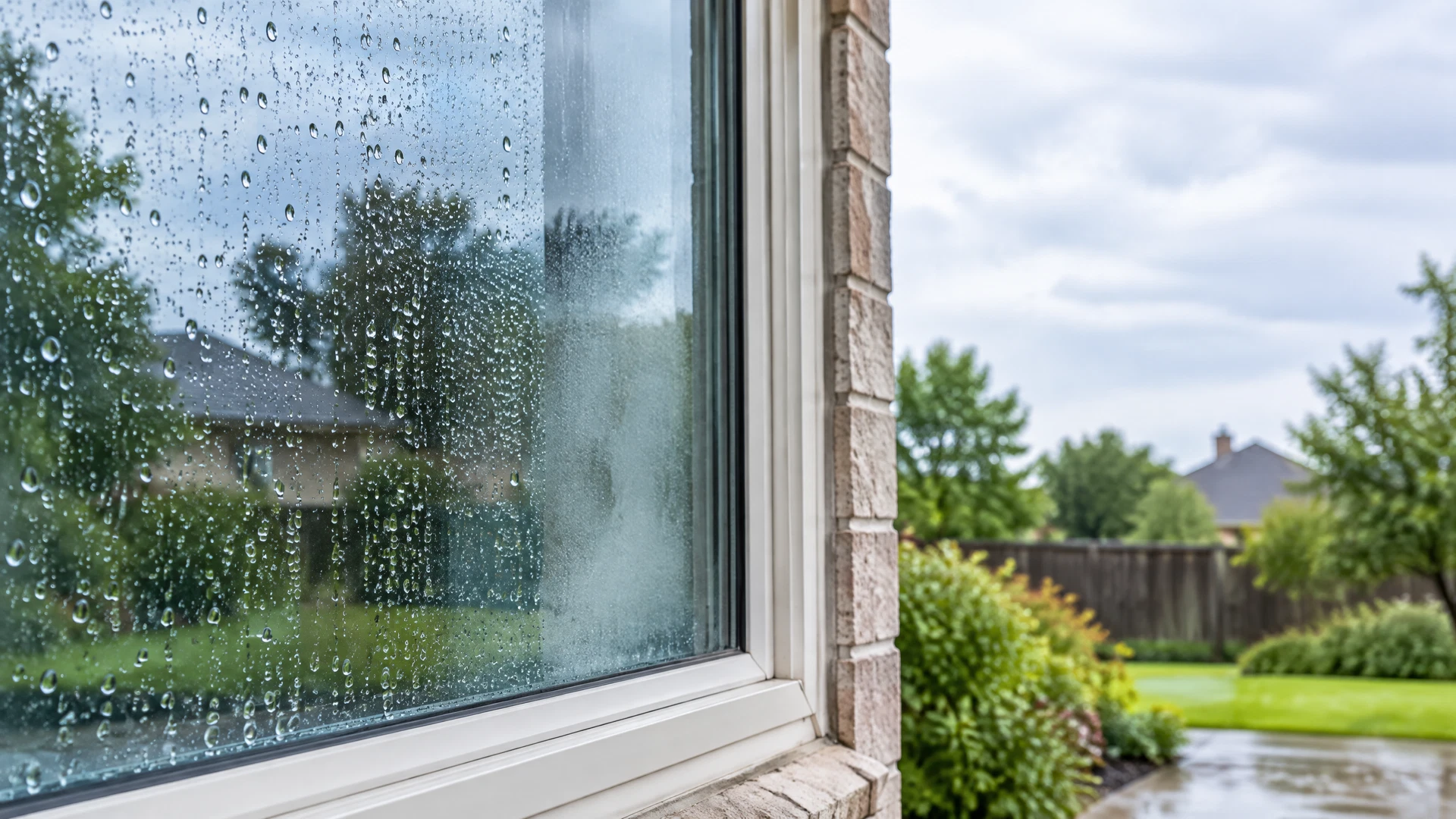
After a significant storm passes through Richardson, homeowners often check for roof damage, dented gutters, and broken windows. While a shattered pane is easy to spot, other window issues can be more subtle. You might notice a persistent haze or moisture between the glass layers that you did not see before the storm. This leads to a critical question: is this new symptom a direct result of hail impact, or is it a pre-existing failed seal that has finally become visible? For homeowners seeking Richardson window services, understanding this distinction is the first step toward an effective repair.
Identifying Immediate Hail Impact on Window Glass
Hail damage to windows is often dramatic, but it can also be surgical. In North Texas, where hailstones can range from marble to baseball size, the impact on a vertical glass surface is different than on a sloped roof. When a hailstone strikes a window, the energy is transferred into the glass, which may or may not result in a full breach.
Cracked or Shattered Panes
The most obvious sign of storm damage is a crack originating from a specific point of impact. These cracks often radiate outward in a spiderweb pattern or appear as a single, long fracture line. In some cases, the outer pane of a double-pane window may shatter completely while the inner pane remains intact. Even if the glass is still in one piece, a bruise or a small circular fracture at the point of impact indicates that the structural integrity of the pane has been compromised.
Chipped Glass and Starburst Patterns
Not all hail damage results in a full crack. Sometimes, the impact creates a small pit or chip in the surface of the glass, referred to as starbursts or bullseyes. While they might seem like minor cosmetic issues, these chips are weak points that can expand into full cracks during temperature swings. In Richardson, where heat can be intense, a small chip from a morning storm can quickly become a major fracture as the glass expands. It is important to understand what to do about hail-damaged window glass before the damage worsens.
Recognizing the Signs of a Failed Window Seal
A failed seal is a different phenomenon. Modern windows use insulated glass units, which consist of two or more panes of glass separated by a spacer and sealed together. When the seal around the edges of this unit breaks down, the gas escapes and moist air from the outside enters the gap.
The Persistent Haze of Inter-Pane Condensation
The hallmark of a failed seal is condensation that you cannot wipe away. If you see fog, mist, or water droplets inside the window, meaning between the two layers of glass, the seal has failed. It might appear in the cool morning hours and seem to disappear as the sun warms the window, only to return the next day.
Long-Term Seal Degradation Symptoms
If a seal has been failed for a long time, the moisture inside the unit can leave behind permanent marks. As the water evaporates and reforms, it carries minerals that eventually etch the glass or leave white, powdery streaks known as rivering. These marks are a sign of long-term seal failure and cannot be cleaned.
Why Post-Storm Timing Can Be Deceptive
One reason homeowners often confuse hail damage with seal failure is the timing. A heavy storm involves more than just falling hail; it brings high winds, rapid temperature drops, and significant pressure changes. If a window seal was already nearing the end of its functional life, the vibration and pressure fluctuations of a severe storm can be the final straw that causes the seal to give way.
Diagnostic Checklist: Hail vs. Seal Failure
| Symptom | Likely Hail Damage | Likely Seal Failure |
|---|---|---|
| Visible Cracks | Yes, radiating from impact | No, glass is usually intact |
| Surface Pits/Chips | Yes, circular bullseye marks | No, surface is smooth |
| Location of Fog | None, unless glass is broken | Between the two panes of glass |
| Wipeable Moisture | No, it is a physical break | No, it is inside the unit |
| Shattered Glass | Possible on outer pane | Highly unlikely |
| Long-term Streaks | No | Yes, white mineral deposits |
When to Consider Glass-Only Replacement
Once you have identified the issue, the next step is determining the scope of the repair. Many homeowners assume that a broken pane or a foggy window requires the installation of an entirely new window frame and sash. However, this is not always the case. In many instances, glass-only insulated glass unit replacement can be considered only when the existing frame, sash, hardware, glazing system, and opening are serviceable; a broader window assessment can be appropriate when they are not. If your frames are in good condition, meaning they are not warped, rotted, or difficult to operate, replacing just the glass unit is a targeted way to restore the window's clarity.
Taking the Next Steps After a Richardson Storm
If you suspect your windows have been affected by a recent storm, the most suitable approach is a systematic inspection. Start by cleaning the exterior of the glass with a gentle soap and water solution. This removes dirt and debris that might be masking small chips or cracks. Once the glass is clean, view it from different angles in the sunlight to check for the starburst patterns typical of hail impact. If the glass is clean and smooth but still looks foggy, look closely at where the haze is located. If it is clearly between the panes, you are looking at a seal failure.
How can I tell if the fog in my window is from a storm?
Fogging inside a window is almost always a sign of a failed seal, not direct storm damage. While a storm can provide the moisture that makes a failed seal visible, the underlying cause is usually the age of the window or the breakdown of the sealant over time.
Does hail always cause immediate glass breakage?
No, hail does not always break glass immediately. Sometimes it creates small, nearly invisible chips or bruises in the glass. These small points of damage can eventually grow into large cracks due to the natural expansion and contraction of the glass during Richardson's temperature changes.
Can a storm cause a window seal to fail without breaking the glass?
It is possible, though less common than direct impact. The extreme wind pressure and vibrations during a severe storm can put stress on an older window seal. If the seal was already weak, the storm might cause it to fail completely.
Is glass-only replacement an option for hail damage?
Yes, if the window frame and sash are still in good structural condition, you can often replace just the affected insulated glass unit. This allows you to fix the hail damage or the failed seal without the cost and complexity of a full window replacement.
Need Foggy Glass Replacement in Your Area?
We provide expert foggy glass replacement and window repair across the Dallas-Fort Worth metroplex. Click your city below for local pricing, neighborhoods served, and FAQs:
About the Author
Alvin Paulson
Co-Owner & Lead Technician, Apex Windows & Glass
Alvin Paulson co-founded Apex Windows & Glass and brings over 30 years of hands-on expertise in foggy glass replacement, insulated glass unit (IGU) repair, and energy-efficient window upgrades. Born and raised in North Texas, Alvin has personally assessed and repaired thousands of windows across the Dallas-Fort Worth metroplex — from historic McKinney homes to new-build subdivisions in Frisco and Prosper. He is a licensed glazier and holds certifications in Low-E glass installation and argon gas window systems. Alvin's philosophy is simple: replace only what's broken, save the homeowner money, and back every job with a 10-year warranty.