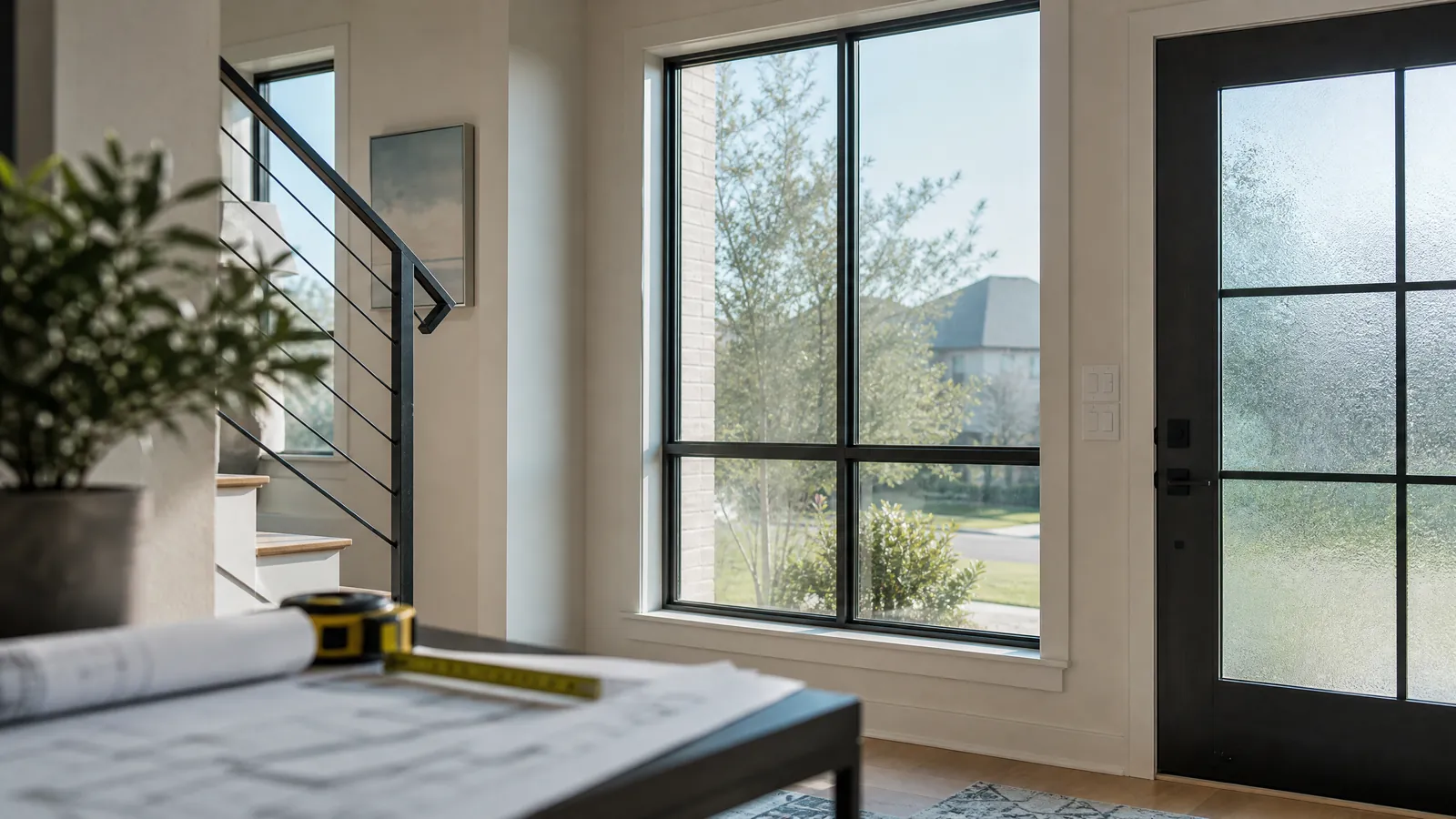
If you are updating your Dallas–Fort Worth home or replacing older windows, you might have heard that certain locations require tempered safety glass. Understanding when and where this specialized glass is necessary is crucial for keeping your family safe and ensuring your home meets current building codes. In many situations, standard window glass is perfectly fine. However, in high-traffic or high-risk areas, installing the correct safety glazing is not just a good idea—it is a legal requirement.
This guide breaks down the most common residential areas that demand tempered glass. By knowing the rules for windows near doors, stairs, bathtubs, and floors, you can avoid failed inspections and protect your household from dangerous glass breakage. If you discover that your existing windows are not up to code, replacing the insulated glass unit (IGU) rather than the entire frame is often a smart, cost-effective solution.
What is Tempered Safety Glass and Why Do You Need It?
Tempered glass is a type of safety glass that has been treated with heat or chemicals to increase its strength compared to normal, annealed glass. When standard glass breaks, it shatters into large, jagged shards that can cause severe injuries. In contrast, tempered glass is designed to crumble into small, granular chunks that are much less likely to cause deep cuts.
Because of this unique safety feature, building codes mandate tempered glass in locations where people are most likely to slip, fall, or accidentally walk into a window. For homeowners planning a window replacement in Dallas, TX, ensuring that all new glass meets these safety standards is a critical step in the renovation process. Always verify specific code requirements with your local municipality, as rules can vary slightly between cities.
Windows Near Doors: The 24-Inch Rule
One of the most common locations requiring safety glass is near entryways and interior doors. The logic is simple: people frequently move quickly through doorways, increasing the chance of someone losing their balance or mistaking a clear glass panel for an open door.
In general, any window that is within a 24-inch arc of either vertical edge of a door in a closed position must be made of tempered glass if its bottom edge is less than 60 inches above the floor. This rule applies to sidelights next to your front door, glass panels adjacent to patio doors, and even windows near interior bedroom doors. If you are hiring the best window company in Dallas, TX, they will automatically assess these locations to ensure your new glass is compliant.
Bathrooms and Wet Areas: Protecting Against Slips
Bathrooms present a unique hazard because wet floors and soapy surfaces significantly increase the risk of slipping. If someone falls in a shower or tub, the last thing they should hit is standard window glass.
Building codes generally require tempered glass for any window located within a shower enclosure, bathtub area, or indoor pool area if the bottom edge of the glass is less than 60 inches above any standing or walking surface. This includes windows situated directly above a garden tub or inside a walk-in shower. When upgrading bathroom windows, safety glass is non-negotiable for protecting your family from severe accidents.
Windows Near Floors and Walking Surfaces
Large windows that extend close to the floor are beautiful, but they can be dangerous, especially in homes with active children or pets. To prevent someone from accidentally falling or running through a low window, specific size and placement rules apply.
Tempered glass is typically required when a window meets all of the following conditions simultaneously: The exposed area of an individual pane is greater than 9 square feet. The bottom edge of the glass is less than 18 inches above the floor. The top edge of the glass is greater than 36 inches above the floor. There is a walking surface within 36 inches horizontally of the glass.
If your home has large, floor-to-ceiling windows that meet these criteria, they must be fitted with safety glass.
Stairways, Ramps, and Landings
Staircases are another high-risk area where falls are more common. If someone trips on a stair and falls against a nearby window, the impact force can be substantial.
Windows adjacent to stairways, landings, and ramps usually require tempered glass if the exposed surface of the glass is less than 60 inches above the nose of the tread or the walking surface. Additionally, glass used in stair railings or balustrades must always be safety glazing, regardless of its height. Whether you are remodeling a split-level home or updating a two-story entryway, your window contractor must follow these strict safety guidelines.
Does My Older DFW Home Need to Be Updated?
If you live in an older Dallas–Fort Worth home built before modern safety codes were established, your existing windows might not have tempered glass in these hazardous locations. In most cases, you are not legally required to upgrade your glass immediately unless you are doing a renovation, adding an extension, or replacing the windows.
However, for peace of mind and family safety, many homeowners choose to proactively update high-risk windows. The good news is that you do not always need a full window replacement. If your window frames are still in good condition, you can opt for foggy window repair in Dallas, TX or a glass-only replacement. Apex Windows replaces only the insulated glass unit when the frame is serviceable, which offers up to 70% savings compared with full window replacement.
| Location | Tempered Glass Requirement | Primary Hazard |
|---|---|---|
| Near Doors | Within 24 inches of the door's edge (under 60 inches high) | Walking into glass, accidental impact |
| Bathrooms | Within showers/tubs (under 60 inches high) | Slipping on wet surfaces |
| Near Floors | Large panes (over 9 sq ft) with bottom edge under 18 inches | Falling or running into low glass |
| Stairways | Adjacent to stairs/landings (under 60 inches high) | Tripping and falling against glass |
FAQs
What happens if regular glass breaks instead of tempered glass?
If regular, annealed glass breaks, it shatters into large, sharp, jagged pieces that can cause severe lacerations and deep injuries. Tempered glass is designed to crumble into small, granular chunks that are much less likely to cause serious harm, making it essential for high-risk areas.
Can I put safety film over regular glass to meet code?
In most jurisdictions, applying an aftermarket safety film to standard annealed glass does not satisfy building code requirements for hazardous locations. While film can hold broken pieces together, it does not change the breaking characteristics of the glass itself. Always verify with your local building inspector, but replacing the glass with true tempered glazing is the standard compliant solution.
How can I tell if my current windows are tempered?
Tempered glass is required by law to have a permanent mark or "bug" etched into one of the corners. This small label usually includes the manufacturer's name and the safety standard it meets (such as CPSC 16 CFR 1201 or ANSI Z97.1). If you cannot find this etching, the glass is likely standard annealed glass.
Does tempered glass cost more than standard glass?
Yes, tempered glass is more expensive than standard glass due to the specialized heating and cooling processes required to manufacture it. However, because Apex Windows replaces only the insulated glass unit and leaves your serviceable frames intact, upgrading to tempered safety glass is much more affordable than a complete window replacement.
Secure Your Home with Expert Glass Replacement
Ensuring your home meets safety standards does not have to be complicated or excessively expensive. If you have older windows in hazardous locations or need to replace broken glass, our team is here to help. Apex Windows replaces only the insulated glass unit when the frame is serviceable, saving you up to 70% compared to a full window replacement. We proudly serve the entire DFW area and back our work with a 10-Year IGU manufacturer warranty + Apex 1-Year workmanship warranty. Contact us today at (214) 263-3008 to schedule an assessment and keep your home safe and compliant.
Need Foggy Glass Replacement in Your Area?
We provide expert foggy glass replacement and window repair across the Dallas-Fort Worth metroplex. Click your city below for local pricing, neighborhoods served, and FAQs:
About the Author
Alvin Paulson
Co-Owner & Lead Technician, Apex Windows & Glass
Alvin Paulson co-founded Apex Windows & Glass and brings over 30 years of hands-on expertise in foggy glass replacement, insulated glass unit (IGU) repair, and energy-efficient window upgrades. Born and raised in North Texas, Alvin has personally assessed and repaired thousands of windows across the Dallas-Fort Worth metroplex — from historic McKinney homes to new-build subdivisions in Frisco and Prosper. He is a licensed glazier and holds certifications in Low-E glass installation and argon gas window systems. Alvin's philosophy is simple: replace only what's broken, save the homeowner money, and back every job with a 10-Year IGU manufacturer warranty + Apex 1-Year workmanship warranty.