# Why South-Facing Windows Fail First in Texas Homes
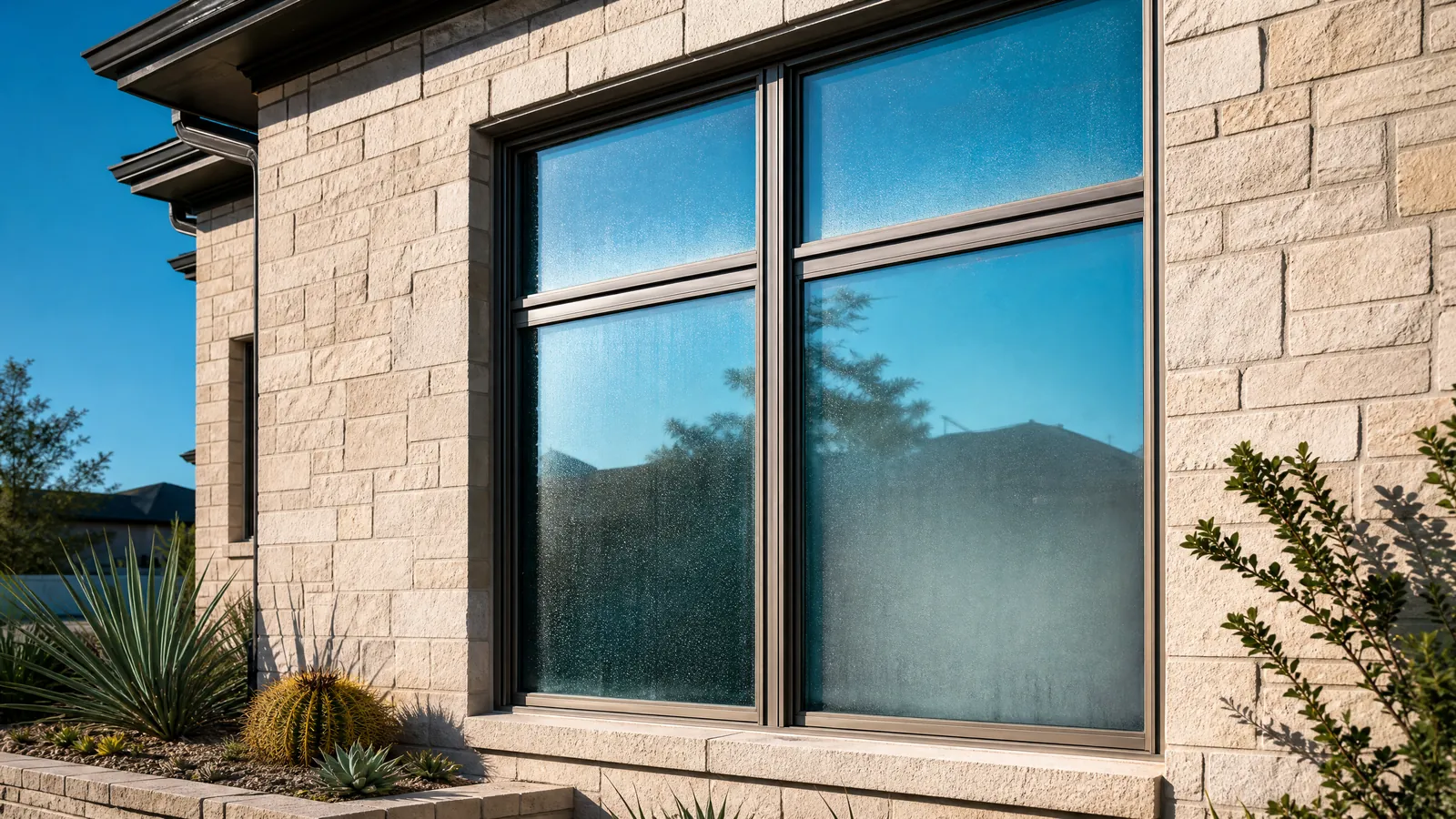
If you have several foggy double-pane windows in the same house, they usually do not fail at random. In North Texas, window orientation often tells the story. Homeowners frequently notice that the glass on one elevation of the home looks hazy years before the rest, and the first trouble spots are commonly the south and west sides.
That pattern is not just bad luck. It comes from basic building science. South-facing and west-facing windows in Texas take far more heat, sunlight, and ultraviolet exposure than windows facing north. Over time, that extra exposure puts repeated stress on insulated glass seals, which is why those windows often fog up first.
Understanding this helps you make smarter maintenance decisions. Instead of treating every foggy unit the same, you can inspect the highest-stress sides of the house first, plan repairs more strategically, and reduce the chance of losing more windows during the hottest part of the year.
Why Window Orientation Matters More in Texas
Texas homes deal with long cooling seasons, high summer temperatures, and intense sun angles. Those conditions make insulated glass work harder than many homeowners realize.
Thermal Pumping: The Daily Stress Cycle
Most foggy residential windows are insulated glass units, sometimes called IGUs. They have two panes of glass separated by a spacer and a sealed air or gas-filled space. That seal is designed to keep moisture out and insulation in.
During the day, direct sun heats the glass and the gas between the panes. As that gas warms, it expands and increases pressure inside the unit. After sunset, temperatures fall, the gas cools, and pressure drops. That constant expansion and contraction is often called thermal pumping.
One cycle will not ruin a window. Thousands of cycles over many Texas summers can. The sealant flexes a little every day, and eventually it can dry out, lose elasticity, or separate from the glass and spacer. Once that seal is compromised, humid air can slip inside the unit. The result is the cloudy or wet appearance homeowners see between the panes.
Why South and West Sides Take the Hardest Hit
South-facing windows receive strong sun exposure for much of the day. West-facing windows often face the most punishing conditions of all because they absorb late-afternoon sunlight when outdoor temperatures are already near their peak. In practical terms, those windows may experience much greater surface temperatures than shaded windows on the north side of the home.
That extra heat means more expansion, more contraction, and more wear on the seal assembly. In many homes, south- and west-facing units can experience two to three times more thermal stress than windows with limited direct sun. That is why those elevations so often become the first place where fogging appears.
The Role of UV Damage
Heat is only part of the problem. Ultraviolet radiation also affects the long-term durability of insulated glass.
UV Breaks Down Seal Materials Over Time
Window seals are made from durable materials, but they are not immune to years of direct solar exposure. UV light gradually degrades many polymers, making them harder, less flexible, and more brittle. A brittle seal is far less capable of absorbing the daily expansion and contraction that comes with hot weather.
In other words, sunlight attacks the window in two ways at once. Heat increases pressure swings inside the unit, and UV light weakens the very materials meant to contain those swings. That combination explains why the same model of window can age unevenly depending on which direction it faces.
Common Degradation Patterns Homeowners Notice
Homeowners often see a progression that follows the sun:
- South-facing windows may show early haze or a faint milky band near the spacer.
- West-facing windows may develop more obvious fogging after long summers of afternoon exposure.
- East-facing windows usually age more slowly because morning sun is less intense.
- North-facing windows often last the longest if they stay mostly shaded.
That pattern will vary depending on roof overhangs, trees, screens, and neighboring structures, but orientation remains one of the best predictors of which insulated glass units will fail first.
Before-and-After Example
The difference between failed and restored insulated glass is easy to see.
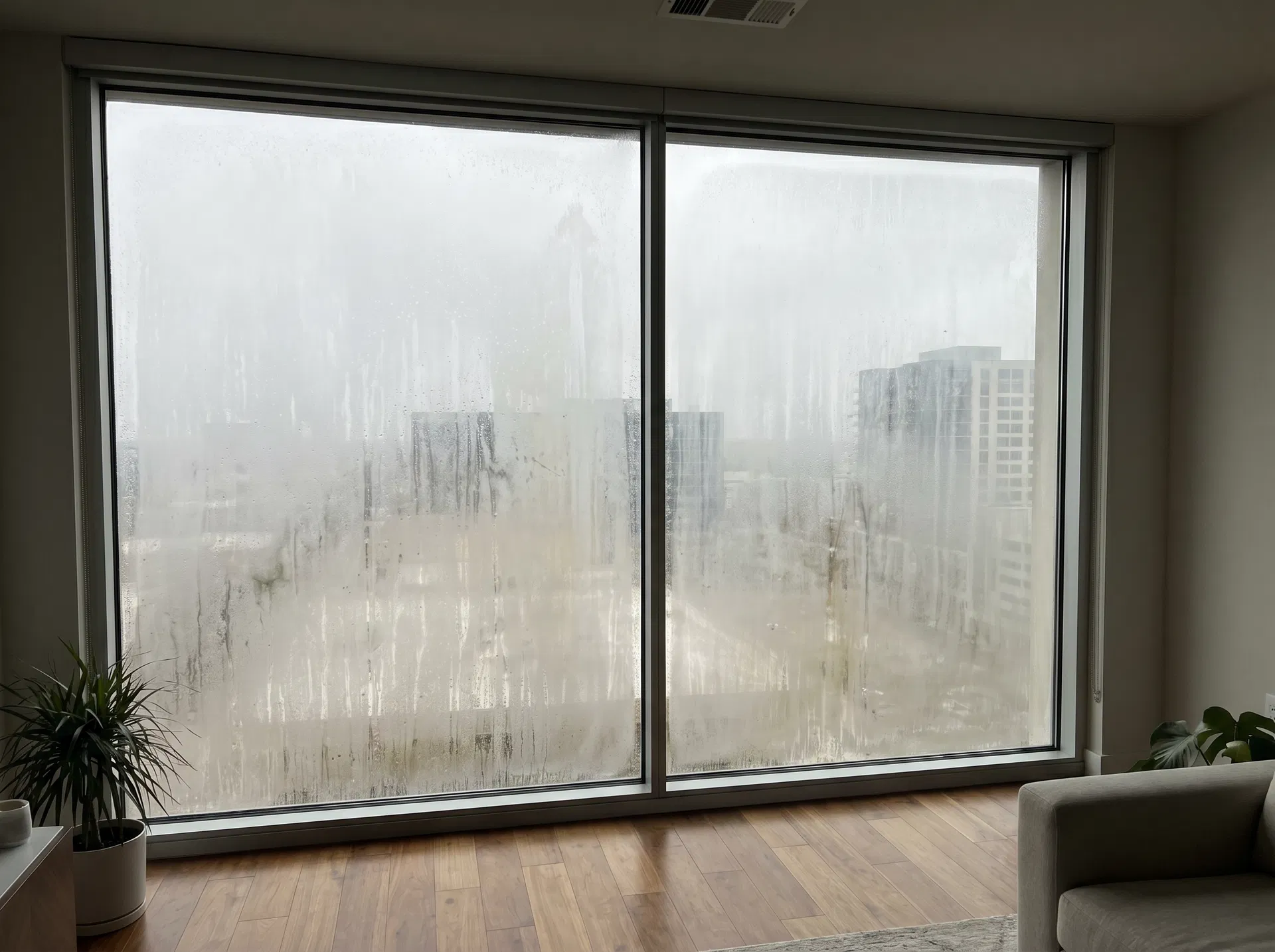
Before: A sun-exposed window with visible seal failure and interior condensation between the panes.

After: The insulated glass has been replaced, restoring clarity and visibility.
How to Decide Which Windows to Fix First
If multiple units are fogging, a thoughtful order of repair can save money and reduce frustration.
Start With the Most Sun-Exposed Elevations
Begin with south-facing and west-facing windows, especially any that affect major living areas, views, or rooms that already run hot in summer. Those units are usually the most thermally stressed and the most likely to continue deteriorating.
For Dallas homeowners with south-facing seal failures, this is often the best place to focus early inspection and budgeting. When these windows fail, you are not just losing visibility. You may also be losing insulating performance on the hottest sides of the house.
Next, Check Windows With Visible Edge Haze
A lightly fogged unit is not always the only problem. Look for subtle warning signs such as a chalky ring near the spacer, rainbow-like moisture patterns, or condensation that appears on mild mornings and then fades. These can signal early seal failure even before the entire pane looks cloudy.
Leave the Lowest-Stress Windows for Later
North-facing windows and heavily shaded windows usually decline more slowly. If your budget is limited, they are often lower priority unless they already show clear moisture between panes.
Practical Ways to Reduce Future Stress
You cannot change the direction your house faces, but you can reduce how hard the sun works against your windows.
Add Exterior Shade Where Possible
Solar screens, awnings, and well-placed landscaping can reduce direct heat gain before it reaches the glass. Exterior shade is especially helpful on west-facing windows that take intense afternoon sun.
Keep an Eye on Seasonal Changes
Inspect your sunniest windows at the end of summer. That is when heat stress has had months to build, and subtle seal problems are easier to spot.
Address Problems Before Staining Gets Worse
Once moisture stays trapped between panes for too long, mineral deposits and haze can become more noticeable. Acting earlier may preserve appearance and help you plan targeted glass replacement instead of waiting for several windows to fail at once.
When Professional Repair Makes Sense
A failed insulated glass seal usually does not mean the entire window frame must be replaced. In many cases, the glass unit itself can be replaced while the existing frame stays in place. You can learn more about that process on Apex Windows TX’s foggy glass repair page.
If your south- or west-facing windows are already clouding up, treat that as a useful diagnostic clue. It often means those elevations are bearing the brunt of Texas heat and should be your first priority. For help evaluating which windows to address first, call Apex Windows TX at (214) 263-3008.
Need Foggy Glass Replacement in Your Area?
We provide expert foggy glass replacement and window repair across the Dallas-Fort Worth metroplex. Click your city below for local pricing, neighborhoods served, and FAQs:
About the Author
Alvin Paulson
Co-Owner & Lead Technician, Apex Windows & Glass
Alvin Paulson co-founded Apex Windows & Glass. The company brings 30+ years of combined leadership experience to foggy glass replacement, insulated glass unit (IGU) repair, and energy-efficient window upgrades across Dallas-Fort Worth. Alvin's philosophy is simple: replace only what's broken, save the homeowner money, and explain the written product and workmanship coverage for the selected scope.