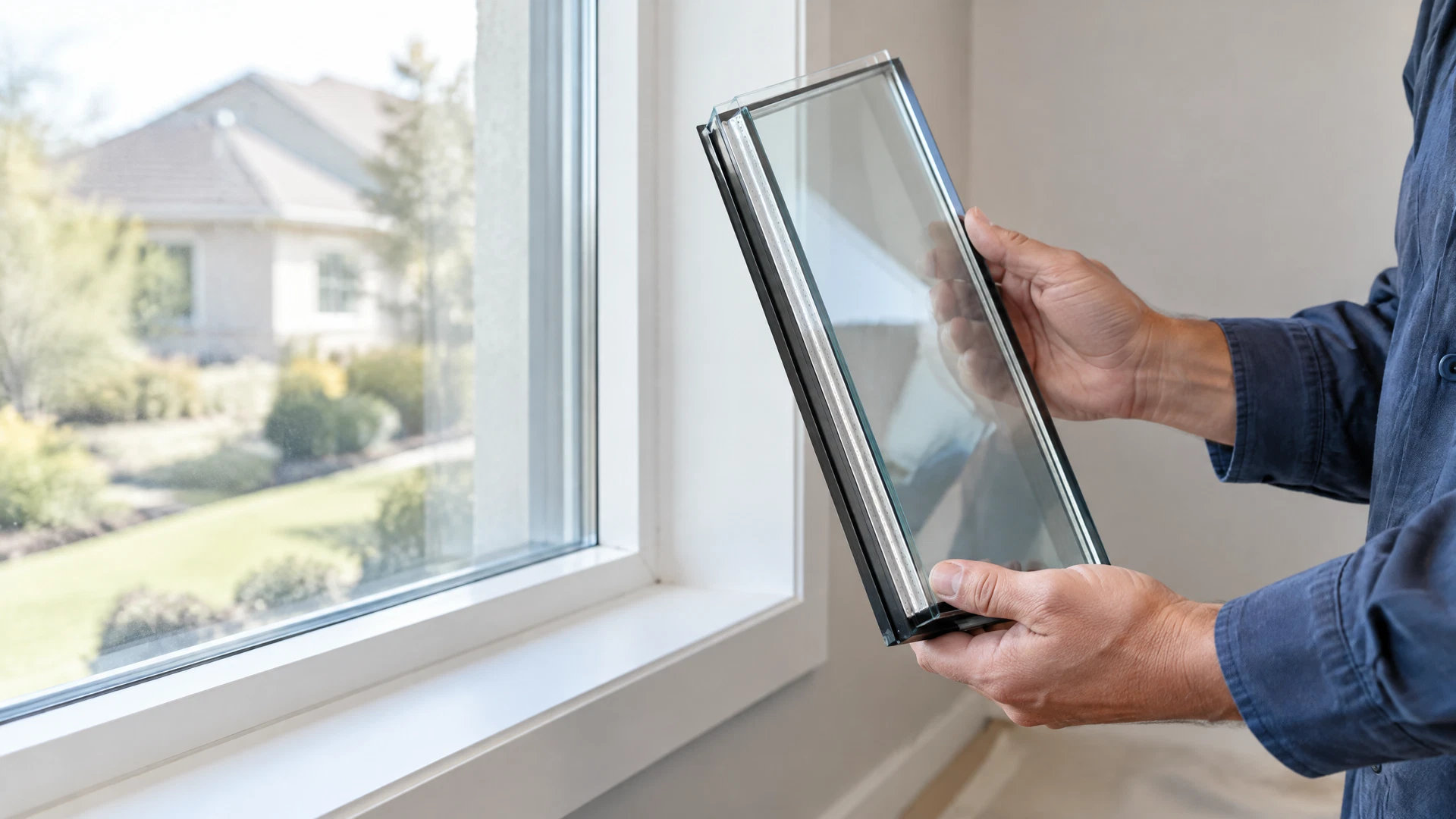
When a window in your Plano home shows signs of fogging or condensation between the panes, the hermetic seal of the insulated glass unit has failed. This obscures your view and compromises thermal efficiency. In the North Texas climate, the performance of your window glass is critical for indoor comfort. Many homeowners look toward argon-filled replacement glass to restore efficiency. However, not all units are manufactured to the same standards. Knowing what to ask about the gas fill, seal construction, and performance will help you make an informed decision.
Why Argon Gas Matters for Your Plano Window Replacement
Argon is a colorless, odorless, non-toxic noble gas that is denser than air. In an insulated glass unit, or IGU, this density serves a specific purpose. When the space between two panes is filled with argon, it creates a more effective thermal barrier. This is important for residents looking for energy efficient upgrades that can handle the temperature swings common in Collin County.
The primary benefit of argon is its ability to reduce heat transfer. Because argon is heavier than air, it moves more slowly within the sealed space. This reduces the convection currents that carry heat from the warm side to the cool side. In the summer, less heat from the Plano sun enters your home. In the winter, it helps keep the warmth inside where it belongs.
The Mechanics of Argon-Filled Insulated Glass Units
To appreciate why argon is a preferred choice, it is helpful to understand the physics at work. The effectiveness of the gas is tied to thermal conductivity and the reduction of convection currents.
Thermal Conductivity and Heat Transfer
Every material has a rate of heat conduction. Air has a relatively low thermal conductivity, but argon is roughly 33 percent lower. By replacing air with argon, manufacturers can significantly lower the U-factor of the window, which measures how well a window prevents heat from escaping.
Density and Convection Current Reduction
Inside a standard air-filled IGU, air near the warm pane rises while air near the cool pane falls. This creates a convection current that transports heat across the gap. Because argon is denser than air, these currents are suppressed. The gas acts as a stagnant blanket, providing consistent insulation that air cannot match. This is why argon is the industry standard for high-performance residential glass.
Critical Questions for Gas Retention and Longevity
The performance of an argon-filled unit is only as good as the seal that contains it. While all IGUs experience a very slow rate of gas dissipation, a high-quality unit is designed to retain its fill for decades. When discussing options, the construction of the seal should be a primary focus.
Understanding the Dual-Seal Construction
Modern high-quality replacement glass typically utilizes a dual-seal system. The primary seal is usually made of polyisobutylene, chosen for its low gas permeability. Its job is to keep the argon in and moisture out. The secondary seal, often silicone or polysulfide, provides structural integrity. Asking whether a unit uses a single or dual-seal system is vital for ensuring long-term performance.
The Impact of Stainless Steel or Warm-Edge Spacers
The spacer holds the two panes apart. Traditional aluminum spacers are highly conductive and can lead to edge condensation. Modern warm-edge spacers, made of stainless steel or composites, conduct less heat. Furthermore, a continuous spacer bent at the corners rather than joined with corner keys provides fewer opportunities for gas to escape.
Comparing Energy Performance Standards in North Texas
When evaluating glass options, you will encounter various ratings. In Plano, paying attention to the Solar Heat Gain Coefficient along with the U-factor is essential. The following table provides a comparison of how different glass configurations might perform.
| Glass Configuration | Typical U-Factor | Typical SHGC | Relative Insulation Value |
|---|---|---|---|
| Standard Double Pane (Air) | 0.48 - 0.50 | 0.60 - 0.70 | Baseline |
| Clear Glass with Argon | 0.45 - 0.47 | 0.55 - 0.65 | Moderate Improvement |
| Low-E Glass with Air | 0.32 - 0.35 | 0.25 - 0.30 | High Improvement |
| Low-E Glass with Argon | 0.27 - 0.30 | 0.20 - 0.25 | Maximum Efficiency |
These values vary based on the Low-E coating and spacer width. Always ask for the NFRC labels for the specific glass units proposed for your project.
Assessing Your Existing Frames for New Glass Units
Replacing glass is only a viable option if the rest of the window is in good condition. Before proceeding, a thorough assessment of the frame, sash, and hardware is necessary. If the frames are warped, the sash is rotting, or the hardware no longer operates smoothly, new glass will not provide the full benefits.
For many Plano homeowners, the existing frames are still structurally sound, making a glass-only IGU replacement a cost-effective way to restore function. However, if the opening itself has shifted or the glazing beads are brittle, a broader window assessment might be appropriate. A professional team can help determine if your current frames are suitable candidates for new argon-filled units.
Frequently Asked Questions About Argon Glass in Plano
Does the argon gas eventually leak out of the window?
All insulated glass units experience a minute amount of gas exchange over time, often at a rate of about one percent per year. However, high-quality units with dual-seal construction are designed to maintain insulating properties for twenty years or more. If a window fogs up quickly, it is usually due to a sudden seal failure rather than gradual gas dissipation.
Is argon gas dangerous if the window glass breaks?
No, argon is a naturally occurring noble gas that makes up about one percent of the atmosphere. It is non-toxic, colorless, and odorless. If a window breaks, the small amount of argon contained between the panes dissipates harmlessly into the air. There is no risk to your family or pets from the gas itself.
Can you tell just by looking if a window is filled with argon?
It is impossible to see argon gas because it is transparent. However, you can often find evidence of the gas fill by looking at the spacer between the panes. Many manufacturers leave small injection holes in the spacer that are then plugged. Additionally, the NFRC label that comes with new windows will explicitly state whether the unit is argon-filled.
Does argon gas help with noise reduction in Plano neighborhoods?
While argon is denser than air, its primary purpose is thermal insulation rather than acoustic performance. You might notice a slight improvement in sound dampening compared to a single-pane window, but argon alone is not a specialized noise-reduction solution. If sound control is a primary concern, you should ask about laminated glass or varying glass thicknesses.
Need Foggy Glass Replacement in Your Area?
We provide expert foggy glass replacement and window repair across the Dallas-Fort Worth metroplex. Click your city below for local pricing, neighborhoods served, and FAQs:
About the Author
Alvin Paulson
Co-Owner & Lead Technician, Apex Windows & Glass
Alvin Paulson co-founded Apex Windows & Glass and brings over 30 years of hands-on expertise in foggy glass replacement, insulated glass unit (IGU) repair, and energy-efficient window upgrades. Born and raised in North Texas, Alvin has personally assessed and repaired thousands of windows across the Dallas-Fort Worth metroplex — from historic McKinney homes to new-build subdivisions in Frisco and Prosper. He is a licensed glazier and holds certifications in Low-E glass installation and argon gas window systems. Alvin's philosophy is simple: replace only what's broken, save the homeowner money, and back every job with a 10-year warranty.