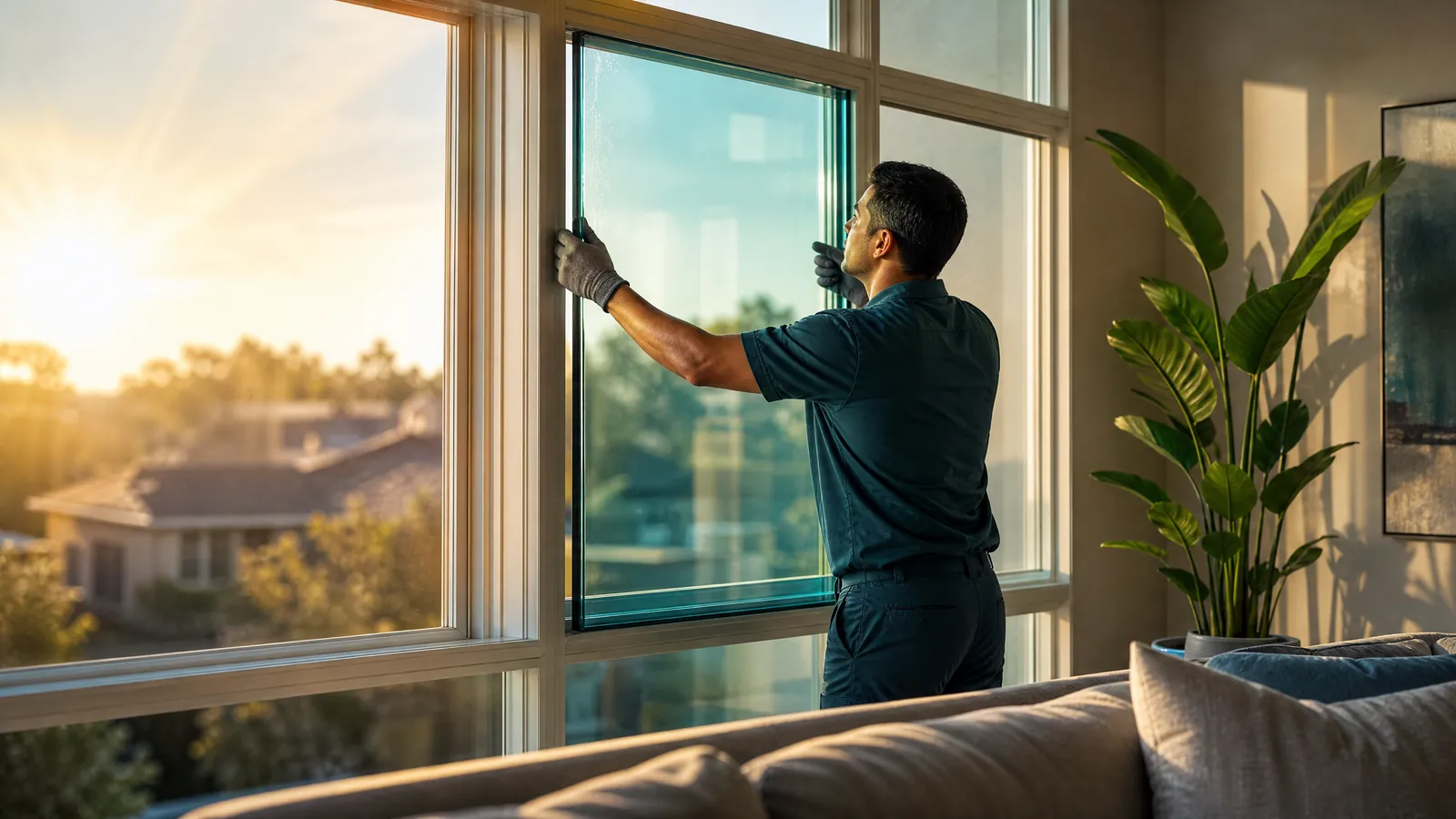
If you live in the Dallas–Fort Worth area, you already know the struggle of keeping a west-facing room comfortable during the brutal Texas summer. By mid-afternoon, the sun begins to beat down on these windows, turning bedrooms, home offices, and living spaces into uncomfortable saunas. Many homeowners assume that the only way to solve this intense heat problem is to undergo a complete, expensive window replacement. Fortunately, that is not the case. If your window frames are still in good condition, a glass-only Low-E upgrade can block the afternoon heat at a fraction of the cost.
This approach targets the exact source of the problem—the glass—without the disruption of tearing out perfectly good frames. In this guide, we will explore why west-facing rooms get so hot, the differences between standard and Low-E glass, and how targeted glass upgrades can restore comfort to your home.
Why West-Facing Rooms Bake in the Texas Afternoon
The orientation of your home plays a massive role in its energy efficiency and indoor comfort. In DFW, the sun is highest and hottest during the late afternoon, which means west-facing walls and windows absorb the most intense, direct sunlight of the day. This solar radiation passes straight through standard clear glass, heating up the air, furniture, and flooring inside your home.
This phenomenon is known as solar heat gain. When standard double-pane windows fail to block this radiation, your air conditioning system has to work overtime to compensate. The result is a single room that feels significantly hotter than the rest of the house, leading to uncomfortable living conditions and spiked energy bills. Addressing the glass itself is the most effective way to stop this heat transfer before it enters the room.
The Difference Between Double-Pane and Low-E Glass
It is a common misconception that all double-pane windows are highly energy efficient. While having two panes of glass with an insulating airspace is better than a single pane, standard clear glass still allows a significant amount of solar heat to pass through. This is where Low-Emissivity (Low-E) glass makes a critical difference.
Low-E glass features a microscopically thin, virtually invisible coating that reflects heat while still allowing natural light to enter. During the DFW summer, this spectrally selective coating acts like a mirror for infrared heat, bouncing it back outside rather than letting it bake your west-facing rooms. The U.S. Department of Energy notes that in warm climates, Low-E coatings can substantially reduce summer heat gain and air-conditioning costs without noticeably changing the visible light or color of the glass.
Why You Don't Always Need Full Window Replacement
When faced with a sweltering room, many homeowners are told they need entirely new windows. However, if your window frames—whether vinyl, wood, or aluminum—are structurally sound, operating correctly, and free from rot, a full replacement is often an unnecessary expense. The heat issue is primarily a glass problem, not a frame problem.
Apex Windows TX specializes in replacing just the insulated glass unit (IGU). By carefully removing the old, inefficient glass and installing a new, custom-measured Low-E glass unit into your existing frame, you solve the heat problem directly. This targeted approach is significantly less invasive, faster to complete, and avoids the mess of tearing out frames and repairing surrounding drywall or trim.
How Glass-Only Upgrades Save DFW Homeowners Money
Choosing a glass-only Low-E upgrade over a full window replacement offers substantial financial benefits. On average, replacing just the glass can save you up to 70% compared to the cost of a full window replacement. This allows you to invest your budget exactly where it matters most: upgrading the thermal performance of the windows that take the brunt of the afternoon sun.
Furthermore, this upgrade directly impacts your monthly utility bills. By lowering the solar heat gain in your west-facing rooms, your HVAC system does not have to run as frequently or as long to maintain a comfortable temperature. Over time, the energy savings from Low-E glass benefits in Texas can help offset the initial cost of the glass replacement, making it a smart, long-term investment for your home.
Choosing the Right SHGC for West-Facing Windows
When selecting new glass for your home, understanding the Solar Heat Gain Coefficient (SHGC) is essential. The SHGC measures how much solar radiation is admitted through a window. Ratings typically range from 0.25 to 0.80, and lower numbers indicate less heat transmission. The National Fenestration Rating Council (NFRC) emphasizes that lower or higher is not universally better; climate and window orientation matter significantly.
For west-facing windows in the DFW climate, a lower SHGC is critical. You want a glass unit that aggressively blocks the afternoon sun. High-performance Low-E glass designed for southern climates will have a low SHGC, ensuring that your room stays cool without sacrificing natural daylight. If you are also dealing with failed seals on other windows, you can address both issues simultaneously by exploring double pane window repair in DFW.
Other Ways to Supplement Your New Glass
While a Low-E glass upgrade is the most effective permanent solution for hot rooms, you can further enhance your comfort with supplemental strategies. Combining high-performance glass with thoughtful window treatments can create an incredibly energy-efficient barrier.
| Supplemental Strategy | How It Helps | Best Application |
|---|---|---|
| Interior Cellular Shades | Traps a layer of air against the window for added insulation. | Bedrooms and living areas needing light control. |
| Exterior Solar Screens | Blocks sunlight before it even reaches the glass surface. | Windows receiving the most direct, intense sun. |
| Awnings or Overhangs | Provides physical shade to the window during peak sun hours. | Patios or large picture windows. |
| Thermal Curtains | Heavy fabric blocks heat and light from entering the room. | Rooms where complete darkness is sometimes desired. |
These additions work in tandem with your new glass. The Low-E coating does the heavy lifting by reflecting infrared heat, while shades or screens handle the remaining visible light and ambient warmth.
FAQs
Will Low-E glass make my room too dark?
No. Modern Low-E coatings are spectrally selective, meaning they are designed to reflect infrared heat while allowing visible light to pass through. Your room will remain bright and naturally lit, just significantly cooler.
Can I replace just the glass on my west-facing windows?
Yes. As long as your existing window frames are in good, serviceable condition, the insulated glass unit (IGU) can be replaced independently. This is exactly what Apex Windows TX specializes in.
What is a good SHGC rating for Texas?
For the hot DFW climate, especially on west-facing windows, you generally want an SHGC rating of 0.25 or lower. This ensures maximum protection against solar heat gain. Always verify specific code requirements with the applicable authority or manufacturer.
Do exterior solar screens work better than new glass?
Solar screens are effective at blocking sunlight, but they can darken a room and obstruct your view. Low-E glass provides permanent, invisible heat rejection. Many homeowners find that combining both offers the ultimate protection for exceptionally hot rooms.
Get Expert Help Cooling Your Home
You do not have to live with a room that feels like an oven every afternoon. If your west-facing windows are making your home uncomfortable, a targeted glass upgrade is the smart, cost-effective solution. You can improve your home's energy efficiency without the massive expense of a window replacement in Dallas, TX.
Apex Windows TX replaces only the insulated glass unit when your frame is serviceable, saving you up to 70% compared to full window replacement. We back our work with a 10-Year IGU manufacturer warranty + Apex 1-Year workmanship warranty to give you lasting peace of mind. Call us today at (214) 263-3008 to schedule a consultation and take the first step toward a cooler, more comfortable home.
Need Foggy Glass Replacement in Your Area?
We provide expert foggy glass replacement and window repair across the Dallas-Fort Worth metroplex. Click your city below for local pricing, neighborhoods served, and FAQs:
About the Author
Alvin Paulson
Co-Owner & Lead Technician, Apex Windows & Glass
Alvin Paulson co-founded Apex Windows & Glass and brings over 30 years of hands-on expertise in foggy glass replacement, insulated glass unit (IGU) repair, and energy-efficient window upgrades. Born and raised in North Texas, Alvin has personally assessed and repaired thousands of windows across the Dallas-Fort Worth metroplex — from historic McKinney homes to new-build subdivisions in Frisco and Prosper. He is a licensed glazier and holds certifications in Low-E glass installation and argon gas window systems. Alvin's philosophy is simple: replace only what's broken, save the homeowner money, and back every job with a 10-Year IGU manufacturer warranty + Apex 1-Year workmanship warranty.