
If you see fog or condensation trapped between the panes, the first decision is not which window is cheaper. It is which part of the window has failed. A sound frame with a failed insulated glass unit (IGU) usually calls for glass-only replacement. A rotted, warped, leaking, or unusable window assembly may need complete replacement.
> Quick decision: Choose glass-only IGU replacement when the frame and sash are sound and the window still opens, closes, and locks. Choose a complete window when the frame, sash, hardware, drainage, or installation has failed, or when you want a different window style.
This guide is about that scope decision. For detailed local price bands and every variable that changes a quote, use the detailed foggy window repair cost breakdown.
Start with the Failed Component
A double-pane window is a system. The sealed glass unit, sash, frame, hardware, weatherstripping, drainage paths, and installation perimeter all do different jobs. Fog between the panes confirms a failed IGU seal, but it does not prove that the frame is bad. Conversely, clear new glass cannot correct a frame that is rotting, distorted, or leaking around the opening.
A useful assessment separates four questions:
- Is the moisture between the panes? Fog that will not wipe from either surface points to IGU failure.
- Is the frame structurally sound? Look for rot, split vinyl welds, corrosion, or movement at the corners.
- Does the sash operate safely? It should open, close, stay in position, and lock without excessive force.
- Is water or air entering around the opening? Perimeter leaks can involve flashing, caulk, drainage, or installation rather than the glass.
When Glass-Only IGU Replacement Is the Right Scope
Glass-only replacement removes the failed sealed glass assembly and fits a new factory-sealed IGU into the existing sash or frame. The frame, interior trim, exterior finish, and operating hardware remain in place.
This scope usually fits when:
- The frame and sash are square, solid, and free of rot or major distortion.
- The window opens, closes, and locks correctly.
- The glazing channel can accept a compatible replacement unit.
- The problem is limited to between-pane fog, a failed Low-E coating, or damaged glass.
- You want to preserve the current window style and surrounding finishes.
What a Technician Checks Before Recommending Glass-Only Work
Apex technicians first confirm that the haze is trapped between the panes. They then inspect the sash corners, glazing stops, frame drainage, and operating hardware. Finally, they identify glass thickness, coatings, grids, and any safety-glass requirement. If those checks show that the supporting window is serviceable, replacing only the IGU addresses the failed component without discarding a sound frame.
The existing before-and-after example below shows the visible result of replacing a failed sealed unit while retaining the surrounding window.
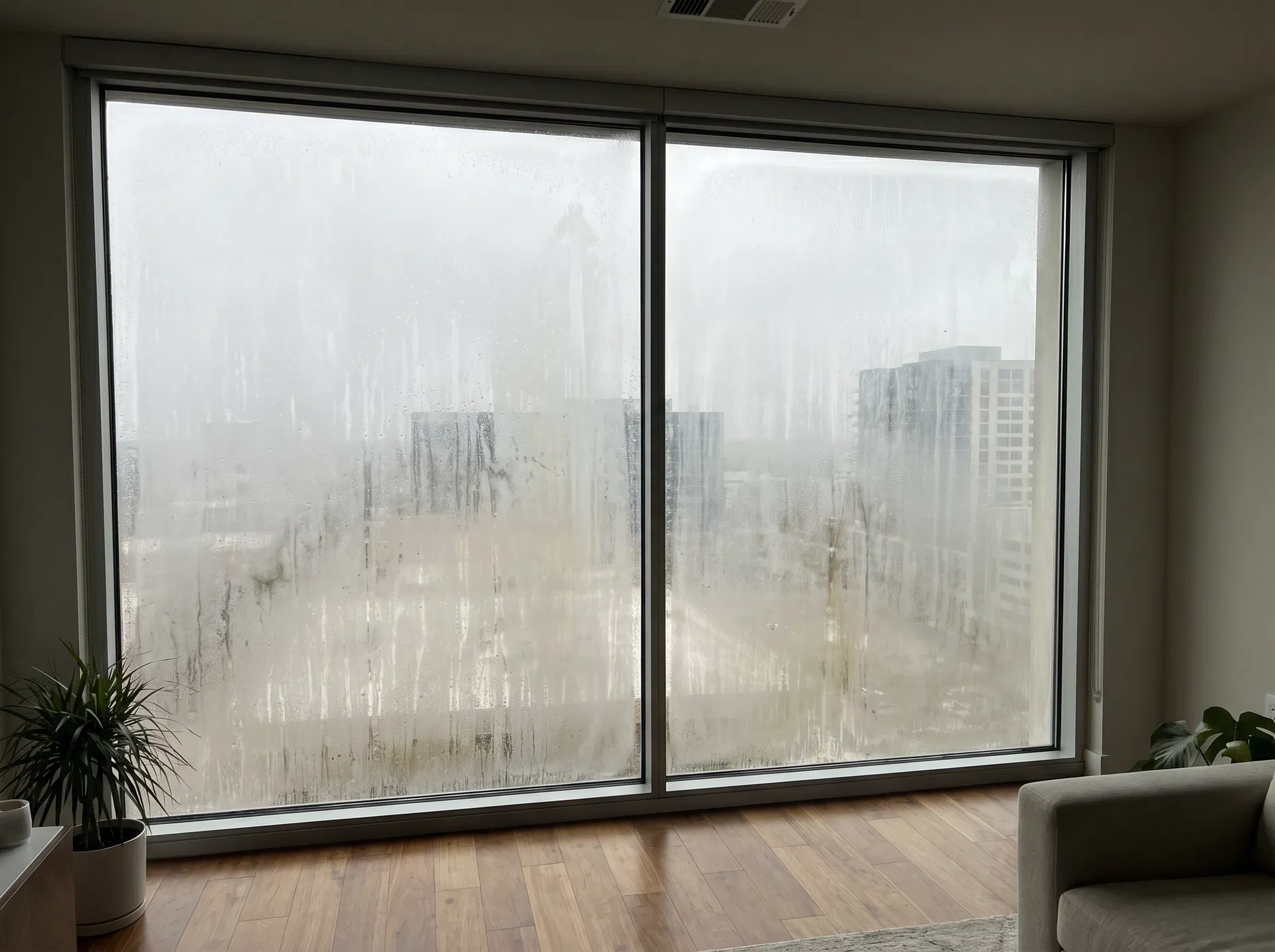
Before: Between-pane haze and mineral deposits obscure the view through a failed insulated glass unit.
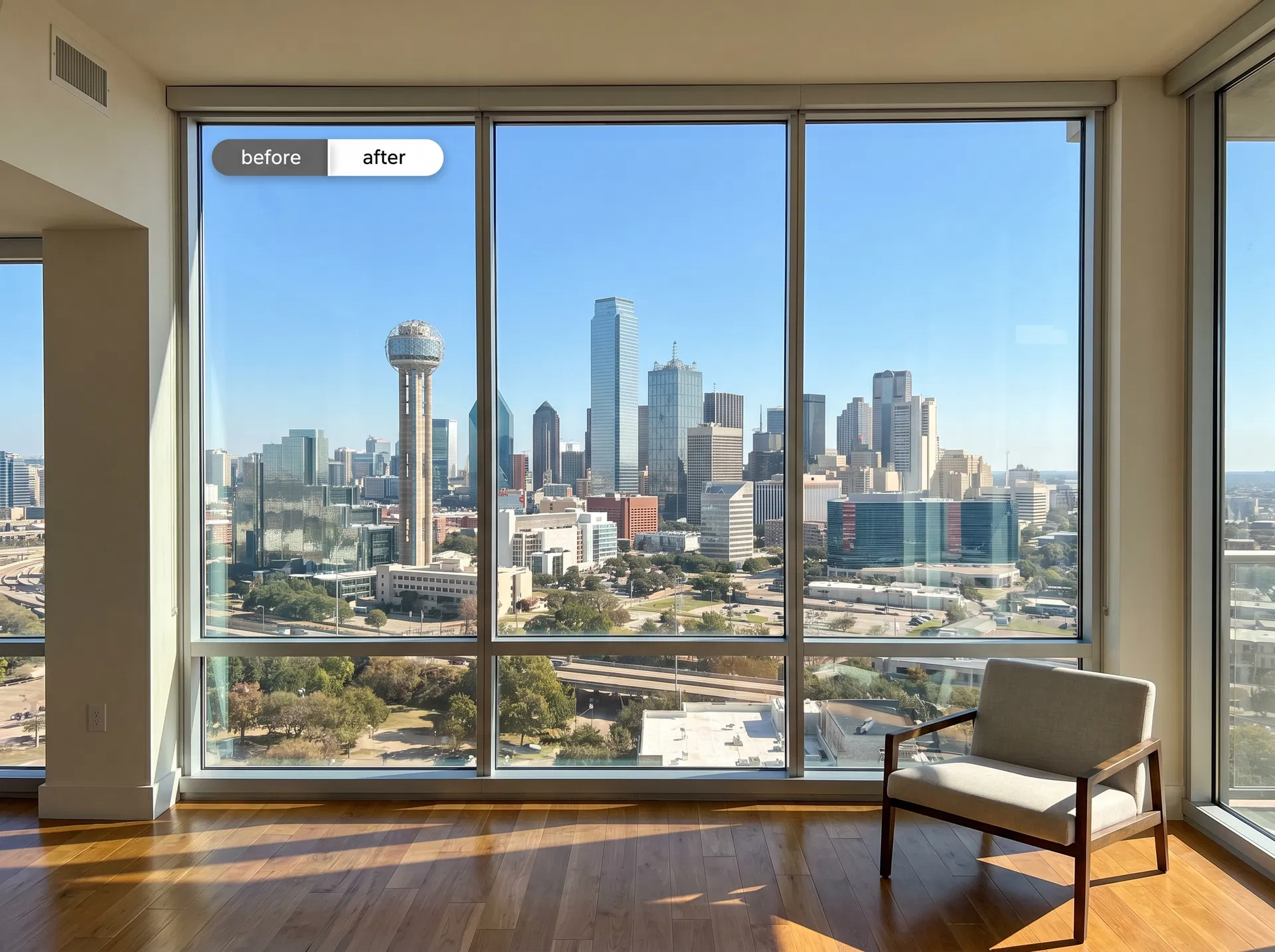
After: A new sealed glass unit restores clarity while the serviceable frame remains in place.
When Complete Window Replacement Is the Better Choice
Complete replacement removes the window assembly rather than only the glass. It is the appropriate scope when the supporting system can no longer do its job or when the homeowner wants a different product.
Choose complete replacement when:
- Wood is soft or rotted. New glass will not stop decay or water entry through a damaged frame.
- Vinyl or aluminum frames are warped, cracked, or separated. A distorted opening can prevent the new IGU from being supported correctly.
- The sash or hardware is unsafe or unserviceable. Broken balances, hinges, locks, or unavailable parts can make the whole assembly impractical to retain.
- The window leaks around the perimeter. Flashing, drainage, and installation defects require diagnosis beyond the glass.
- The opening is single-pane. A complete modern window may be the practical way to add an insulated assembly when the existing design cannot accept one.
- You want a different style or size. Changing a fixed picture window to an operable unit, for example, is a complete-window project.
Cost Is a Result of Scope, Not the Starting Point
Published planning ranges can be useful, but they should not decide the scope before an inspection. Apex's current DFW planning ranges are approximately $150 to $350 for a typical glass-only unit, with large, shaped, tempered, or difficult-to-access units costing more. Complete windows commonly begin around $400 to $1,200 or more per opening, depending on product, installation, finishing, and access.
Those figures are not a quote or a price ceiling. Glass dimensions, Low-E coatings, argon fill, tempered safety glass, grids, second-story access, frame repairs, interior trim, and disposal can all change the installed total. See the detailed foggy window repair cost breakdown for the full list of price drivers.
Three Exceptions Homeowners Commonly Miss
A Sound Frame Can Still Need Hardware Work
If the glass is foggy and the sash no longer stays open, there may be two separate problems: a failed IGU and a failed balance. A quote should identify each item instead of assuming that new glass will fix operation.
A Newer Home Can Still Qualify for Glass-Only Repair
Window age alone is not the deciding factor. Builder-grade sealed units can fail while the vinyl frames remain serviceable. The frame and sash condition matter more than the date on the house.
Several Foggy Windows Do Not Automatically Mean Whole-Home Replacement
Windows installed at the same time and facing the same direction often fail in clusters. Each opening should still be evaluated. A mixed project can replace failed IGUs where frames are sound and reserve complete replacement for the few openings with structural or operating problems.
Questions to Ask Before Approving Either Scope
Ask the contractor to show you what failed and include the answer in writing:
- Is the quote for the sealed glass unit or the complete window assembly?
- Are the frame, sash, hardware, drainage, and perimeter installation all serviceable?
- What glass specification is included, including Low-E, gas fill, grids, and safety glass?
- Are measurement, installation, removal, disposal, taxes, and finishing included?
- What does the warranty cover, for how long, and who handles a claim?
- If complete replacement is recommended, what condition makes glass-only work unsuitable?
The Bottom Line
Repair the sealed glass unit when the fog is between the panes and the supporting window is sound. Replace the complete window when the frame, sash, hardware, drainage, or installation has failed, or when the project calls for a different style or performance package. The most reliable recommendation is based on an opening-by-opening inspection, not a blanket rule based on age or price.
Apex Windows & Glass assesses both glass-only and complete-window scopes across Dallas-Fort Worth. Call (214) 263-3008 or request a free assessment to receive a written recommendation for your windows.
Need Foggy Glass Replacement in Your Area?
We provide expert foggy glass replacement and window repair across the Dallas-Fort Worth metroplex. Click your city below for local pricing, neighborhoods served, and FAQs:
About the Author
Alvin Paulson
Co-Owner & Lead Technician, Apex Windows & Glass
Alvin Paulson co-founded Apex Windows & Glass and brings over 30 years of hands-on expertise in foggy glass replacement, insulated glass unit (IGU) repair, and energy-efficient window upgrades. Born and raised in North Texas, Alvin has personally assessed and repaired thousands of windows across the Dallas-Fort Worth metroplex — from historic McKinney homes to new-build subdivisions in Frisco and Prosper. He is a licensed glazier and holds certifications in Low-E glass installation and argon gas window systems. Alvin's philosophy is simple: replace only what's broken, save the homeowner money, and back every job with a 10-Year IGU manufacturer warranty + Apex 1-Year workmanship warranty.