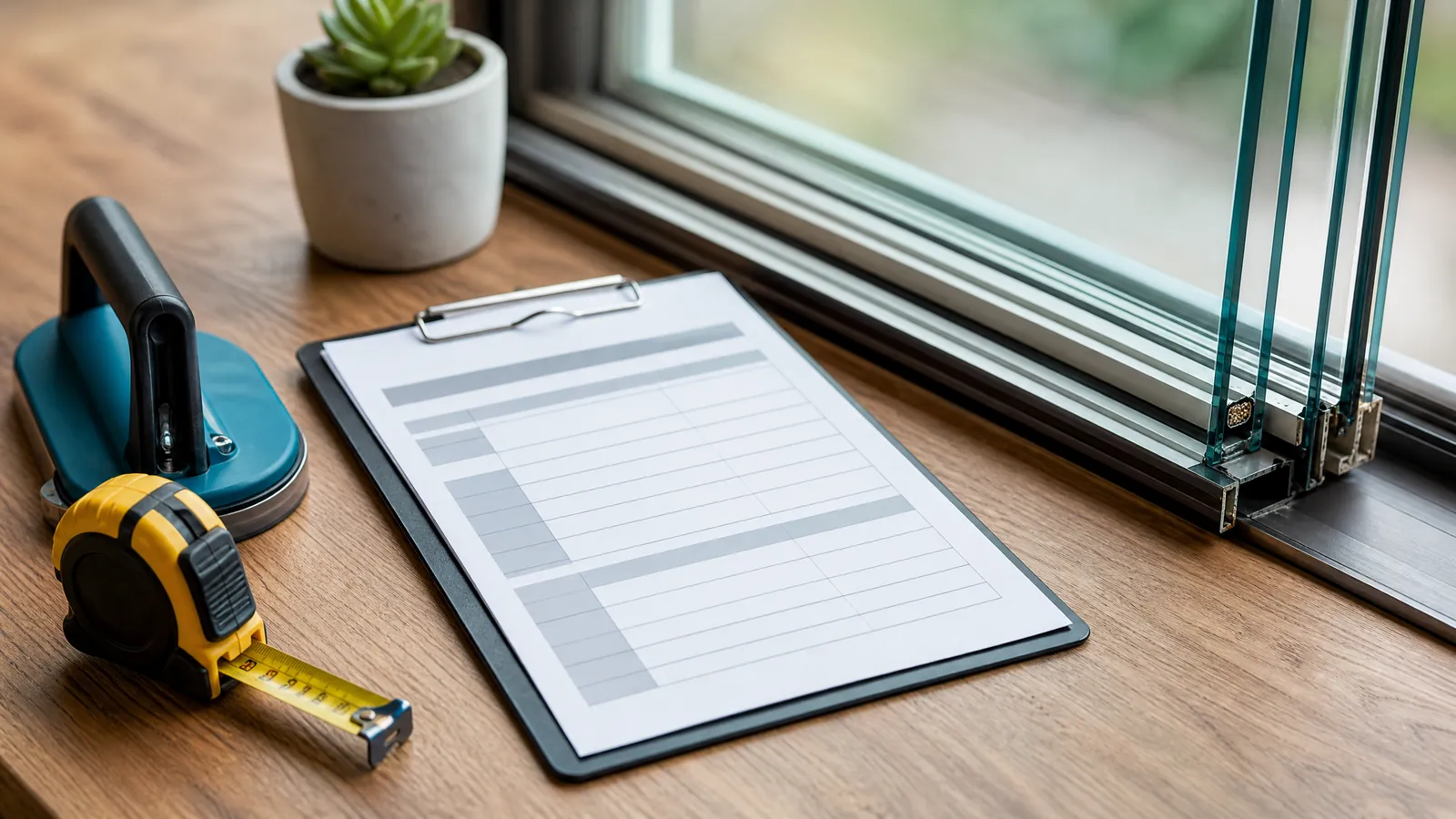
Foggy window repair in DFW typically costs $150 to $350 for a standard glass-only insulated glass unit (IGU). Large picture windows commonly fall around $350 to $600 or more, while patio-door glass can run $400 to $800 or more. These are planning ranges, not quotes or price ceilings; every replacement is custom measured.
If you are asking what it costs to fix foggy windows, five variables explain most quote differences:
- Glass dimensions and total thickness
- Low-E, argon, tint, grid, or decorative specifications
- Tempered or laminated safety-glass requirements
- Second-story, roofline, pool-deck, or restricted access
- Quantity, removal, disposal, and warranty scope
The work usually replaces the failed sealed glass unit while retaining a serviceable frame, sash, hardware, and surrounding finishes. That targeted scope often costs materially less than complete window replacement. If the frame is rotted, warped, leaking, or no longer operates safely, use our guide to when glass-only repair is the right choice before comparing prices.
Understanding the Anatomy of a Glass Replacement Quote
When you receive an estimate for insulated glass unit replacement, the total figure represents a combination of custom materials, specialized labor, and logistical overhead. A professional quote should account for the entire process, from the initial measurement to the final installation and warranty administration. Breaking down these costs reveals the value embedded in a proper repair job. It is not simply a matter of buying a piece of glass; it is a comprehensive service that involves custom manufacturing, precise handling, and expert installation.
The Fabricated Insulated Glass Unit
The largest portion of your quote covers the new insulated glass unit itself. An IGU is a custom-manufactured component: two or more panes separated by a spacer bar that holds a desiccant to absorb residual moisture, sealed with a primary and secondary sealant system of polyisobutylene and silicone. That sealant system is exactly what failed on your window. Unit cost tracks overall dimensions, glass thickness, and total assembly thickness.
Fabrication is not a lumber-yard purchase. The glass is cut to exact specifications, washed with deionized water, and assembled in a controlled environment so no dust or humidity is trapped in the airspace. Sealant and spacer quality determine how long the unit lasts, which is why we source from established regional fabricators rather than the cheapest available supplier.
Low-E Coatings and Argon Gas Fill
Modern insulated glass units include energy-efficient upgrades that move the price. Low-emissivity (Low-E) coatings are microscopically thin metallic layers that reflect heat while passing visible light, and the airspace is usually filled with argon, a dense inert gas that insulates better than air. In North Texas a Low-E coating is effectively mandatory: it is what keeps a west-facing room usable in August and holds your cooling costs down.
These upgrades add material cost, but they also match the performance of the rest of your windows so one replaced opening does not become the weak point in the wall. Whether the coating is a soft coat applied inside the sealed unit or a hard coat applied during glass manufacturing also affects the price.
Tempered and Laminated Safety Glass
Building codes require safety glass in specific locations: in and near doors, close to the floor, at stair landings, and around tubs and showers. If your failed unit sits in one of those locations, the replacement must be tempered or laminated regardless of what the original builder installed.
Tempering means heating cut glass past 1,100 degrees Fahrenheit and quenching it rapidly, putting the surface in compression so it breaks into small blunt pieces instead of shards. Because tempering happens after cutting, every tempered unit is a custom production run, which is why safety glass carries a real premium on your quote.
Professional Glazing Labor
Replacing an insulated glass unit is precise work. The glazier removes the stops or glazing bead without splitting the sash, extracts the failed unit, cleans and preps the channel so new sealant will actually adhere, sets the replacement on fresh setting blocks, then reinstalls the stops. Deglazing knives, suction cups, and shims are all part of the job.
The labor line covers skill, not just time. A unit set out of square or bedded on a dirty channel will crack or leak within a season, so squaring and shimming new glass inside an existing frame is where an experienced technician earns the difference.
Accessibility and Second-Story Labor
Window location drives labor cost as much as glass size does. Ground-floor openings with clear exterior access price at standard rates. A second-story unit above a steep roofline, behind mature landscaping, or over a pool deck requires ladders or scaffolding, suction lifting gear, and often a second technician purely for safety.
A 40-pound insulated unit carried up an extension ladder is a two-person job, and pricing that honestly beats discovering the access problem on install day. Expect a per-window access adder rather than an inflated rate across the whole project.
Removal and Disposal of the Failed Unit
The failed unit has to leave your property, and it cannot go in a municipal recycling bin because of the sealants, coatings, and aluminum spacer bonded to the glass. Architectural glass goes to a commercial waste or recycling facility that charges tipping fees, and someone has to load, secure, and haul it there.
That is why disposal belongs in a complete quote rather than appearing as a surprise. A bid that leaves the old glass leaning against your fence is not cheaper; it has moved the disposal problem to you.
Trip Charges and Measurement Visits
Every unit is built to order, so a technician has to measure width, height, and unit thickness on site, identify the glass type and coating, and note whether grids or tint are present. That measurement visit plus the return trip for installation carries real fuel, vehicle, and time cost.
Most companies build this into the unit price; some list a separate trip charge, which is worth clarifying before you sign. A measurement off by an eighth of an inch means a reorder and another week of waiting, so it is not a step to rush or hand to the homeowner with a tape measure.
Warranty Administration
A warranty is a real cost line, not a marketing line. Our 10-year coverage on materials and workmanship means the possibility of a return visit and a replacement unit is already priced in, and that we have to stay in business long enough to honor it.
When you compare two quotes, read the warranty terms before the totals. A slightly cheaper bid with a one-year seal warranty is transferring the risk of premature failure to you, and IGU seals rarely fail in year one.
Typical Price Bands for Glass Replacement
To provide a clearer picture of what you can expect to pay, the following table outlines typical price bands for insulated glass unit replacement in the Dallas-Fort Worth market. These figures represent the cost of replacing the glass only, not the entire window frame. Keep in mind that these are general ranges, and a written estimate is required for exact pricing based on your specific needs.
| Window Type and Size | Typical Price Range (Per Window) | Description |
|---|---|---|
| Small Casement or Awning | $150 - $250 | Common in bathrooms or above kitchen sinks; standard clear glass. |
| Standard Double-Hung or Single-Hung | $150 - $350 | The most common residential window style; typical bedroom or living room sizes. |
| Large Picture Window | $350 - $600+ | Fixed, non-operable windows; requires thicker glass and more labor to handle. |
| Patio Door / Sliding Glass Door | $400 - $800+ | Requires tempered safety glass by code; large, heavy units requiring two technicians. |
| Custom Shapes (Arches, Transoms) | $300 - $700+ | Requires custom fabrication templates and specialized manufacturing processes. |
Factors That Add Cost to Your Quote
While the base price covers a standard replacement, several variables can increase the final cost of your project. The table below highlights common factors that add to the total invoice and provides a rough estimate of their impact.
| Cost Factor | Estimated Impact | Reason for Additional Cost |
|---|---|---|
| Tempered Safety Glass | Adds 30% - 50% to unit cost | Required by building code for doors, near floors, and in wet areas; specialized manufacturing. |
| Low-E Coating and Argon Gas | Adds $20 - $50 per unit | Improves energy efficiency; requires specialized materials and fabrication techniques. |
| Second-Story or Difficult Access | Adds $50 - $150 per window | Requires ladders, scaffolding, extra technicians, and increased safety measures. |
| Grids or Muntins Between Glass | Adds $30 - $75 per unit | Custom fabrication to match existing window aesthetics; requires precise alignment. |
| Tinted or Obscure Glass | Adds 20% - 40% to unit cost | Specialized glass types for privacy or solar control; higher material costs. |
The Advantage of Volume Pricing
When reviewing a quote for glass replacement, it is important to consider the impact of volume pricing. If you have multiple windows with failed seals, replacing them all at once is significantly more cost-effective than addressing them individually over time. The logistical costs, such as the measurement visit, travel time, and setup, are distributed across multiple units, lowering the per-window price.
Glaziers can work more efficiently when replacing several units in a single visit, and these labor savings are often passed on to the homeowner. If you notice one foggy window, it is wise to inspect the rest of your home, as windows of the same age and exposure are likely to experience seal failure around the same time. Addressing all failing units in a single project minimizes disruption to your daily life and maximizes the value of the service call.
Why Glass-Only Repair Makes Financial Sense
Many homeowners mistakenly believe that a foggy window requires a complete window replacement. However, if the window frame, sash, and operating hardware are still in good condition, replacing only the insulated glass unit is the most logical and economical choice. Full window replacement involves removing the entire frame down to the rough opening, which often requires repairing interior drywall, exterior siding, and trim. This invasive process typically runs $400 to $1,200 or more per window, with whole home projects commonly ranging from several thousand to $20,000 or more depending on the count and product tier.
By contrast, glass-only repair focuses solely on the failed component. The existing frame remains intact, eliminating the need for costly carpentry and painting work. This targeted approach typically saves homeowners 50 to 70 percent compared to full replacement, while restoring the clarity, energy efficiency, and aesthetic appeal of the window. For the vast majority of foggy window issues, IGU replacement provides the best return on investment, allowing you to allocate your home improvement budget to other necessary projects.
Local Service Across the Metroplex
When dealing with failed window seals, it is crucial to work with a local, experienced glass company that understands the specific climate challenges of North Texas. The intense summer heat and rapid temperature fluctuations can put significant stress on window seals, accelerating the aging process and leading to premature failure. We proudly serve homeowners throughout the region, providing expert glass replacement services in Dallas, Plano, Frisco, McKinney, and Fort Worth. Our deep understanding of local building codes and architectural styles ensures that your replacement units are fabricated and installed to the highest standards, providing lasting performance in our demanding climate.
Restore Your View Today
Don't let foggy, condensation-filled windows ruin your view or compromise your home's energy efficiency. Understanding the cost breakdown of insulated glass unit replacement empowers you to make informed decisions about your property. If you are ready to restore the clarity of your windows without the expense of full replacement, our team of expert glaziers is here to help. We provide transparent, detailed quotes and back our work with a 10-Year IGU manufacturer warranty and an Apex 1-Year workmanship warranty on materials and workmanship.
Contact Apex Windows & Glass today at (214) 263-3008 to schedule a professional measurement and consultation. Learn more about our specialized foggy window repair services and discover how much you can save with targeted glass replacement.
Frequently Asked Questions About Foggy Window Repair Cost
Can a foggy window be repaired without replacing the glass?
No, a foggy window cannot be permanently repaired without replacing the glass unit. The condensation indicates that the factory seal has failed and the insulating gas has escaped. The only effective, long-term solution is to replace the entire insulated glass unit while keeping your existing window frame.
Why is tempered glass more expensive than standard glass?
Tempered glass undergoes a specialized heat-treatment process that makes it significantly stronger and safer than standard annealed glass. If broken, it shatters into small, blunt pieces rather than dangerous sharp shards. This extra manufacturing step and the safety benefits it provides result in a higher material cost.
Does replacing the glass improve energy efficiency?
Yes, replacing a failed insulated glass unit restores the window's energy efficiency. The new unit is sealed airtight and can be upgraded with Low-E coatings and argon gas fill. This prevents heat transfer, helping to keep your home comfortable and potentially lowering your heating and cooling bills.
How long does it take to replace an insulated glass unit?
The actual installation process typically takes 30 to 60 minutes per window, depending on the size and accessibility. However, the custom glass unit must be fabricated first, which usually takes several days to a week after the initial measurement visit. The entire process from measurement to installation is generally completed within one to two weeks.
Is there a warranty on glass replacement?
Reputable glass companies provide a warranty on both the materials and the workmanship. We offer a 10-Year IGU manufacturer warranty and an Apex 1-Year workmanship warranty on our insulated glass unit replacements. This protects you against premature seal failure and ensures that the installation was performed correctly.
Will my homeowner's insurance cover the cost of foggy window repair?
Standard homeowner's insurance policies typically do not cover foggy window repair caused by normal wear and tear or age-related seal failure. However, if the seal failure was caused by a specific covered peril, such as a severe storm or accidental impact, your policy might provide coverage. You should consult your insurance agent to review your specific policy details.
Need Foggy Glass Replacement in Your Area?
We provide expert foggy glass replacement and window repair across the Dallas-Fort Worth metroplex. Click your city below for local pricing, neighborhoods served, and FAQs:
About the Author
Alvin Paulson
Co-Owner & Lead Technician, Apex Windows & Glass
Alvin Paulson co-founded Apex Windows & Glass and brings over 30 years of hands-on expertise in foggy glass replacement, insulated glass unit (IGU) repair, and energy-efficient window upgrades. Born and raised in North Texas, Alvin has personally assessed and repaired thousands of windows across the Dallas-Fort Worth metroplex — from historic McKinney homes to new-build subdivisions in Frisco and Prosper. He is a licensed glazier and holds certifications in Low-E glass installation and argon gas window systems. Alvin's philosophy is simple: replace only what's broken, save the homeowner money, and back every job with a 10-Year IGU manufacturer warranty + Apex 1-Year workmanship warranty.