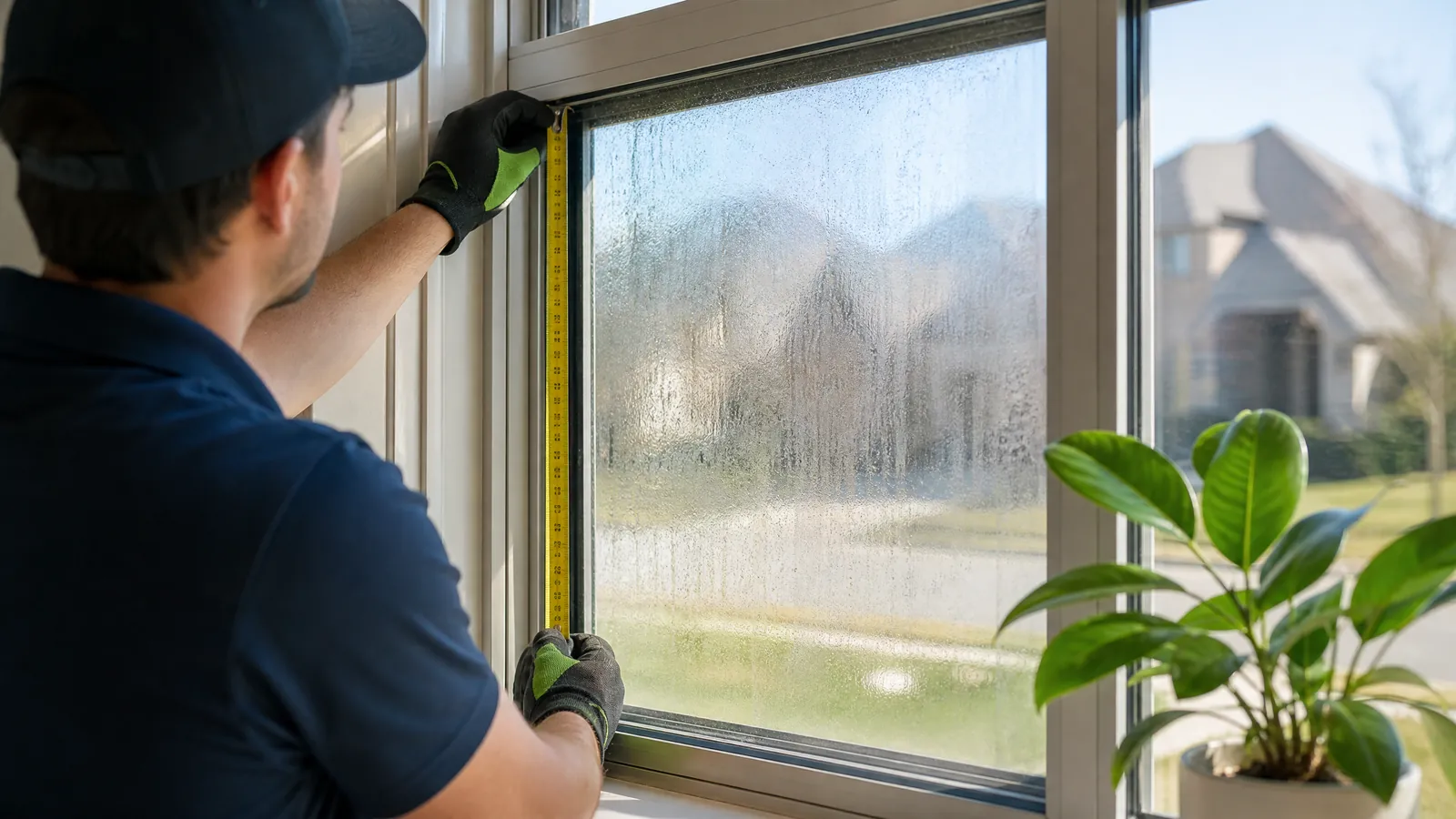
When homeowners notice condensation trapped between the panes of their double-pane windows, the immediate concern is often the cost and disruption of a full window replacement. Fortunately, foggy glass window repair offers a targeted, efficient solution. By replacing only the failed insulated glass unit (IGU) while leaving the existing window frame intact, foggy glass repair restores clarity and energy efficiency at a fraction of the cost of a complete overhaul.
Understanding the operational reality of foggy glass repair helps set accurate expectations for the project. From the initial phone consultation to the final warranty registration, the process is highly structured and relies on precise measurements and specialized fabrication. The goal is to seamlessly integrate a new, factory-sealed glass unit into your existing frame without damaging the surrounding trim or interior finishes.
This guide details exactly what happens during a professional insulated glass unit replacement. We will walk through the entire timeline, explaining the technical steps our technicians take to ensure a perfect fit, a watertight seal, and a lasting repair for your home.
The Initial Phone Call: Gathering the Right Information
The repair process begins before a technician ever steps foot on your property. When you call to schedule a consultation, having specific information ready allows us to understand the scope of the project and prepare for the on-site assessment. While we do not expect homeowners to provide exact manufacturing measurements, a general overview of the affected windows is crucial.
During the initial call, our team will ask a series of questions to gauge the scale of the foggy glass window repair. We need to know the approximate number of windows exhibiting seal failure. We will also ask for rough size estimates: standard bedroom sizes, large picture windows, or sliding patio doors.
Additionally, the location of the windows matters. Windows on the second or third story may require specialized ladders or scaffolding, which affects scheduling and equipment requirements. Finally, noting any specific features, such as internal grids (muntins) or factory tints, helps us anticipate the type of glass fabrication required.
| Stage | Typical Duration | What You Need to Do |
|---|---|---|
| Initial Phone Call | 10-15 minutes | Provide rough window count, sizes, and story level. |
| On-Site Assessment | 30-60 minutes | Ensure clear access to the affected windows. |
| Glass Fabrication | 3-7 business days | Wait for the custom units to be manufactured. |
| Installation Day | 1-8 hours (varies by count) | Clear furniture away from windows; secure pets. |
| Sealant Cure Time | 48-72 hours | Avoid cleaning the glass or pressing on the panes. |
The Free On-Site Assessment
Once the initial details are gathered, the next step is a comprehensive on-site assessment. A trained technician arrives at your home to inspect the windows in question. The primary objective of this visit is to confirm that the issue is indeed a seal failure rather than surface condensation or hard water staining.
Surface condensation occurs on the room-facing or exterior-facing side of the glass and is typically a result of indoor humidity levels or weather conditions. Seal failure, on the other hand, means the perimeter seal of the insulated glass unit has degraded, allowing ambient air and moisture to penetrate the space between the panes. When the desiccant material inside the spacer bar becomes saturated, the moisture condenses on the inner surfaces of the glass, creating the signature foggy or milky appearance.
If the technician confirms seal failure, they will proceed to evaluate the condition of the window frame. The frame must be structurally sound to accept a new IGU. If there is severe frame rot in wood windows or significant warping in vinyl frames, a full window replacement might be necessary. However, in the vast majority of cases, the frame is perfectly viable for a glass-only replacement.
Precise Measurement: The Science of Glass Sizing
The most critical phase of the on-site assessment is the measurement process. Insulated glass units are not off-the-shelf products; each unit is custom-fabricated to fit the exact dimensions of your specific window frame. A fraction of an inch off in any direction can result in a unit that will not fit or a seal that will fail prematurely.
Technicians measure the sight-line dimensions, meaning the visible glass area, and calculate the overall unit dimensions based on the depth of the glazing channel. They must also determine the exact overall thickness of the IGU, which typically ranges from half an inch to a full inch. This involves measuring the thickness of the individual glass panes (usually single-strength or double-strength) and the width of the spacer bar separating them.
Furthermore, the technician must identify if the glass needs to be tempered. Building codes mandate tempered safety glass in specific locations, such as near doors, close to the floor, or in bathrooms. Tempered glass is designed to shatter into small, blunt pieces rather than dangerous, jagged shards. Identifying these requirements during the measurement phase ensures the new unit complies with all local safety regulations.
Glass Fabrication Lead Time
After the precise measurements and specifications are recorded, the order is sent to a specialized glass manufacturing facility. Because every IGU is custom-built, there is a mandatory fabrication lead time. The manufacturing process involves cutting the glass to size, washing it with deionized water, applying the spacer bar with a primary polyisobutylene seal, and then sealing the entire perimeter with a secondary silicone or polysulfide sealant.
For standard clear glass units, the fabrication process typically takes several business days. However, the lead time can extend for specialized units. Oversized picture windows, tempered safety glass, obscure or patterned glass for bathrooms, and units with internal grids all require additional manufacturing steps.
During this waiting period, the foggy windows remain in place, securing your home against the elements. The existing failed units are not removed until the new, custom-fabricated glass is ready for installation.
Scheduling Your Service
Once the newly fabricated insulated glass units arrive at our facility and pass a rigorous quality control inspection, our scheduling team contacts you to arrange the installation day. We coordinate a time that minimizes disruption to your daily routine. Because the replacement process is highly efficient, most standard residential jobs can be completed in a single day.
Install Day: Hour by Hour Breakdown
The day of service is highly orchestrated. Our technicians follow a strict operational protocol to ensure the safety of your property and the integrity of the new glass units. Here is what you can expect as the installation unfolds.
Protecting Interior Surfaces
Upon arrival, the first priority is protecting your home. Technicians lay down drop cloths and protective runners in the work areas to shield your floors and furniture from dust, debris, and the tools required for the job. We treat your home with the utmost respect, ensuring the work zone remains contained.
Removing Stops or Glazing Bead
To access the failed insulated glass unit, the technician must carefully remove the stops or glazing beads that hold the glass in the frame. Depending on the window type, these may be vinyl, aluminum, or wood. This step requires precision and specialized tools to avoid snapping brittle vinyl or splintering wood trim. The stops are carefully set aside and labeled for reinstallation later.
Extracting the Failed Unit
With the stops removed, the technician cuts through the original glazing tape or sealant securing the glass to the frame. Using heavy-duty suction cups, the failed IGU is carefully extracted from the window sash. The old unit is then safely moved to our service vehicle for proper disposal and recycling.
Cleaning the Frame Channel
Before the new glass can be installed, the frame channel must be meticulously cleaned. Any residual silicone, old glazing tape, dirt, or debris is scraped away. A clean, smooth surface is absolutely essential for the new sealant to adhere properly. Skipping this step compromises the watertight integrity of the new installation.
Setting the New Unit
The technician places new setting blocks inside the bottom of the frame channel. These small rubber or neoprene blocks support the weight of the glass, keeping it centered in the frame and preventing it from sitting directly in any water that might enter the weeping system. Fresh glazing tape or structural silicone sealant is applied to the frame, and the new custom-fabricated IGU is carefully set into place, ensuring equal pressure along all edges.
Reinstalling Stops and Cleanup
Once the glass is perfectly positioned and sealed, the original stops or glazing beads are snapped or nailed back into place. The technician then applies a final bead of silicone around the perimeter if required by the window design. Finally, the protective drop cloths are removed, the work area is vacuumed, and all tools are packed away.
Final Verification, Warranty, and Cure Time
After the installation is complete, the lead technician conducts a final verification walk-through with the homeowner. We inspect each replaced unit to ensure the glass is pristine, the seals are tight, and the window operates correctly.
At this time, we also complete the warranty registration. Every job we perform carries a 10-Year IGU manufacturer warranty and an Apex 1-Year workmanship warranty, providing long-term peace of mind against future seal failures.
It is important to note that the new sealants require a cure time. We advise homeowners to wait at least 48 to 72 hours before cleaning the new glass with any liquid glass cleaners or applying pressure to the panes. This allows the silicone to fully set and achieve maximum adhesion.
Capacity and Potential Delays
A common question is how many windows can be repaired in a single day. A standard two-person crew can typically replace 10 to 15 insulated glass units in a standard workday, assuming the windows are easily accessible on the ground or second floor. For whole home projects involving 20 or more windows, the installation may be scheduled over two consecutive days.
While we strive for seamless execution, certain factors can delay a job. Heavy rain or severe weather prevents the proper application and curing of exterior sealants, necessitating a reschedule. Occasionally, a glass unit may arrive from the manufacturer with the wrong dimensions or a defect, requiring a rapid refabrication.
During the extraction process, a technician might discover hidden frame rot that was not visible during the initial assessment, which must be addressed before the new glass is set. Additionally, restricted access due to heavy furniture, or delays in gaining HOA or gated community access, can slow down the installation timeline.
Local Service Area
Apex Windows & Glass is proud to provide expert window glass replacement across the Dallas-Fort Worth metroplex. Whether you need a single foggy window repaired or a comprehensive glass update for your property, our technicians are ready to assist. We frequently service homes in Dallas, McKinney, Frisco, Plano, and Southlake, delivering high-quality craftsmanship and reliable service to our local communities.
Professional Window Glass Replacement
If you are tired of looking through milky, obscured windows, it is time to restore the clarity and efficiency of your home. Replacing the insulated glass unit is a smart, cost-effective alternative to full window replacement. Standard-size glass-only IGU replacement is typically $150-$350 per window, while large picture windows and patio door glass run higher. In contrast, full window replacement typically runs $400-$1,200+ per window, and whole home projects commonly run from several thousand to $20,000+ depending on count and product tier. Exact pricing requires a written estimate based on precise measurements.
Contact Apex Windows & Glass today at (214) 263-3008 to schedule your free on-site assessment, or visit our foggy glass repair page to learn more about our specialized services.
Frequently Asked Questions About Foggy Glass Window Repair
Can you just clean the inside of the foggy glass?
No, cleaning the inside of a sealed insulated glass unit is not a viable long-term solution. Once the perimeter seal fails and moisture enters, the desiccant is saturated and the internal low-E coatings are often permanently oxidized or etched. The only proper repair is replacing the entire sealed glass unit.
Do I need to replace the whole window frame?
In most cases, you do not need to replace the window frame. As long as the wood, vinyl, or aluminum frame is structurally sound and free of severe rot or warping, we can simply extract the failed glass and install a new custom-fabricated unit into the existing frame.
How long does the actual installation take per window?
For a standard ground-floor window, the extraction of the old glass and installation of the new unit typically takes 30 to 45 minutes. Windows on upper levels, oversized picture windows, or units with complex glazing beads may require additional time to ensure safe and proper installation.
Will the new glass match my other windows?
Yes, our technicians take precise notes during the measurement phase to ensure the new glass matches your existing windows. We specify the correct glass thickness, tint, low-E coating type, and internal grid patterns so the replacement unit blends seamlessly with the rest of your home.
What happens to the old foggy glass?
We handle the complete removal and disposal of your failed glass units. The old insulated glass is safely transported away from your property in our service vehicles and taken to a commercial recycling facility where the glass and aluminum spacers are processed.
Is the repair work covered by a warranty?
Absolutely. Every insulated glass unit replacement we perform carries a 10-Year IGU manufacturer warranty and an Apex 1-Year workmanship warranty. If the new unit experiences a seal failure within that decade, we will replace it at no additional cost to you.
Need Foggy Glass Replacement in Your Area?
We provide expert foggy glass replacement and window repair across the Dallas-Fort Worth metroplex. Click your city below for local pricing, neighborhoods served, and FAQs:
About the Author
Alvin Paulson
Co-Owner & Lead Technician, Apex Windows & Glass
Alvin Paulson co-founded Apex Windows & Glass and brings over 30 years of hands-on expertise in foggy glass replacement, insulated glass unit (IGU) repair, and energy-efficient window upgrades. Born and raised in North Texas, Alvin has personally assessed and repaired thousands of windows across the Dallas-Fort Worth metroplex — from historic McKinney homes to new-build subdivisions in Frisco and Prosper. He is a licensed glazier and holds certifications in Low-E glass installation and argon gas window systems. Alvin's philosophy is simple: replace only what's broken, save the homeowner money, and back every job with a 10-Year IGU manufacturer warranty + Apex 1-Year workmanship warranty.