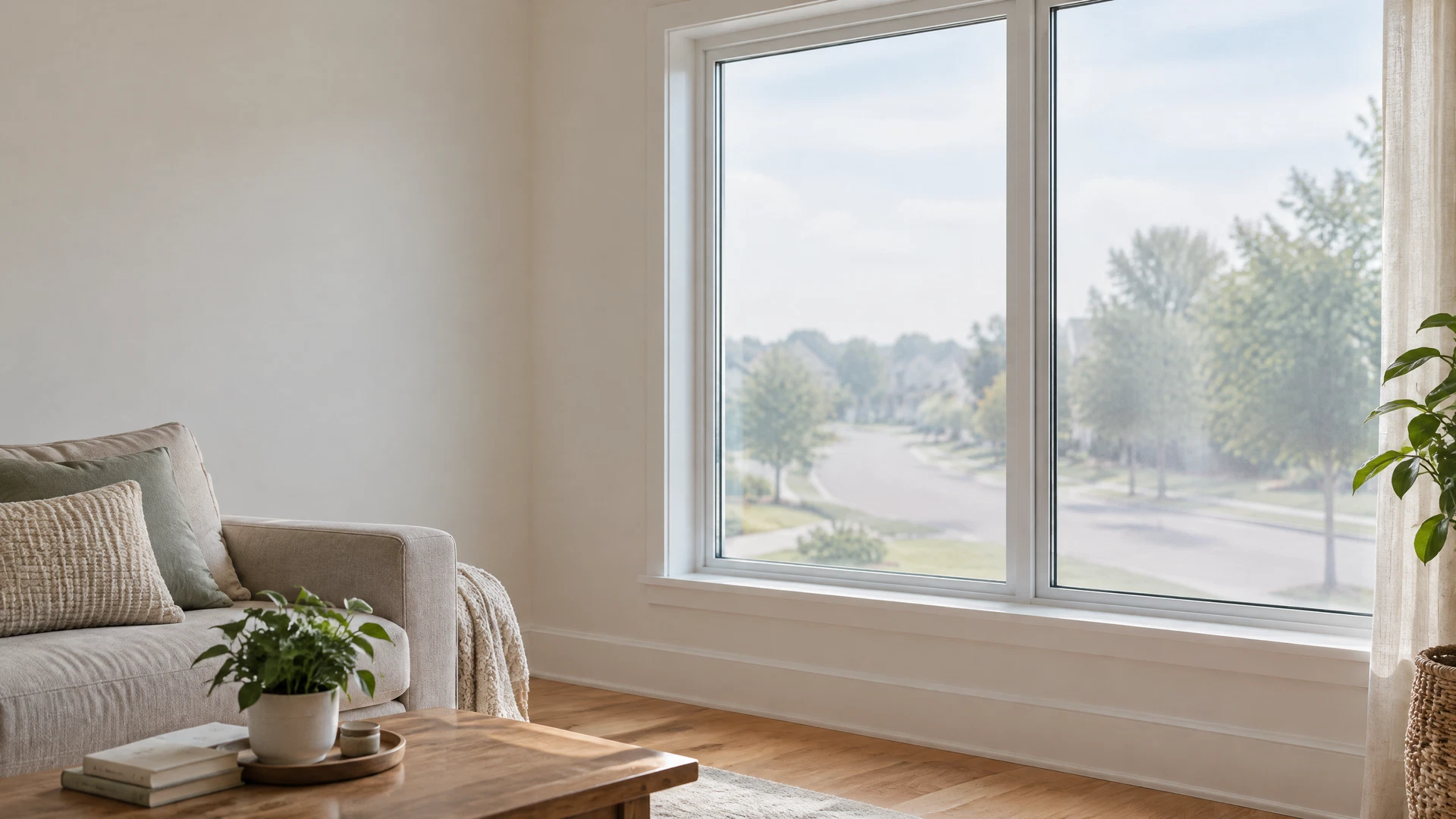
Frisco homeowners near major roads like the Dallas North Tollway understand the unique challenges of North Texas suburban life. When a window begins to fog between the panes, it often happens in rooms where traffic noise is most noticeable. This haze, caused by a failed seal in the insulated glass unit (IGU), does more than block the view. It serves as a decision point for homeowners who want to make their interior spaces quieter. Instead of merely restoring clarity, many residents now ask about acoustic glass upgrades. This transition requires an understanding of how sound travels through glass and what options are available for existing window frames.
Understanding Foggy Glass Near Busy Frisco Corridors
The appearance of moisture or a milky haze between two panes of glass is a definitive sign of seal failure. In Frisco, extreme temperature swings put significant pressure on window seals. Over time, the sealant can develop small cracks, allowing humid North Texas air to enter the space. Once the seal is breached, the desiccant material inside the spacer bar becomes saturated, and condensation begins to form on the inner surfaces of the glass. For homes near high-traffic areas like Lebanon Road, this failure often prompts a closer look at the overall performance of the glass.
The Sound of Silence: Moving Beyond Simple Glass Repair
When a homeowner notices a foggy window, the initial thought is usually to restore the view. However, for those near the Sam Rayburn Tollway, the secondary concern is often the constant hum of tires on pavement. A standard glass-only replacement involves removing the failed IGU and installing a new one with similar specifications. This restores clarity and the original energy efficiency of the window. An acoustic upgrade, by contrast, involves selecting a new IGU designed specifically to dampen sound vibrations. It is important to distinguish between a repair that fixes a defect and an upgrade that changes how the home functions.
Acoustic Glass Options for Your Frisco Home
The most common upgrades include laminated glass and asymmetrical glass configurations. Both can be fitted into many existing window frames, provided the frame and sash are in good structural condition.
Laminated Glass: The PVB Interlayer Advantage
Laminated glass consists of two layers of glass bonded together with a transparent interlayer, typically made of polyvinyl butyral (PVB). This interlayer remains flexible, which allows it to absorb sound vibrations rather than passing them through to the inner pane. In addition to its acoustic benefits, laminated glass provides enhanced security and superior UV protection, which is a significant advantage in the Texas sun.
Asymmetrical Glass Thickness for Traffic Noise
A simpler way to reduce noise is the use of asymmetrical glass. In a standard IGU, both panes are usually 1/8 inch thick. An asymmetrical unit might use one 1/8-inch pane and one 3/16-inch pane. Because each thickness of glass vibrates at a different frequency, the combination helps to cancel out a broader range of exterior noise. This is particularly effective for the low-frequency rumble associated with heavy traffic on roads like US 380.
Comparing Glass-Only Replacement Options
To help Frisco homeowners evaluate their choices, the following table outlines the differences between standard and acoustic glass configurations for a typical Frisco residential window.
| Feature | Standard IGU Replacement | Asymmetrical Glass Upgrade | Laminated Glass Upgrade |
|---|---|---|---|
| Primary Goal | Restore clarity and seal | Reduce specific noise frequencies | Maximum noise reduction |
| Glass Construction | Two panes of equal thickness | Two panes of different thickness | One standard, one laminated |
| Sound Reduction | Baseline performance | Moderate improvement | Significant improvement |
| UV Protection | Standard Low-E levels | Standard Low-E levels | Enhanced (up to 99%) |
| Security | Standard break resistance | Slightly improved | High impact resistance |
| Frame Compatibility | High (exact match) | High (similar thickness) | Moderate (requires check) |
When to Choose Acoustic Upgrades During a Foggy Glass Repair
The most suitable time to consider an acoustic upgrade is when the glass is already being replaced due to a seal failure. Since the labor to remove the old unit and install the new one is largely the same, the additional cost is limited to the specialized glass itself. Residents should prioritize rooms that face high-traffic areas or those where quiet is essential. By focusing the upgrade on specific problem windows, homeowners can achieve a noticeable improvement in interior comfort. These projects often include energy efficient upgrades like argon gas fills, which also contribute slightly to the overall density of the unit and assist in dampening sound waves.
Evaluating Your Existing Window Frames for Upgrades
Before committing to an acoustic glass upgrade, it is essential to ensure that the existing window frames can support the new units. Acoustic glass, especially laminated options, can be heavier than standard double-pane glass. The frames, sashes, and hardware must be in good working order to handle the additional weight and ensure a proper seal. If the frames are warped or the vinyl is severely cracked, a glass-only replacement may not be the most suitable long-term solution. However, for many well-maintained Frisco homes, glass-only replacement remains a viable way to address both fogging and noise.
Frequently Asked Questions
Will acoustic glass completely block out the sound of the Dallas North Tollway?
No glass can completely eliminate all exterior noise. However, acoustic glass upgrades significantly reduce the volume of traffic noise. The goal is to lower the sound to a level where it no longer disrupts sleep or conversation.
Can I upgrade just one window in a room to acoustic glass?
Yes, you can choose to replace only the failed, foggy unit with an acoustic upgrade. While replacing all windows in a room provides the most consistent sound reduction, upgrading the single most affected window can still provide a noticeable benefit.
Is laminated glass safe for use in Frisco homes?
Laminated glass is extremely safe and is often referred to as safety glass. If the glass is ever broken, the fragments tend to stick to the PVB interlayer rather than falling out of the frame. This makes it an excellent choice for windows near entryways or areas where children play.
How long does a typical glass-only replacement take?
The process begins with a precise measurement of the existing window opening. Once the custom-sized IGU is manufactured, the actual installation usually takes less than an hour per window. This minimized disruption is a primary reason Frisco homeowners prefer glass-only replacement over full-frame window projects.
Need Foggy Glass Replacement in Your Area?
We provide expert foggy glass replacement and window repair across the Dallas-Fort Worth metroplex. Click your city below for local pricing, neighborhoods served, and FAQs:
About the Author
Alvin Paulson
Co-Owner & Lead Technician, Apex Windows & Glass
Alvin Paulson co-founded Apex Windows & Glass and brings over 30 years of hands-on expertise in foggy glass replacement, insulated glass unit (IGU) repair, and energy-efficient window upgrades. Born and raised in North Texas, Alvin has personally assessed and repaired thousands of windows across the Dallas-Fort Worth metroplex — from historic McKinney homes to new-build subdivisions in Frisco and Prosper. He is a licensed glazier and holds certifications in Low-E glass installation and argon gas window systems. Alvin's philosophy is simple: replace only what's broken, save the homeowner money, and back every job with a 10-Year IGU manufacturer warranty + Apex 1-Year workmanship warranty.