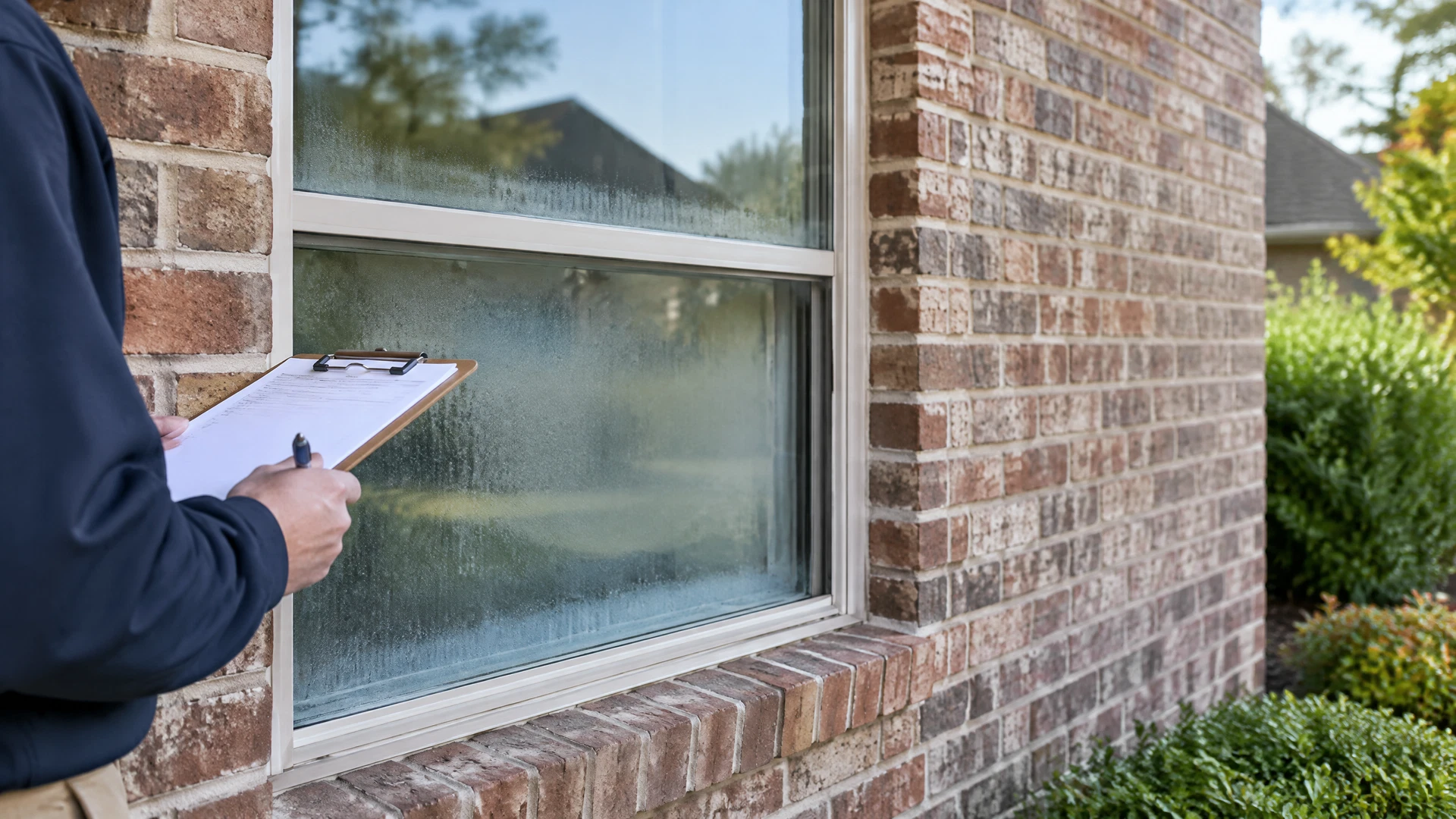
When a McKinney home inspection report highlights foggy windows or failed thermal seals, it triggers concern for both buyers and sellers. In a real estate transaction, clarity is more than an aesthetic preference; it is a point of negotiation. However, a foggy pane does not always necessitate a full window replacement. Understanding how to document these symptoms and separate glass issues from broader structural window defects is essential for moving the conversation toward a resolution.
Understanding the Foggy Window Note in a McKinney Inspection
A home inspector’s role is to identify visible symptoms that may indicate maintenance or performance issues. When they note fogging between the panes of an insulated glass unit (IGU), they are typically flagging a failed seal. This occurs when the moisture-absorbing desiccant inside the spacer bar becomes saturated, allowing ambient humidity to condense inside the unit. In McKinney’s climate, where temperature fluctuations can be significant, this cycle of expansion and contraction eventually stresses the seals until they give way. For a homeowner in McKinney, seeing this on a report can feel like a major setback. However, an inspection report is a snapshot of current conditions, not a final verdict on the entire window system.
Separating Glass Failure from Frame Defects
One of the most important distinctions to make during a home sale is the difference between a failed IGU and a failing window frame. A failed seal is often a component issue that can be addressed through glass-only replacement, provided the surrounding materials are in good condition. If the frame, sash, and hardware remain structurally sound and the window operates smoothly, replacing just the glass is often a viable path. Conversely, if the inspector notes that the window is difficult to open, shows wood rot, or has significant frame warping, the foggy glass may be a symptom of a larger problem. In these cases, a broader window assessment is appropriate to determine if a full replacement is necessary.
Identifying Serviceable Frames
Before deciding on a repair path, the existing frame must be inspected for serviceability. A frame is generally considered a candidate for glass-only replacement if the wood, vinyl, or aluminum is free of significant cracks or rot. Additionally, the glazing beads or putty that hold the glass in place must be removable without destroying the sash.
Assessing Sash and Hardware Function
The functionality of the sash and hardware also plays a role. If a window is painted shut or the balances are broken, replacing the glass alone will not restore full utility. Professionals look at the entire opening to ensure that a new IGU will perform as intended. If the opening itself is out of square, this may require more than just a glass technician's attention.
Documenting the Symptom for Negotiation
When foggy glass appears on an inspection report, the documentation should be specific. Rather than a vague note about bad windows, the report should list the location and quantity of the affected units. This level of detail helps both parties understand the financial implications and prevents the assumption that the entire home needs new windows. Sellers can prepare by doing their own walkthrough before the official inspection. Identifying failed seals early allows for a more proactive conversation. By obtaining a professional assessment of the foggy window repair vs replacement cost, sellers can provide factual data to potential buyers.
| Inspection Finding | Potential Glass-Only Fix | Requires Full Window Check |
|---|---|---|
| Haze between panes | Yes, if frame is sound | No, typically isolated |
| Broken or cracked glass | Yes, if frame is sound | No, typically isolated |
| Rotted wood sash | No | Yes, structural issue |
| Warped vinyl frame | No | Yes, structural issue |
| Window won't open | No | Yes, hardware/frame issue |
Seeking a Written Scope of Work
Once the foggy windows are identified, the next step is to seek a written scope of work from a glass professional. This document should clearly state the measurements of the affected units, the type of glass required and the condition of the existing frames. Having a written scope removes the guesswork from the negotiation process. It is important to note that glass-only insulated glass unit replacement can be considered only when the existing frame, sash, hardware, glazing system, and opening are serviceable; a broader window assessment can be appropriate when they are not.
Practical Steps for McKinney Sellers and Buyers
For sellers, the most suitable approach is transparency. Providing the history of the windows and any recent glass work can build trust with a buyer. If a seal has failed, acknowledging it and having a plan in place shows that the home has been well-maintained despite the natural wear and tear that affects all insulated glass. For buyers, seeing foggy windows should be a prompt for further inquiry rather than a reason to walk away. Ask for a professional evaluation to see if the frames are still in good condition.
Reviewing Repair Documentation
As the closing date approaches, ensure that all agreed-upon repairs are documented with invoices and warranty information. If the glass was replaced, the buyer should receive the details of the new units, including any energy-efficient coatings used. This documentation is valuable for the new homeowner's records.
Managing Buyer Expectations
Buyers should understand that glass replacement restores clarity and thermal performance but does not address unrelated structural issues. Clear communication about the scope of work prevents misunderstandings at the closing table. By focusing on factual assessments, both parties can reach a fair resolution that preserves property value.
Frequently Asked Questions
Does foggy glass always mean the entire window must be replaced?
No, if the frame and sash are in good condition, a professional can replace just the insulated glass unit (IGU). This restores clarity and thermal performance without removing the entire window frame.
Will replacing only the glass fix a drafty window?
Replacing the glass will restore the insulating properties of the IGU, but it will not fix drafts caused by worn-out weatherstripping or gaps between the window frame and the house. A full assessment is necessary to address air infiltration.
How long does it take to replace a foggy glass unit?
Once the custom glass unit is manufactured, the actual installation typically takes less than an hour per pane. The manufacturing lead time is usually the longest part of the process.
Can I clean the fog from between the panes myself?
No, once moisture has entered the sealed space, it cannot be cleaned out. The haze is often accompanied by mineral deposits that etch the glass. The only effective way to restore clarity is to replace the entire insulated glass unit.
Need Foggy Glass Replacement in Your Area?
We provide expert foggy glass replacement and window repair across the Dallas-Fort Worth metroplex. Click your city below for local pricing, neighborhoods served, and FAQs:
About the Author
Alvin Paulson
Co-Owner & Lead Technician, Apex Windows & Glass
Alvin Paulson co-founded Apex Windows & Glass and brings over 30 years of hands-on expertise in foggy glass replacement, insulated glass unit (IGU) repair, and energy-efficient window upgrades. Born and raised in North Texas, Alvin has personally assessed and repaired thousands of windows across the Dallas-Fort Worth metroplex — from historic McKinney homes to new-build subdivisions in Frisco and Prosper. He is a licensed glazier and holds certifications in Low-E glass installation and argon gas window systems. Alvin's philosophy is simple: replace only what's broken, save the homeowner money, and back every job with a 10-year warranty.