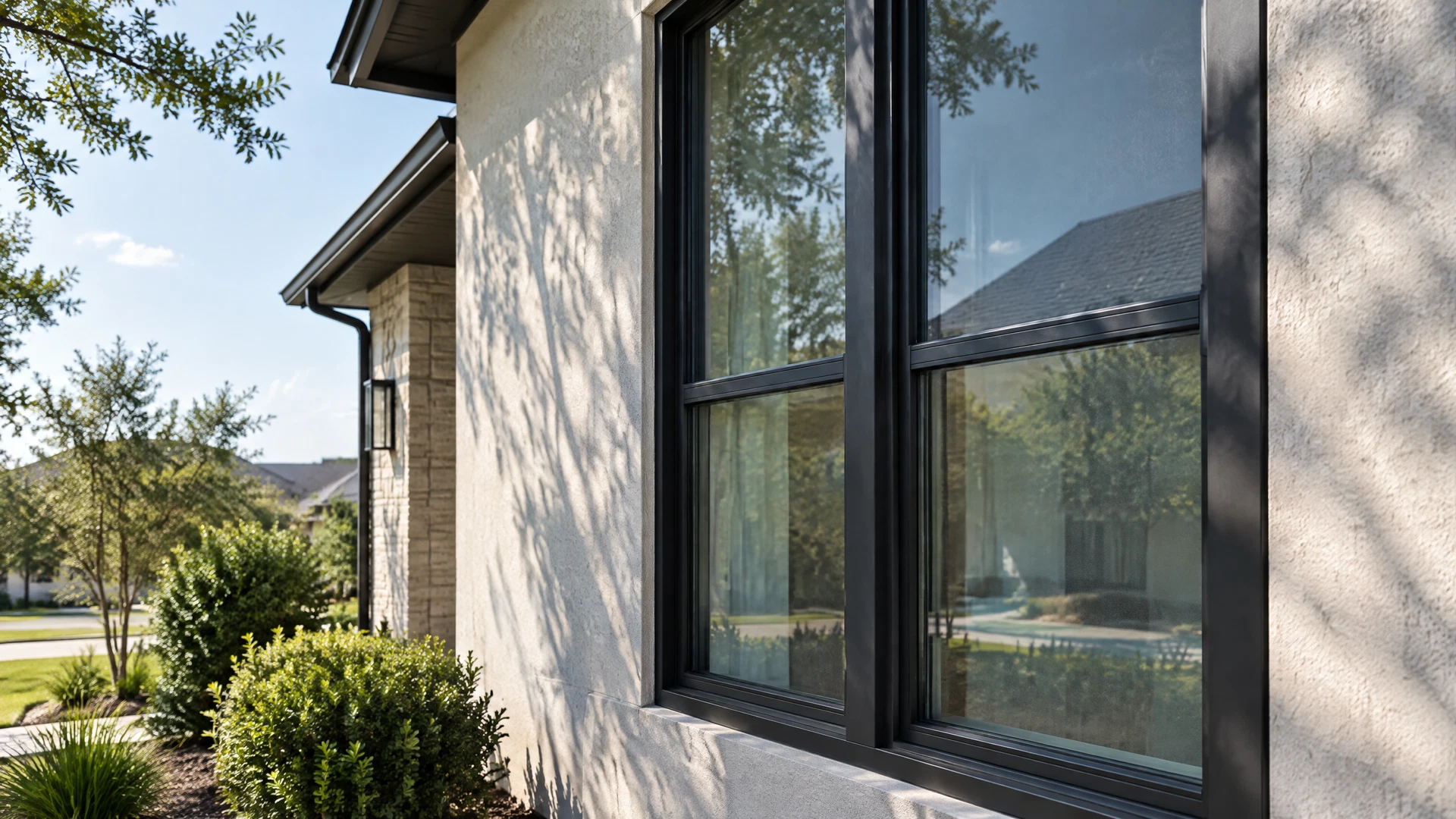
Dark window frames have become a hallmark of modern North Texas home design. While sleek charcoal and deep bronze finishes offer stunning aesthetic contrast, they also introduce unique challenges related to thermal stress. Homeowners in Plano are increasingly noticing foggy glass in these modern systems. Understanding the relationship between dark frame pigments and solar heat absorption is the first step in diagnosing why these seals fail and determining the most suitable path for restoration. By examining how these frames interact with the intense Texas sun, you can better understand the diagnostic steps needed to address the issue before considering replacement options.
Understanding the Relationship Between Frame Color and Heat Absorption
The color of a window frame significantly influences how much solar energy it absorbs. While light-colored frames reflect a large portion of the sun’s rays, dark pigments act as a heat sink. This is particularly relevant for those seeking window services in Plano, where summer temperatures frequently climb into the triple digits and the sun remains intense for many hours each day. The heat absorbed by the frame radiates into the entire window assembly, affecting the glass and its sealing components.
Thermal Absorption of Dark Pigments
Darker colors, such as black or bronze, have a lower solar reflectance index. When the sun hits a dark frame, the material converts that list energy into heat. In the peak of a Texas afternoon, the surface temperature of a dark frame can be significantly higher than the ambient air temperature. This heat radiates into the surrounding components of the window system, including the spacer bar and the primary seal of the glass unit, potentially softening the sealants over time.
Expansion and Contraction Cycles
Every material expands when it gets hot and contracts when it cools. In a window assembly, the frame, the glass, and the sealant all have different rates of thermal expansion. Dark frames experience more extreme temperature swings between the heat of the day and the relative cool of the night. This creates a pumping action where the seals are constantly being stretched and compressed. Over several seasons, this repetitive mechanical stress can lead to small fissures in the sealant, allowing moisture-laden air to enter the space between the glass panes.
Why Sun Exposure Matters for Modern Frame Systems
In many Plano developments, homes are positioned to maximize natural light, which often means large expanses of glass facing south or west. These orientations receive the most direct and punishing solar radiation. When dark frames are combined with high sun exposure, the thermal load is maximized. Modern frame systems are designed with thermal breaks to manage this heat, but the laws of physics still apply. It is important to understand the underlying causes of window seal failure to distinguish between simple surface condensation and a true IGU failure.
Assessing Your Existing Frame for Glass-Only Replacement
When foggy glass appears in a dark-framed window, the first question many homeowners ask is whether the entire window must be replaced. In many cases, if the frame itself is in good condition, a glass-only replacement is a viable and cost-effective solution. This process involves removing the failed IGU and installing a new, factory-sealed unit while retaining the original frame.
Before proceeding, a thorough assessment of the window’s structural components is necessary. The sash must be square and free of significant warping. Dark frames made of vinyl can sometimes suffer from permanent deformation if they have been subjected to extreme heat without proper internal reinforcement. Additionally, the hardware should be inspected to ensure they operate smoothly. If the frame is sagging or the sash is no longer sealing against the weatherstripping, replacing the glass alone may not solve the underlying comfort issues.
Diagnostic Checklist for Plano Homeowners
To help you decide on the most suitable course of action for your windows, consider the following comparison of symptoms and potential causes.
| Symptom | Potential Cause | Recommended Action |
|---|---|---|
| Fogging that can be wiped away | Interior humidity | Improve room ventilation |
| Haze or moisture between panes | Seal failure | Assess for IGU replacement |
| Frame feels hot to the touch | Solar absorption | Consider exterior shading |
| Visible cracks in the frame | Structural failure | Full window assessment |
| Rainbow streaks on glass | Long-term failure | Replace insulated glass unit |
| Difficulty opening or closing | Frame warping | Full window assessment |
Next Steps for Failed Seals in Dark Frames
If you have determined that your dark-framed windows have failed seals, the next step is to seek a professional evaluation. Because Plano homes often feature high-performance glass with specific Low-E coatings, it is crucial that any replacement glass matches the performance and aesthetic characteristics of the original units. A mismatched pane can stand out significantly, especially when viewed against the consistent look of a modern dark frame system.
A professional technician can measure the thickness of your existing glass unit, identify the type of spacer used, and recommend a replacement that incorporates modern sealant technology. By addressing the issue early, you can restore the clarity and energy efficiency of your home without the need for a full-scale renovation, provided your frames remain in serviceable condition.
Frequently Asked Questions
Why do dark window frames fail more often than white ones?
Dark frames absorb more solar heat, leading to higher surface temperatures. This increased heat causes the frame and the glass seals to expand and contract more aggressively than lighter frames. Over time, this repetitive thermal movement can stress the sealants until they develop small gaps, leading to the foggy appearance known as seal failure.
Can I just reseal the glass without replacing the whole unit?
No, once moisture has entered the space between the two panes of glass, the internal desiccant is usually saturated. A permanent fix requires the removal of the old insulated glass unit and the installation of a new, factory-sealed unit. Attempting to reseal a unit in place does not remove the trapped moisture.
Does my dark frame mean I need to replace the entire window?
Not necessarily. If the dark frame is structurally sound, not warped, and the hardware functions correctly, you can often replace just the glass unit. This is a common solution for modern homes where the frames are still in good aesthetic and functional shape but the glass seals have succumbed to thermal stress.
How can I prevent thermal stress on my dark-framed windows?
While you cannot change the color of the frames easily, you can reduce thermal stress by providing exterior shade through landscaping or solar screens. Additionally, ensuring that interior window treatments are not pressed tightly against the glass allows for better airflow, which helps prevent heat from becoming trapped against the window assembly.
Need Foggy Glass Replacement in Your Area?
We provide expert foggy glass replacement and window repair across the Dallas-Fort Worth metroplex. Click your city below for local pricing, neighborhoods served, and FAQs:
About the Author
Alvin Paulson
Co-Owner & Lead Technician, Apex Windows & Glass
Alvin Paulson co-founded Apex Windows & Glass and brings over 30 years of hands-on expertise in foggy glass replacement, insulated glass unit (IGU) repair, and energy-efficient window upgrades. Born and raised in North Texas, Alvin has personally assessed and repaired thousands of windows across the Dallas-Fort Worth metroplex — from historic McKinney homes to new-build subdivisions in Frisco and Prosper. He is a licensed glazier and holds certifications in Low-E glass installation and argon gas window systems. Alvin's philosophy is simple: replace only what's broken, save the homeowner money, and back every job with a 10-year warranty.