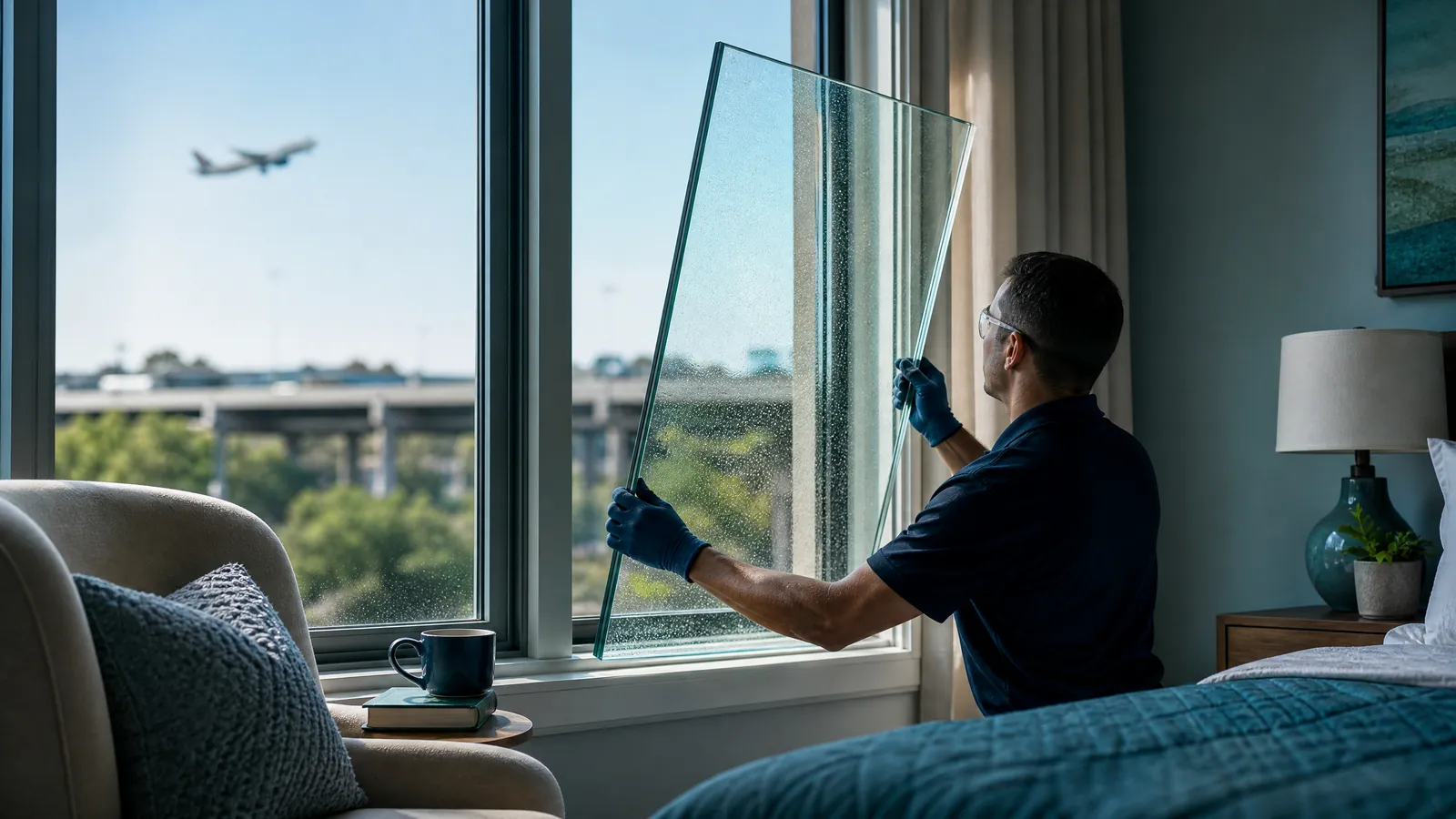
Dallas–Fort Worth is a vibrant, rapidly growing metroplex, but that growth comes with a downside: noise. Whether you live near a busy highway, under the flight paths of DFW International or Dallas Love Field, or in a bustling neighborhood, constant exterior noise can disrupt your peace and quiet. If your home is plagued by road and airport noise, you might assume that the only solution is a complete, expensive window replacement. However, you can significantly reduce noise transmission with a glass-only window upgrade.
By replacing just the insulated glass unit (IGU) while keeping your existing window frames, you can upgrade to noise-reducing glass configurations like dissimilar or laminated glass. This approach offers up to 70% savings compared to a full window replacement. In this guide, we will explore how glass-only upgrades work, why they are effective for soundproofing, and how they can restore tranquility to your DFW home.
Why DFW Homes Suffer from Road and Airport Noise
The DFW area is home to major transportation hubs and an extensive network of highways, including I-35, US-75, and the Dallas North Tollway. Homes situated near these thoroughfares or under active flight paths are constantly bombarded by low-frequency rumbling and high-frequency engine noise. Standard builder-grade windows, especially older single-pane or basic double-pane units, are often inadequate at blocking these sound waves.
Sound travels through the path of least resistance, and in most homes, windows are the weakest link in the building envelope. When sound waves hit standard glass, the panes vibrate, transmitting the noise directly into your living space. To combat this, homeowners need windows specifically designed to disrupt and absorb these vibrations.
How Window Glass Impacts Sound Transmission
Not all glass is created equal when it comes to soundproofing. The ability of a window to block noise depends on several factors, including the thickness of the glass, the space between the panes, and the materials used. Standard double-pane windows consist of two identical panes of glass separated by an airspace. While this design provides decent thermal insulation, it is less effective at blocking noise because both panes vibrate at the same frequency.
To effectively reduce sound transmission, the window must incorporate different materials or thicknesses that vibrate at different frequencies, thereby breaking the sound wave before it enters your home. This is where advanced glass technologies, such as dissimilar glass and laminated glass, come into play.
Understanding STC Ratings for Windows
When evaluating noise-reducing windows, the Sound Transmission Class (STC) rating is the standard measurement used to determine how well a barrier blocks airborne sound. The higher the STC rating, the better the window is at reducing noise.
Single-pane windows: Typically have an STC rating of 26 to 28. Standard double-pane windows: Generally range from 26 to 32. * Soundproof windows (dissimilar or laminated): Can achieve STC ratings of 38 to 45 or higher.
An increase of just 10 points in an STC rating can make the perceived noise level seem half as loud. By upgrading the glass in your existing frames, you can significantly boost your window's STC rating without the hassle and expense of a full replacement.
The Science of Dissimilar and Laminated Glass
For homeowners looking to maximize noise reduction through a glass-only upgrade, there are two primary options: dissimilar glass and laminated glass.
Dissimilar Glass
Dissimilar glass involves using two panes of glass with different thicknesses in the same insulated glass unit. For example, one pane might be 1/8-inch thick while the other is 1/4-inch thick. Because the panes have different masses, they block different sound frequencies. This mismatch disrupts the sound waves more effectively than two panes of the same thickness, providing a noticeable reduction in noise.
Laminated Glass
Laminated glass takes soundproofing a step further. It consists of two panes of glass bonded together with a clear plastic interlayer, usually made of polyvinyl butyral (PVB). This interlayer acts as a shock absorber, dampening sound vibrations and preventing them from passing through the glass. Laminated glass is highly effective at blocking both high-frequency noises (like sirens or jet engines) and low-frequency rumbles (like highway traffic).
| Feature | Standard Double-Pane | Dissimilar Glass | Laminated Glass |
|---|---|---|---|
| Glass Thickness | Identical panes | Different thicknesses | Glass bonded with plastic interlayer |
| Noise Reduction | Minimal | Moderate to High | High to Excellent |
| STC Rating | 26 - 32 | 34 - 38 | 38 - 45+ |
| Best For | General use, energy efficiency | Moderate road noise | Heavy traffic, airport noise |
Why Glass-Only Upgrades Beat Full Window Replacement for Noise
Many window replacement companies will push for a full tear-out and replacement to solve your noise issues. However, if your window frames are still in good condition, this is often an unnecessary and costly approach.
At Apex Windows, we specialize in glass-only replacement. We can custom-manufacture a new insulated glass unit featuring dissimilar or laminated glass and install it directly into your existing frames. This method offers several distinct advantages:
- Cost Savings: A glass-only upgrade can save you up to 70% compared to a full window replacement.
- Faster Installation: Replacing just the glass is a much quicker process, minimizing disruption to your home.
- No Frame Damage: Full replacements often require removing interior and exterior trim, which can lead to additional repair and painting costs. Glass-only replacement leaves your frames and walls untouched.
- Targeted Solutions: You can choose to upgrade only the windows facing the noise source, such as the street or the airport, rather than replacing every window in your home.
Cost vs. Value: Investing in a Quieter Home
Investing in noise-reducing glass is not just about comfort; it's also about value. A quieter home is a more relaxing and enjoyable place to live, which can improve your overall quality of life. Furthermore, reducing exterior noise can make your home more attractive to potential buyers if you decide to sell in the future.
When you consider the substantial savings of a glass-only upgrade compared to a full replacement, the return on investment is clear. You get the peace and quiet you deserve without overpaying for unnecessary materials and labor. Plus, Apex Windows provides a 10-Year IGU manufacturer warranty + Apex 1-Year workmanship warranty on our insulated glass units, giving you long-term peace of mind.
FAQ
Can replacing just the glass really reduce noise?
Yes, replacing just the glass can significantly reduce noise, provided you upgrade to a noise-reducing configuration like dissimilar or laminated glass. As long as your window frames are in good condition and properly sealed, upgrading the glass is a highly effective and budget-friendly solution for soundproofing.
What is dissimilar glass and how does it work?
Dissimilar glass uses two panes of different thicknesses within the same insulated glass unit. Because the panes have different masses, they vibrate at different frequencies. This mismatch breaks up sound waves more effectively than standard glass, reducing the amount of noise that enters your home. For more information on glass options, check out our guide to window glass thickness for DFW homes and learn how to choose the right glass thickness for your Dallas home.
Is laminated glass better for soundproofing than double-pane?
Yes, laminated glass is superior to standard double-pane glass for soundproofing. The plastic interlayer in laminated glass acts as a sound dampener, absorbing vibrations and blocking a wider range of noise frequencies, making it ideal for homes near airports or busy highways. If you are considering a full replacement instead, review our cost comparison of window replacement vs. foggy glass repair.
Will noise-reducing glass also improve energy efficiency?
Yes, upgrading to new insulated glass units, especially those with Low-E coatings, will improve your home's energy efficiency. While the primary goal of dissimilar or laminated glass is noise reduction, these modern units also provide excellent thermal insulation, helping to keep your home cooler in the Texas summer and lowering your energy bills.
Restore the Peace in Your DFW Home
You don't have to live with the constant disruption of road and airport noise, nor do you have to spend a fortune on a full window replacement. If your window frames are still serviceable, a glass-only upgrade with dissimilar or laminated glass is the smart, cost-effective solution.
Apex Windows is proud to serve the DFW area, offering expert glass-only replacement that saves you up to 70% compared to full window replacement. Our custom-manufactured insulated glass units are backed by a 10-Year IGU manufacturer warranty + Apex 1-Year workmanship warranty, ensuring lasting performance and peace of mind. (Note: Warranties can vary; please verify specific terms with the manufacturer).
Ready to enjoy a quieter, more comfortable home? Contact Apex Windows today at (214) 263-3008 to schedule a consultation and learn more about our noise-reducing glass options.
Need Foggy Glass Replacement in Your Area?
We provide expert foggy glass replacement and window repair across the Dallas-Fort Worth metroplex. Click your city below for local pricing, neighborhoods served, and FAQs:
About the Author
Alvin Paulson
Co-Owner & Lead Technician, Apex Windows & Glass
Alvin Paulson co-founded Apex Windows & Glass and brings over 30 years of hands-on expertise in foggy glass replacement, insulated glass unit (IGU) repair, and energy-efficient window upgrades. Born and raised in North Texas, Alvin has personally assessed and repaired thousands of windows across the Dallas-Fort Worth metroplex — from historic McKinney homes to new-build subdivisions in Frisco and Prosper. He is a licensed glazier and holds certifications in Low-E glass installation and argon gas window systems. Alvin's philosophy is simple: replace only what's broken, save the homeowner money, and back every job with a 10-Year IGU manufacturer warranty + Apex 1-Year workmanship warranty.