When condensation appears between the panes of your double-pane windows, it is a clear sign that the hermetic seal has failed. For homeowners facing this issue, figuring out how to repair fogged windows can be a confusing process filled with conflicting advice. Some sources suggest drilling holes, while others insist on full window replacement. The reality of fogged window repair is that the approach you choose dictates not only how the window looks tomorrow, but how it performs five years from now.
The core issue is that insulated glass units (IGUs) are factory-sealed systems designed to operate in a very specific way. They contain a hollow aluminum or warm-edge spacer bar filled with desiccant, a moisture-absorbing material similar to the silica gel packets found in new shoes. The space between the two glass panes is typically filled with an inert gas like argon or krypton to slow thermal transfer. When the perimeter seal degrades due to years of solar pumping (the daily expansion and contraction caused by the sun heating the glass), thermal stress, or standing water in the window frame's glazing channel, ambient air is drawn inside. The desiccant absorbs this moisture for a while, but it eventually saturates. Once that happens, moisture condenses on the inner glass surfaces. No amount of wiping the exterior will clear it.
In this comprehensive guide, we will compare the five most common methods homeowners consider when addressing failed window seals, examining the upfront costs, the actual physical outcomes, and what you can realistically expect in the long term.
Method 1: Surface Cleaning and Dehumidifiers
Many homeowners first attempt to resolve the issue by aggressively cleaning the interior and exterior glass surfaces with ammonia-based cleaners or placing a portable dehumidifier directly near the affected window. While this is a logical first step to rule out high indoor humidity, which can cause condensation on the room-side surface of the glass during winter, it does absolutely nothing to repair fogged windows if the moisture is trapped between the panes.
The condensation you see is physically inaccessible without breaching the glass unit itself. A dehumidifier can lower the relative humidity inside your home, which might temporarily reduce the volume of moisture drawn into the failed seal during temperature swings, but the desiccant inside the window spacer remains completely saturated. The fog will return as soon as the glass temperature drops below the dew point of the trapped air inside the unit.
This approach costs nothing but time, yet it yields zero results for a failed IGU. The window will continue to look cloudy, the glass will eventually develop permanent mineral etching, and the insulating value remains compromised because the argon gas has already escaped into the atmosphere.
Method 2: Mail-Order Defogging Kits (Drill-and-Vent)
A popular DIY approach found on various internet forums involves purchasing a mail-order defogging kit. These kits typically instruct you to drill small holes through the exterior pane of glass at the bottom and top corners, inject a liquid cleaning solution or isopropyl alcohol to wash away the mineral deposits left by the condensation, and then install tiny plastic vents or plugs in the drilled holes.
The theory behind this fogged window repair method is that the vents allow the cavity to breathe, equalizing pressure and preventing moisture from accumulating. However, from a professional glazing perspective, this method is fundamentally flawed and highly problematic. Drilling into annealed glass is incredibly risky and often results in immediate cracking, turning a cosmetic issue into a security and safety hazard. If the window contains tempered glass, which building codes require in doors, near floors, and in bathrooms, drilling will cause the entire pane to shatter instantly into thousands of pieces.
Even if you successfully drill the holes and clean the glass without breaking it, you have not restored the window's original function. The hermetic seal is permanently broken, and the insulating argon gas is gone. The window is now essentially two single panes of glass with a vented air space, offering very little thermal resistance. Furthermore, the DIY cleaning solutions rarely remove all the etched mineral deposits, leaving a hazy, streaky residue on the inside. Within a year or two, dust, pollen, and tiny insects can enter through the vents, and the window often looks significantly worse than it did before you started.
Method 3: Local Defogging Services
Some local companies offer a professional version of the drill-and-vent method. They use specialized diamond-tipped drill bits and alignment jigs to drill the holes safely, proprietary chemical solutions to wash the interior surfaces, and vacuum pumps to extract the moisture before sealing the holes with specialized micro-valves.
While a professional defogging service is much less likely to break your glass during the process, the underlying physics of the window remain exactly the same. The service does not replace the saturated desiccant inside the spacer bar, nor does it restore the argon gas fill. The thermal performance (U-factor) of the window is permanently reduced, meaning your HVAC system will have to work harder to maintain indoor temperatures.
These services typically charge between $100 and $200 per window. While this is cheaper than replacing the glass, the results are often temporary and visually disappointing. The micro-valves can clog with exterior debris, and the interior glass surfaces almost always show permanent etching from the original condensation that no chemical can wash away. After five years, many homeowners who paid for professional defogging end up replacing the glass anyway because the visual clarity degrades again or the lack of insulation causes uncomfortable drafts and higher energy bills.
Method 4: DIY Insulated Glass Unit (IGU) Replacement
For the highly handy homeowner, purchasing a custom-made insulated glass unit online or from a local glass supplier and installing it yourself seems like a viable way to repair fogged windows while saving on professional labor costs. This involves removing the window sash, carefully prying out the vinyl or wood glazing stops, cutting the old glass out of the glazing tape or silicone bed, and setting the new IGU in place.
When executed perfectly, this method restores both the visual clarity and the insulating properties of the window, assuming you ordered a unit with the correct Low-E coatings and argon gas fill that matches the original specifications. However, the margin for error in glazing is incredibly small.
Measuring an IGU requires exact dimensions, including the overall thickness of the unit (often measured to the 1/16th or 1/32nd of an inch). If the new unit is too thick, the glazing stops will not fit back into the frame, leaving you with an unsecured window. If it is too thin, the glass will rattle, leak air, and allow water to penetrate the frame. Furthermore, improper setting blocks or the wrong type of glazing sealant can cause the new unit to fail prematurely. If you pinch the edge seal during installation or fail to create a proper weep system for water drainage, the new window will fog up within months. Additionally, DIY installations typically void any manufacturer warranties on the glass unit itself.
Method 5: Professional IGU Replacement
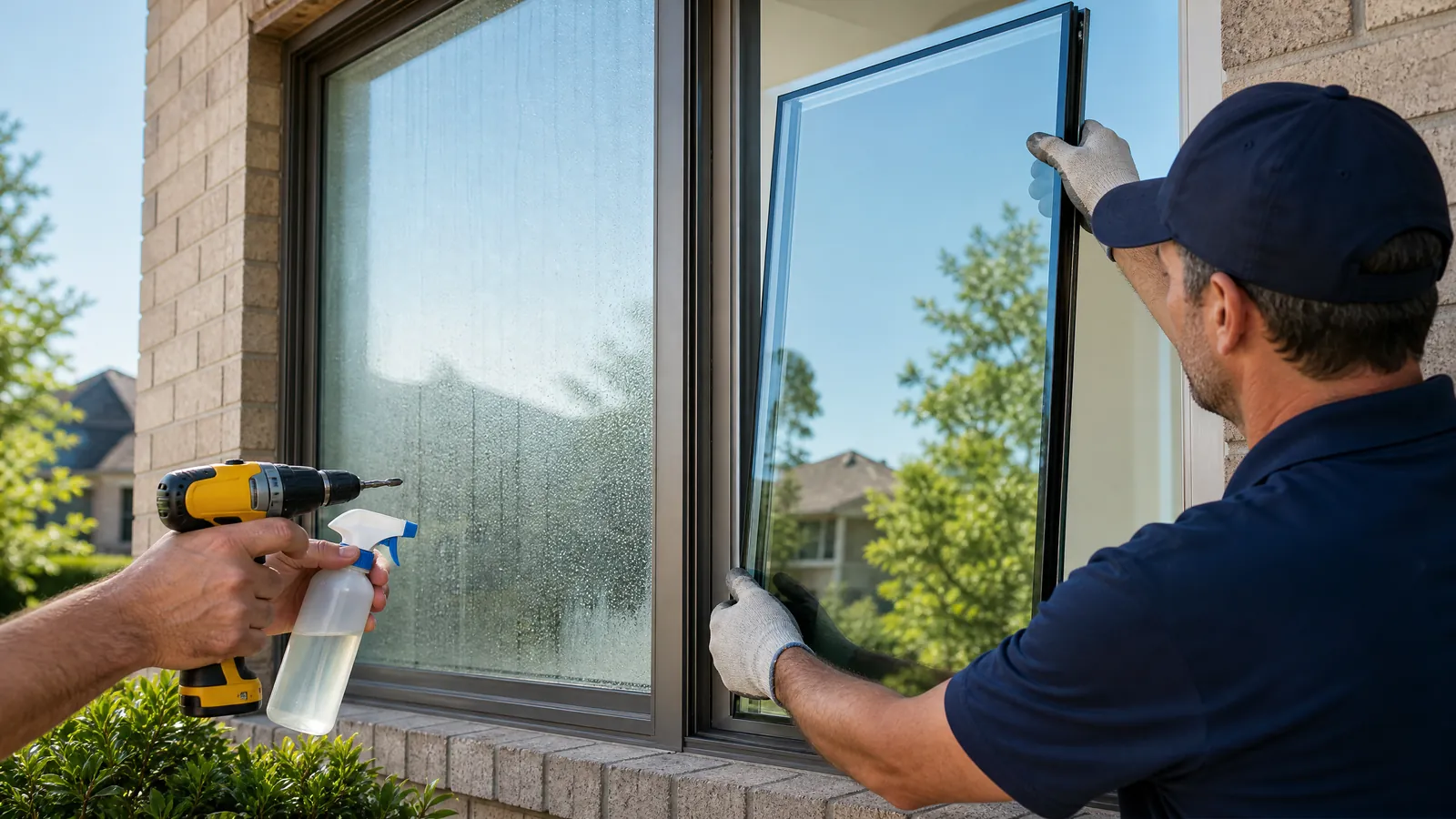
The most reliable, cost-effective, and long-lasting method for fogged window repair is professional insulated glass unit replacement by an experienced glazier. This process, often called a "glass swap," involves removing the failed IGU from your existing window frame and installing a brand-new, factory-sealed unit.
Because the original window frame remains intact and undisturbed in the wall, this method saves homeowners 50-70% compared to full window replacement. A professional glazier will accurately measure the width, height, and overall thickness of the glass, identify the correct Low-E coating to match the tint and performance of your other windows, and ensure the new unit is tempered if required by local building codes.
The installation process is precise and efficient. Technicians use specialized tools to deglaze the old unit without damaging the vinyl, aluminum, or wood frame. They clean the glazing channel thoroughly, apply the correct architectural-grade sealants, and use proper neoprene setting blocks to ensure the glass weight is distributed evenly. This prevents stress cracks and protects the new seal from sitting in standing water.
In the Dallas-Fort Worth market, standard-size glass-only IGU replacement typically ranges from $150 to $350 per window, while large picture windows and patio door glass run higher. Full window replacement, by contrast, typically runs $400 to $1,200 or more per window, with whole home projects commonly running from several thousand to $20,000 or more depending on the count and product tier. Professional IGU replacement fully restores the window's clarity, U-factor, and structural integrity. When performed by a reputable company, it comes with a robust warranty, ensuring the window remains clear and efficient for a decade or more.
Comparing Fogged Window Repair Methods
To help you make an informed decision, here is a breakdown of how each approach performs across key metrics.
| Method | Typical Cost | Restores Clarity? | Restores Insulation? | Condition After 5 Years |
|---|---|---|---|---|
| Surface Cleaning | $0 | No | No | Still fogged, permanent etching likely |
| DIY Defogging Kit | $30 - $60 | Partially | No | Hazy, dusty, vents often clogged |
| Professional Defogging | $100 - $200 | Yes (mostly) | No | Often requires replacement anyway |
| DIY IGU Replacement | $100 - $250 | Yes | Yes | Highly dependent on install quality |
| Professional IGU Swap | $150 - $350 | Yes | Yes | Clear, efficient, under warranty |
The Specific Risks of DIY IGU Work
While replacing an IGU yourself might seem like a straightforward weekend project for someone with basic carpentry skills, it carries significant risks that go beyond simply measuring incorrectly.
Glass Breakage and Injury: Handling large panes of glass is inherently dangerous. Annealed glass breaks into large, razor-sharp shards that can cause severe lacerations. Even removing the old, failed unit requires significant force to break the bond of the original glazing tape or silicone, which often results in the glass shattering in your hands while you are applying pressure.
Tempered Glass Hazards: If you are working on a patio door, a window near the floor, or a window adjacent to a door, the glass is likely tempered. While tempered glass breaks into smaller, less dangerous cubes, it is highly sensitive to edge damage. A slight bump against the metal window frame or a dropped screw during installation can cause the entire new unit to explode instantly.
Seal Contamination: The perimeter seal of an IGU is highly sensitive to certain chemicals. Using the wrong type of silicone (such as a standard acetoxy-curing silicone that smells like vinegar) can chemically attack the polyisobutylene secondary seal of the new IGU, causing it to liquefy, fail, and fog up within a year.
Voided Warranties: Most reputable glass manufacturers require professional installation to honor their warranties. If a DIY-installed unit fails prematurely due to improper setting blocks or sealant incompatibility, you will bear the full cost of purchasing and replacing it again.
Second-Story Falls: Replacing glass in second-story windows often requires working from extension ladders while handling heavy, awkward materials. The risk of a fall is substantial, and professional glaziers are trained, equipped, and insured for this specific hazard.
When is DIY Defensible?
There are narrow cases where DIY makes sense. A failed unit in a detached garage, a garden shed, or an unconditioned space has no meaningful thermal role, so a kit or a budget replacement unit is a reasonable call. The same applies to a low-value rental you are selling immediately that simply needs to look acceptable.
For the conditioned living spaces in your home, where efficiency, security, and resale value all matter, DIY usually costs more over a few years once you account for premature failure, voided warranties, and the professional replacement you end up buying anyway.
Local Service for the Dallas-Fort Worth Metroplex
If you are tired of looking through cloudy glass and want a permanent, professional solution, Apex Windows & Glass provides expert foggy glass replacement across the DFW area. We specialize in precise IGU swaps that restore your view and your home's energy efficiency without the high cost and disruption of full window replacement.
Our technicians handle measurement through installation, backed by a 10-Year IGU manufacturer warranty and an Apex 1-Year workmanship warranty and a 5.0-star Google rating. We serve homeowners in Dallas, Arlington, Garland, Irving, Plano, and 50 other cities across the metroplex.
Call (214) 263-3008 to schedule an inspection and get a written estimate for your glass replacement.
Frequently Asked Questions About Fogged Window Repair
Can you fix a fogged window without replacing the glass?
While you can drill holes and vent the window to temporarily clear the moisture, this does not fix the underlying problem. The hermetic seal remains broken, and the insulating argon gas is lost forever. The only way to fully restore the window's clarity and energy efficiency is to replace the insulated glass unit.
How much does it cost to repair fogged windows?
In the Dallas-Fort Worth area, replacing the glass unit typically costs between $150 and $350 per window for standard sizes. Large picture windows or patio doors will cost more. This is significantly cheaper than full window replacement, which usually runs $400 to $1,200 or more per window.
Will a dehumidifier clear up my foggy windows?
No, a dehumidifier will not clear condensation that is trapped between the panes of an insulated glass unit. The moisture is sealed inside the glass assembly, and external changes to room humidity cannot extract it. The desiccant inside the window spacer is already saturated and must be replaced along with the glass.
Is it safe to drill holes in my double-pane windows?
Drilling holes in double-pane windows is highly risky and not recommended. If the glass is tempered, it will shatter instantly upon contact with the drill bit. Even with standard annealed glass, drilling permanently destroys the window's insulating properties and often leads to dirt and bugs entering the air space.
How long does a new insulated glass unit last?
A high-quality, professionally installed insulated glass unit should last 15 to 20 years before the seal begins to degrade. Factors such as direct sun exposure, extreme temperature fluctuations, and the quality of the original window frame can affect this lifespan. Reputable glass companies typically offer a 10-Year IGU manufacturer warranty + Apex 1-Year workmanship warranty on their units.
Does homeowners insurance cover fogged window repair?
Homeowners insurance typically does not cover fogged windows because seal failure is considered a maintenance issue or normal wear and tear. However, if the seal was broken due to a specific covered peril, such as a severe hail storm or a fallen tree branch, your policy might cover the glass replacement.
Need Foggy Glass Replacement in Your Area?
We provide expert foggy glass replacement and window repair across the Dallas-Fort Worth metroplex. Click your city below for local pricing, neighborhoods served, and FAQs:
About the Author
Alvin Paulson
Co-Owner & Lead Technician, Apex Windows & Glass
Alvin Paulson co-founded Apex Windows & Glass and brings over 30 years of hands-on expertise in foggy glass replacement, insulated glass unit (IGU) repair, and energy-efficient window upgrades. Born and raised in North Texas, Alvin has personally assessed and repaired thousands of windows across the Dallas-Fort Worth metroplex — from historic McKinney homes to new-build subdivisions in Frisco and Prosper. He is a licensed glazier and holds certifications in Low-E glass installation and argon gas window systems. Alvin's philosophy is simple: replace only what's broken, save the homeowner money, and back every job with a 10-Year IGU manufacturer warranty + Apex 1-Year workmanship warranty.