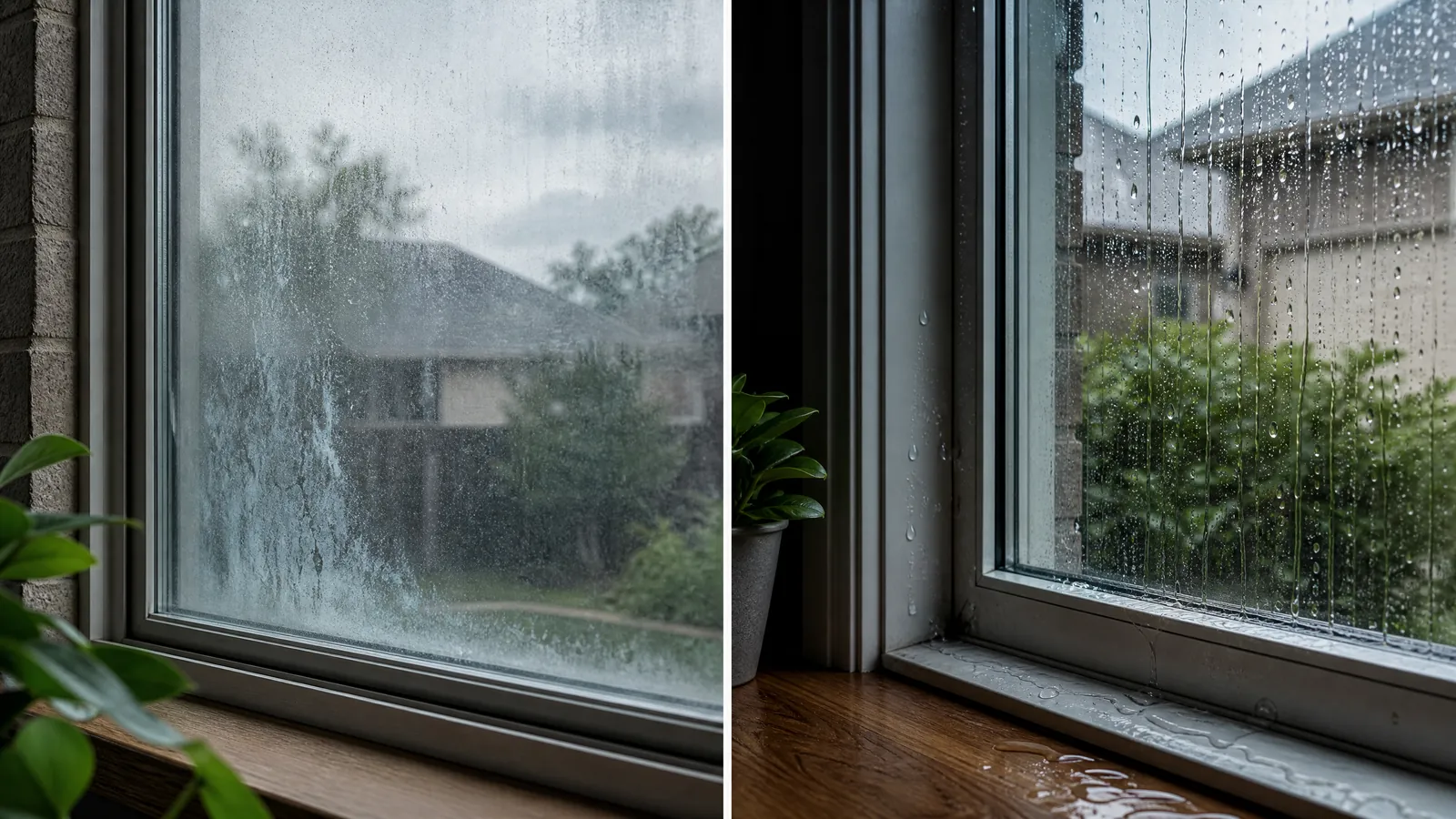
When water appears on or around your windows, it can be alarming. Dallas–Fort Worth homeowners frequently face intense storms and high humidity, making window moisture a common concern. However, not all moisture points to the same problem. Understanding whether you are dealing with a structural window leak or an insulated glass unit (IGU) seal failure is the crucial first step to finding the right solution. A physical water leak often requires structural repair, while a failed seal typically only requires replacing the glass. This guide will help you distinguish between the two, so you can address the issue efficiently and protect your home from further damage.
Understanding the Difference Between a Leak and a Seal Failure
While both issues involve unwanted moisture, their causes and locations are fundamentally different. A structural window leak occurs when water from outside penetrates the building envelope and enters your home. This is a physical breach in the frame, siding, or caulking around the window.
On the other hand, an insulated glass seal failure happens entirely within the window glass itself. Modern double-pane windows have two pieces of glass separated by a spacer and sealed to trap an insulating gas like argon. When this seal breaks, outside air and humidity enter the space between the panes. The moisture you see is condensation trapped inside the glass unit, not water leaking into your living room.
Signs of a Structural Window Leak (Water on the Frame or Sill)
A structural leak is usually evident during or immediately after a rainstorm. If you have a true window leak, you will likely notice water pooling on the window sill or running down the wall beneath the window.
Other common signs include peeling paint or bubbling drywall around the window frame. You might also notice damp or stained wood, or even a musty smell indicating mold or mildew growth. In severe cases, you can actually feel a draft or see daylight through gaps between the window frame and the wall. If the moisture is on the wall, sill, or the frame itself, you are dealing with a structural leak that needs immediate attention to prevent water damage to your home's interior.
Signs of Insulated Glass Seal Failure (Fog Between the Panes)
Seal failure presents very differently from a structural leak. The most obvious sign of a failed window seal is condensation, fog, or a milky haze that appears between the two panes of glass.
You can easily test this by wiping the inside and outside of the window. If the glass remains cloudy or wet, the moisture is trapped inside the IGU. This fog may come and go with temperature changes, often appearing worse in the morning or when the sun hits the window directly. Unlike a structural leak, a failed seal will not cause water to pool on your sill or damage your drywall. It primarily affects the clarity of your view and the energy efficiency of the window.
Why DFW Weather Causes Both Issues
The extreme weather in the Dallas–Fort Worth area accelerates both window leaks and seal failures. The intense summer heat causes window frames and glass to expand, while sudden cold snaps cause them to contract. This constant thermal pumping puts immense stress on window seals, eventually causing them to break.
Similarly, the heavy spring rains and high winds in North Texas test the integrity of exterior caulking and flashing. Over time, the sun's UV rays degrade caulking, making it brittle and prone to cracking, which creates pathways for water to leak around the window frame.
| Feature | Structural Window Leak | IGU Seal Failure |
|---|---|---|
| Location of Moisture | On the sill, frame, wall, or floor | Trapped between the two glass panes |
| Timing | During or immediately after rain | Varies with temperature and humidity |
| Potential Damage | Rot, mold, drywall damage | Reduced visibility and energy efficiency |
| Primary Cause | Failed caulking, flashing, or frame | Broken seal on the insulated glass unit |
| Typical Solution | Recaulking or full window replacement | Glass-only replacement |
Can You Repair a Leaking Window or a Failed Seal?
The repair approach depends entirely on the diagnosis. For a structural leak, the solution might be as simple as removing old, cracked caulking and applying a fresh, high-quality exterior sealant. However, if the leak is caused by improper flashing or severe frame rot, you may need a more extensive repair or even a full window replacement.
For a failed seal, the good news is that you rarely need to replace the entire window. If the frame is still sound, the most cost-effective solution may be glass-only replacement. A professional can remove the foggy IGU and install a brand-new, factory-sealed unit into your existing frame.
When to Call a Professional for Window Replacement
If you are unsure whether you have a leak or a seal failure, it is always best to consult a professional. Ignoring a structural leak can lead to thousands of dollars in water damage and mold remediation.
If you determine that your window seal has failed, a professional double-pane window repair evaluation can confirm the source of the moisture. While a foggy window won't rot your walls, it does mean your window is no longer insulating your home properly, which can increase your energy bills. At Apex Windows TX, we specialize in glass-only replacement. If your frame is serviceable, we replace only the insulated glass unit, offering up to 70% savings compared with full window replacement.
FAQs
Is condensation inside the house a leak?
No, condensation on the room-facing side of the glass is typically not a leak. It is usually caused by high indoor humidity meeting a cold window surface, similar to a cold glass of water sweating on a hot day.
Does homeowners insurance cover window leaks?
Coverage varies by policy and the cause of the leak. If the leak is due to a sudden event, like storm damage, it may be covered. However, leaks caused by gradual wear and tear or lack of maintenance are typically not covered. Always verify your coverage with your insurance provider.
Can caulking fix a failed window seal?
No, caulking cannot fix a failed insulated glass seal. Caulking is used to seal the gap between the window frame and the wall to prevent structural leaks. Once the seal between the glass panes is broken, the entire glass unit must be replaced.
How much does it cost to fix a window leak?
The cost to fix a window leak varies widely depending on the cause. Simple recaulking can be inexpensive, while repairing water damage or replacing a rotted frame can be significant. For seal failures, a glass-only replacement is a much more affordable option than replacing the entire window.
Contact Apex Windows TX Today
Don't let a window leak or a foggy view ruin your home's comfort and appearance. If you are dealing with window issues in the Dallas–Fort Worth area, Apex Windows TX is here to help. We provide expert diagnostics and specialize in affordable glass-only replacements, backed by a 10-Year IGU manufacturer warranty + Apex 1-Year workmanship warranty. Contact us today at (214) 263-3008 to schedule an evaluation and restore your windows to their original clarity.
Need Foggy Glass Replacement in Your Area?
We provide expert foggy glass replacement and window repair across the Dallas-Fort Worth metroplex. Click your city below for local pricing, neighborhoods served, and FAQs:
About the Author
Alvin Paulson
Co-Owner & Lead Technician, Apex Windows & Glass
Alvin Paulson co-founded Apex Windows & Glass and brings over 30 years of hands-on expertise in foggy glass replacement, insulated glass unit (IGU) repair, and energy-efficient window upgrades. Born and raised in North Texas, Alvin has personally assessed and repaired thousands of windows across the Dallas-Fort Worth metroplex — from historic McKinney homes to new-build subdivisions in Frisco and Prosper. He is a licensed glazier and holds certifications in Low-E glass installation and argon gas window systems. Alvin's philosophy is simple: replace only what's broken, save the homeowner money, and back every job with a 10-Year IGU manufacturer warranty + Apex 1-Year workmanship warranty.