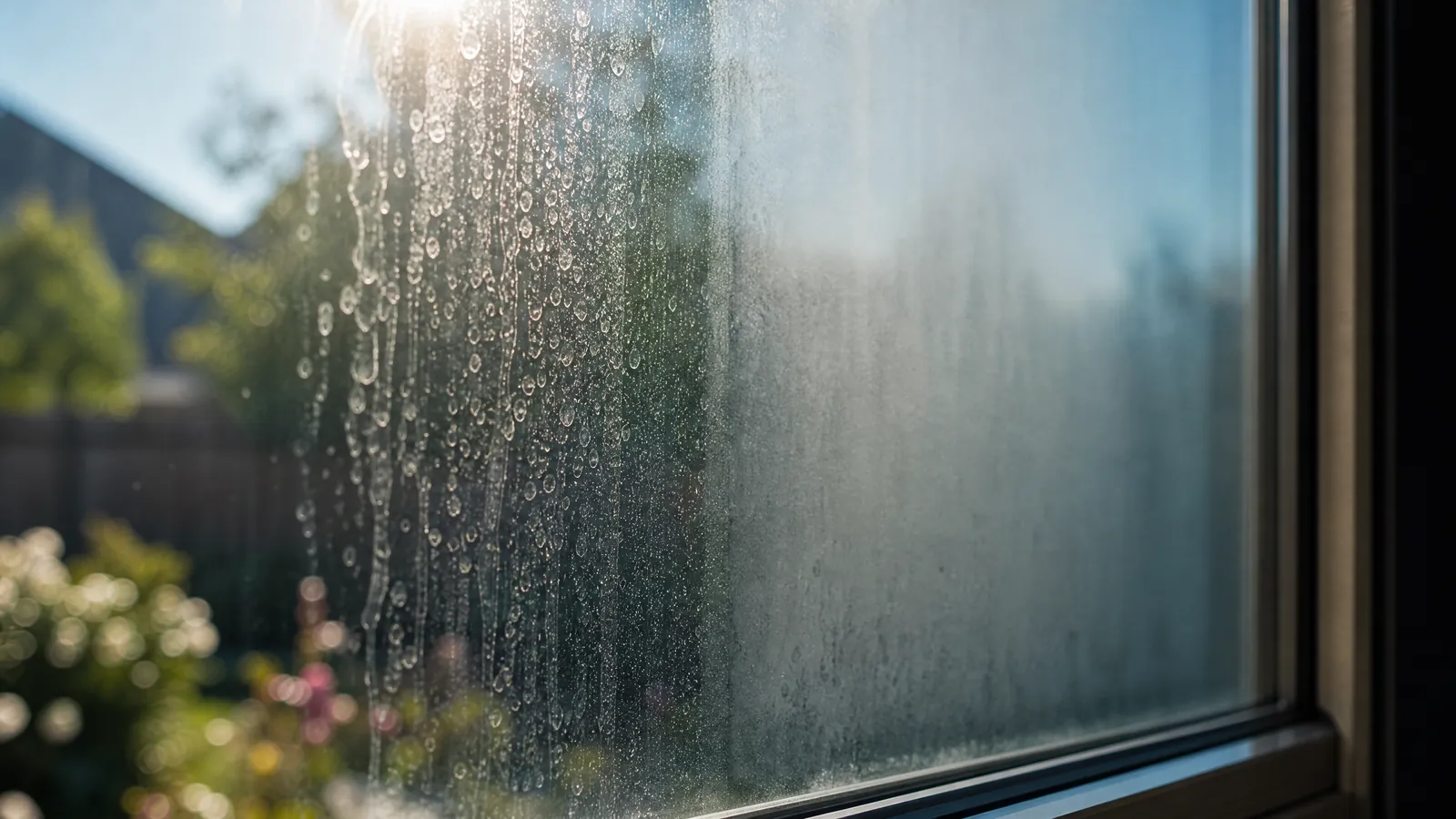
Are your Dallas-Fort Worth windows looking cloudy, hazy, or streaked? When homeowners notice a lack of clarity, they often assume the worst: a failed window seal requiring professional repair. However, in many cases, that cloudy appearance is simply hard water staining on the exterior glass. Knowing how to tell the difference between exterior mineral buildup and moisture trapped between the panes can save you time, money, and unnecessary stress.
Hard water stains are a surface issue that can often be resolved with the right cleaning techniques. On the other hand, permanent fog between window panes indicates a broken seal, which requires a professional solution. In this guide, we will explore the causes of both issues, provide simple at-home tests to diagnose your windows, and explain when it is time to call Apex Windows TX for expert foggy window repair.
Is It Hard Water or a Broken Seal?
The first step in restoring your view is identifying the culprit. Hard water stains and a broken window seal can look surprisingly similar at a glance, but they affect different parts of the window. Hard water stains sit on the exterior surface of the glass, while the fog from a broken seal is trapped inside the insulated glass unit (IGU), between the panes.
When a window seal fails, outside air and moisture enter the space between the glass. As temperatures fluctuate, this moisture condenses, creating a milky or foggy appearance that you cannot wipe away from the inside or the outside. In contrast, hard water stains are physical mineral deposits left behind when water evaporates on the glass surface.
What Causes Hard Water Stains on Windows?
In Texas, hard water is incredibly common. Hard water contains high levels of dissolved minerals, primarily calcium and magnesium. When this water splashes onto your windows and evaporates in the hot Texas sun, the minerals are left behind, forming stubborn, chalky white spots or a hazy film.
The most frequent causes of hard water stains on residential windows include:
Sprinkler Systems: Misaligned lawn sprinklers hitting the windows are the number one cause of hard water spots. Runoff from Masonry: Rainwater washing over brick, stone, or concrete can pick up minerals before dripping onto lower windows. * Washing with Hard Water: Rinsing windows with a garden hose without drying them properly leaves mineral deposits behind.
What Causes Fog Between Window Panes?
Modern double-pane windows are designed with a sealed space between the glass, often filled with an insulating gas like argon, to improve energy efficiency. Over time, the seal protecting this space can degrade. What causes window seal failure in Dallas-Fort Worth? The primary culprit is thermal pumping.
As the intense Texas sun heats the window during the day, the gas inside expands, pushing against the glass and seals. At night, as temperatures drop, the gas contracts. This constant expansion and contraction, combined with UV exposure and aging, eventually weakens the seal. Once the seal breaks, the insulating gas escapes, and moisture-laden air enters. The desiccant material inside the window spacer tries to absorb this moisture, but once it reaches saturation, the moisture condenses on the inside of the glass, resulting in a permanently foggy window.
How to Test Your Windows at Home
Before you assume your window seal has failed, you can perform a few simple tests to determine if you are dealing with hard water stains or trapped moisture.
| Feature | Hard Water Stains | Broken Window Seal (Foggy Windows) |
|---|---|---|
| Location | Exterior surface of the glass | Inside the insulated glass unit (between panes) |
| Texture | Rough, chalky, or textured when touched | Smooth on both the inside and outside surfaces |
| Appearance | Distinct spots, streaks, or a white, hazy film | Milky, cloudy, or misty appearance that may change with temperature |
| Response to Cleaning | Can be reduced or removed with specialized cleaners | Cannot be wiped away or cleaned from either side |
The Touch Test: Run your fingers over the exterior of the glass. If the surface feels rough, chalky, or gritty, you are likely feeling mineral deposits. If the glass feels perfectly smooth on both the inside and outside, but the window still looks cloudy, the issue is between the panes.
The Cleaning Test: Apply a standard glass cleaner or a mixture of equal parts white vinegar and water to a small section of the exterior glass. Scrub gently. If the haze lifts and the glass becomes clear, you have hard water stains. If the cloudiness remains unchanged, you are dealing with a broken seal.
Can Hard Water Stains Be Removed?
Yes, hard water stains can usually be removed, though stubborn buildup may require some elbow grease. For mild stains, a solution of white vinegar and water is often effective. The acidity of the vinegar helps break down the alkaline mineral deposits. Spray the solution on the glass, let it sit for a few minutes to dissolve the minerals, and then scrub with a non-abrasive sponge.
For more severe, long-standing hard water stains, you may need a commercial hard water stain remover or a specialized glass polishing compound. Be careful not to use abrasive tools like steel wool or harsh chemicals that could scratch the glass or damage the window frame. If you are unsure, it is always best to consult a professional window cleaner.
When to Call a Professional for Window Repair
If you have performed the touch and cleaning tests and determined that the cloudiness is trapped between the panes, no amount of exterior cleaning will solve the problem. A broken window seal is a structural failure of the insulated glass unit, and it requires professional intervention.
At Apex Windows TX, we specialize in targeted signs of a broken window seal and foggy window repair. When a seal fails, you do not necessarily need to replace the entire window frame. If your frames are still in good condition, we can replace just the insulated glass unit. This glass-only replacement approach restores your view and energy efficiency while offering up to 70% savings compared to a full window replacement. We proudly serve the Dallas-Fort Worth area and back our work with a 10-Year IGU manufacturer warranty + Apex 1-Year workmanship warranty (verify specific warranty details with the manufacturer).
If your windows have lost their clarity, don't wait for the problem to worsen. Contact Apex Windows TX at (214) 263-3008 today to schedule an assessment and get your view back.
FAQs
Can hard water stains look like a broken seal?
Yes, severe hard water stains can create a uniform, hazy film over the exterior of the glass that closely mimics the appearance of a foggy window caused by a broken seal. The key difference is that hard water stains are on the surface and have a rough texture, while seal failure fog is trapped inside the glass.
Will vinegar remove fog between window panes?
No, vinegar or any other cleaning solution will not remove fog between window panes. Fog between the panes is caused by moisture trapped inside the sealed unit. Because you cannot physically reach the inside surfaces of the glass, surface cleaning will have no effect on a broken seal.
How much does it cost to fix a broken window seal?
The cost to fix a broken window seal depends on the size and type of the window. However, choosing a glass-only replacement rather than replacing the entire window frame is significantly more cost-effective. Homeowners can typically save up to 70% by replacing only the failed insulated glass unit.
Can I prevent hard water stains on my windows?
The most effective way to prevent hard water stains is to stop hard water from hitting your windows in the first place. Adjust your lawn sprinklers so they do not spray onto the glass, and redirect any runoff from your roof or masonry. If you wash your windows with a hose, be sure to dry them thoroughly with a squeegee or microfiber cloth before the water can evaporate.
Need Foggy Glass Replacement in Your Area?
We provide expert foggy glass replacement and window repair across the Dallas-Fort Worth metroplex. Click your city below for local pricing, neighborhoods served, and FAQs:
About the Author
Alvin Paulson
Co-Owner & Lead Technician, Apex Windows & Glass
Alvin Paulson co-founded Apex Windows & Glass and brings over 30 years of hands-on expertise in foggy glass replacement, insulated glass unit (IGU) repair, and energy-efficient window upgrades. Born and raised in North Texas, Alvin has personally assessed and repaired thousands of windows across the Dallas-Fort Worth metroplex — from historic McKinney homes to new-build subdivisions in Frisco and Prosper. He is a licensed glazier and holds certifications in Low-E glass installation and argon gas window systems. Alvin's philosophy is simple: replace only what's broken, save the homeowner money, and back every job with a 10-Year IGU manufacturer warranty + Apex 1-Year workmanship warranty.