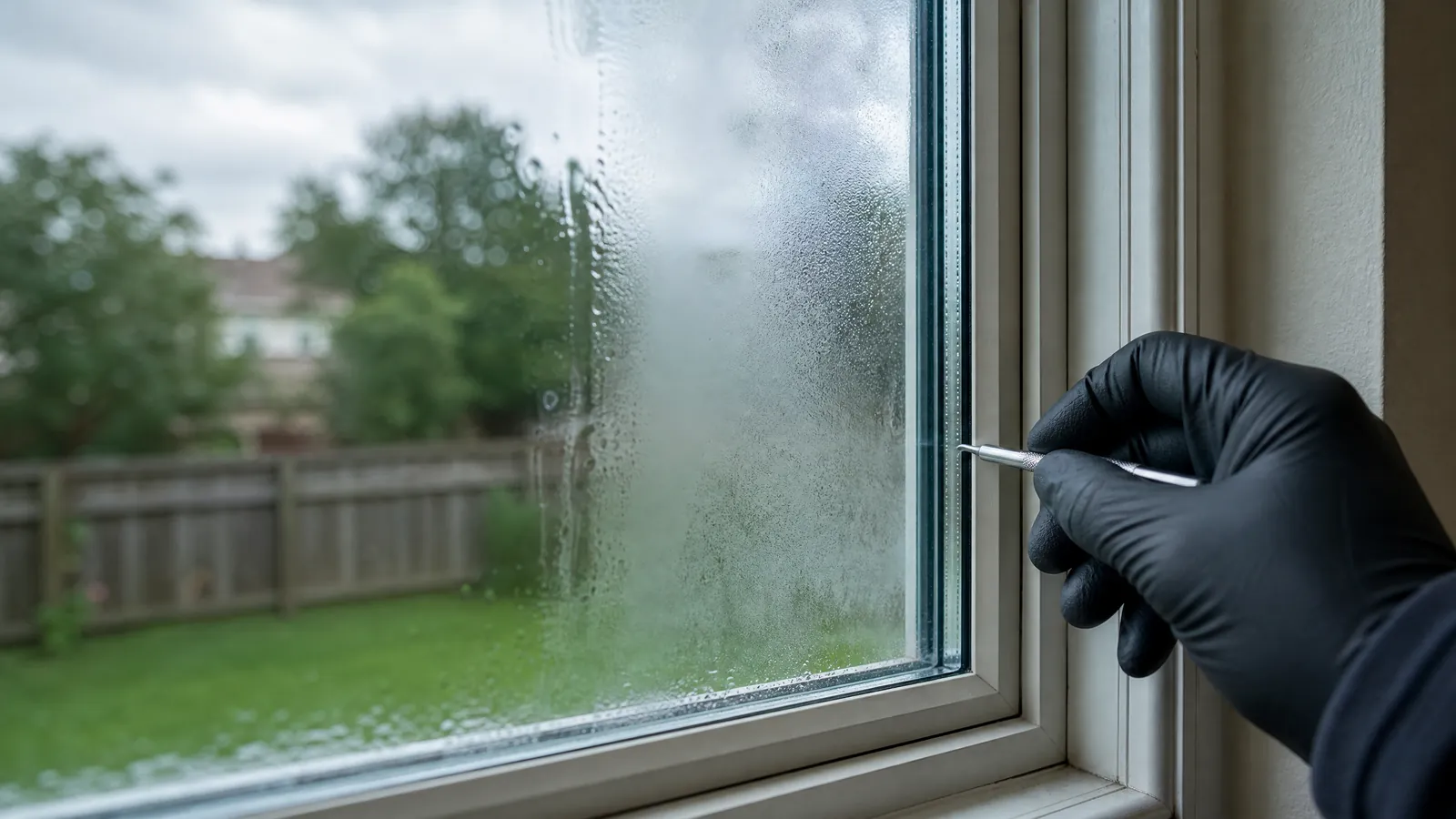
How to fix foggy windows begins with a diagnosis: “foggy” describes an appearance, not a diagnosis. Moisture on the room-side glass, dew on the exterior glass, and a haze trapped between panes can look similar from across the room. They do not call for the same response.
Start by locating the moisture before buying a cleaner or assuming the window needs replacement. The simple check below can help you separate normal surface condensation from a failed sealed glass unit and choose a safe next step.
> Permanent fix: When an assessment confirms a failed sealed IGU and the surrounding window components are suitable, the permanent repair is replacement of that sealed glass unit. Cleaning, drilling, venting, and dehumidifying do not rebuild the failed perimeter seal.
Technician-Led Eligibility Checks
A professional assessment looks beyond the cloudiness. The technician should confirm whether the haze is between panes, review the sash and frame for damage or distortion, identify the glazing system, and note visible features that may need to match. Water staining, failed operation, broken hardware, cracked glass, or deterioration around the opening can change the scope. This is why a between-pane haze is a useful symptom but not a complete project diagnosis.
For an explanation of the estimate factors after eligibility is established, see the DFW foggy-window repair cost guide. Homeowners in the metro area can also use the Dallas service page to start a local assessment request. To discuss foggy glass in your own windows, call Apex Windows & Glass at (214) 263-3008. Keep the cleaning results, photos, and any observations about operation or moisture around the frame available for the conversation.
First, find out where the moisture is
Stand close to the window in good light. Look for droplets, a temporary mist, a milky film, or a white haze. Then consider the three possible locations.
1. Moisture on the inside surface
If moisture is on the glass facing your room and wipes away from indoors, it is interior-surface condensation. That occurs when humid indoor air meets glass that is colder than the air’s dew point. ENERGY STAR explains that relationship and recommends managing indoor humidity and venting moisture from kitchens, baths, and dryers outside.
This is usually a household moisture and airflow issue, not proof that the glass seal has failed. Use bath and kitchen exhaust fans as intended, make sure dryer exhaust is routed outdoors, and avoid blocking air movement across the window with tightly closed treatments. If condensation is frequent or contributes to damp trim, staining, or visible mold, address the indoor-moisture source and seek appropriate help rather than treating the glass alone.
2. Moisture on the outside surface
If the dampness wipes away from outdoors, it is exterior condensation. It can occur when the outer glass surface falls below the dew point of warm, humid outdoor air. It often clears as conditions change. By itself, exterior condensation does not establish that the sealed unit has failed.
3. Haze or droplets between the panes
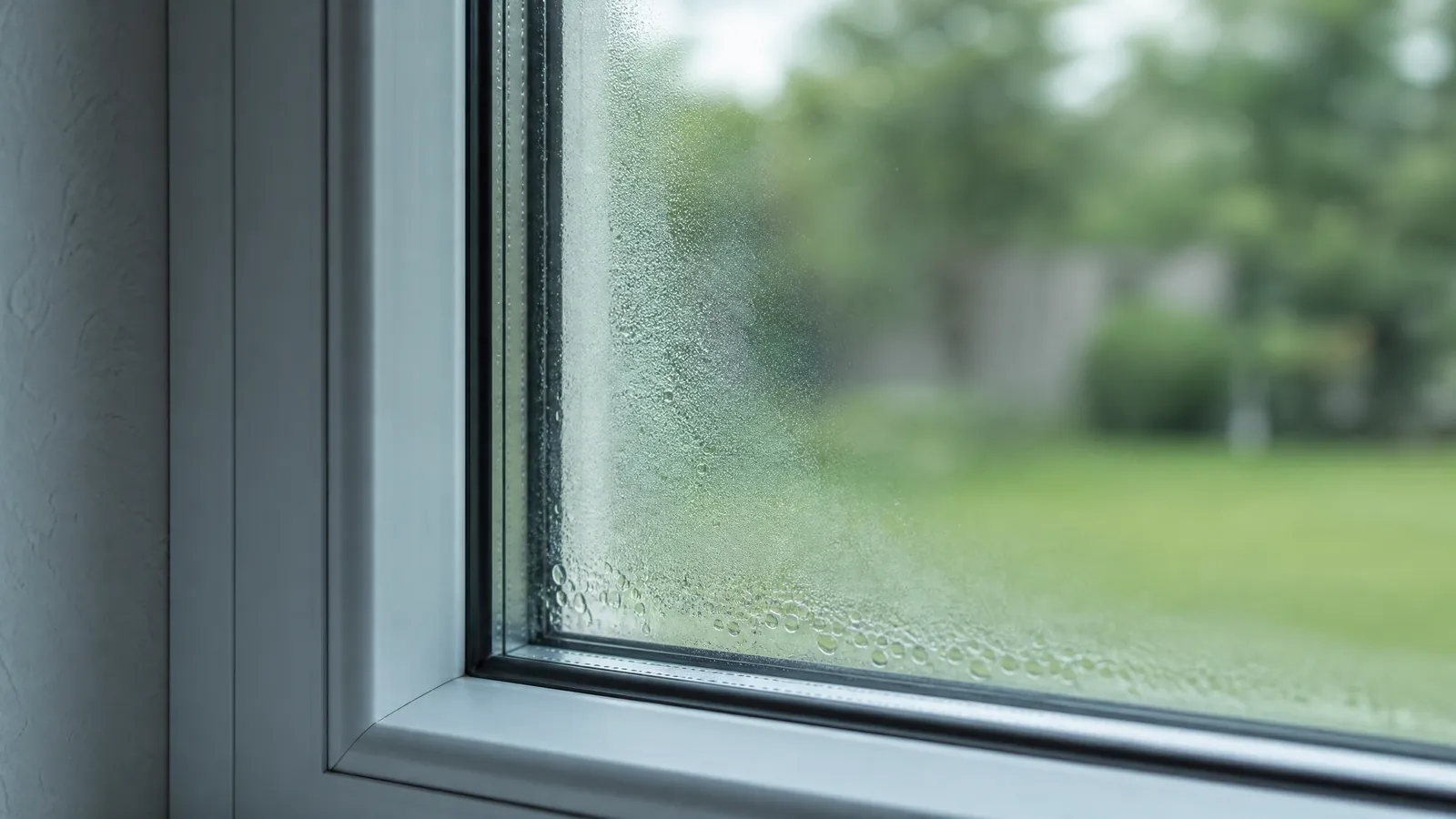
If you clean the inside surface and the outside surface, yet the haze remains visible in the airspace between them, the IGU may have lost its seal. A sealed IGU is designed to keep that cavity dry and, in some products, retain an insulating gas. A persistent or recurring haze between panes is a reason to have the glass unit assessed.
Do not diagnose from temperature alone. A cool pane, a draft, or a higher utility bill can have several causes. The location of the haze is the useful first clue.
The two-cloth test: a safe homeowner check
You need two clean, dry microfiber cloths and a view that lets you see the glass clearly. Do not use blades, abrasives, drill bits, or strong chemicals.
- Wipe a small area on the room-side glass. Step back and see whether the moisture or haze moved with your cleaning.
- If it remains, wipe the matching spot on the exterior glass when it is safe to do so. Never lean out of an upper-story opening or work from an unsafe ladder.
- If the cloudy area stays unchanged after both accessible surfaces are clean, note which windows show it and take a dated photo in indirect light.
Surface moisture responds to wiping. Between-pane haze does not, because it is not reachable from either side. That does not tell you every detail of the window’s condition, but it gives a professional a clearer starting point.
What a failed sealed glass unit means
An IGU has glass panes separated by a spacer and sealed around its perimeter. When that seal no longer keeps the cavity dry, moisture can condense on the interior-facing glass surfaces. The result may be droplets, a foggy look, or a lasting cloudy film that cannot be cleaned from either accessible face.
A failed seal is a glass-unit issue, not an automatic verdict on the entire window. The frame, sash, hardware, drainage, and glazing system still need evaluation. If those components are serviceable, replacing the sealed glass unit may be an option. For the scope decision after a diagnosis, use the repair-versus-replacement guide.
This distinction also matters when shopping for future windows. The National Fenestration Rating Council explains that a window’s Condensation Resistance rating addresses how likely room-side surface condensation is; a higher value indicates greater resistance. It is a rating for surface-condensation tendency, not a guarantee that a particular home will never have moisture on glass. Review the NFRC’s consumer explanation of condensation resistance alongside the product label and your home’s conditions.
Safe next steps when haze is between the panes
If the two-cloth test points to between-pane haze, take a few practical steps before booking work:
- Record the window location, approximate size, whether it opens, and whether grids, tint, or a coating are visible. Photos from inside and outside can be useful.
- Look at the surrounding frame without probing or dismantling it. Note visible decay, cracked vinyl, corrosion, loose glazing pieces, water staining, difficult operation, or a latch that will not secure.
- Keep the window closed and avoid trying to vent, drill, or separate the panes. Those actions can create a safety risk, change the glass, and complicate a later assessment.
- Request an assessment that confirms the haze location and examines the whole window system - not only the glass.
Apex’s foggy glass repair service is the appropriate place to learn how a glass assessment is approached. An assessment should determine whether a glass-only solution fits the condition of the existing window; it should not presume that it does.
For separately purchased IGUs, Apex offers a 10-year manufacturer product warranty on separately purchased IGUs and a 1-year Apex workmanship warranty. Written terms, product-specific conditions, exclusions, and the selected manufacturer’s warranty control, so review them before accepting work.
What not to do
Avoid drilling into a double-pane window, trying to inject a drying agent, or using harsh abrasives to chase a haze you cannot reach. These methods do not establish the source of the cloudiness and may damage glass, coatings, or components. Likewise, a dehumidifier may help reduce interior-surface condensation in some homes, but it cannot remove moisture that is already trapped inside a sealed glass unit.
If you find water around the frame, damaged trim, broken glass, or a window that will not close or lock, treat that as a separate concern. Do not assume it is solved by addressing fog alone.
Frequently Asked Questions
Can I fix foggy windows by cleaning them?
You can clean fog or residue on an accessible inside or outside surface. If the haze remains after both surfaces are cleaned, it may be within the insulated glass unit and ordinary cleaning will not reach it. A professional assessment can confirm the location and condition.
Is condensation inside my house the same as a broken window seal?
No. Condensation on the room-side surface usually relates to humid indoor air contacting cool glass. Moisture or haze that remains between panes after both surfaces are wiped is a different symptom and may indicate a failed sealed unit.
Does a failed seal mean I need a whole new window?
Not necessarily. A failed IGU may sometimes be replaced while the existing frame and sash remain, but that depends on their condition, the glazing system, and safe operation. An inspection is needed before choosing the scope of work.
Will warranty cover a foggy window?
Coverage depends on the product, purchase arrangement, manufacturer terms, age, cause of the condition, and other written exclusions or requirements. Review the applicable documents and ask for the proposed product warranty in writing; do not assume eligibility or coverage.
When fog will not wipe off either side, the practical next step is not a DIY repair - it is a careful diagnosis of the glass and the surrounding window. That gives you a sound basis for deciding what to address next.
Need Foggy Glass Replacement in Your Area?
We provide expert foggy glass replacement and window repair across the Dallas-Fort Worth metroplex. Click your city below for local pricing, neighborhoods served, and FAQs: