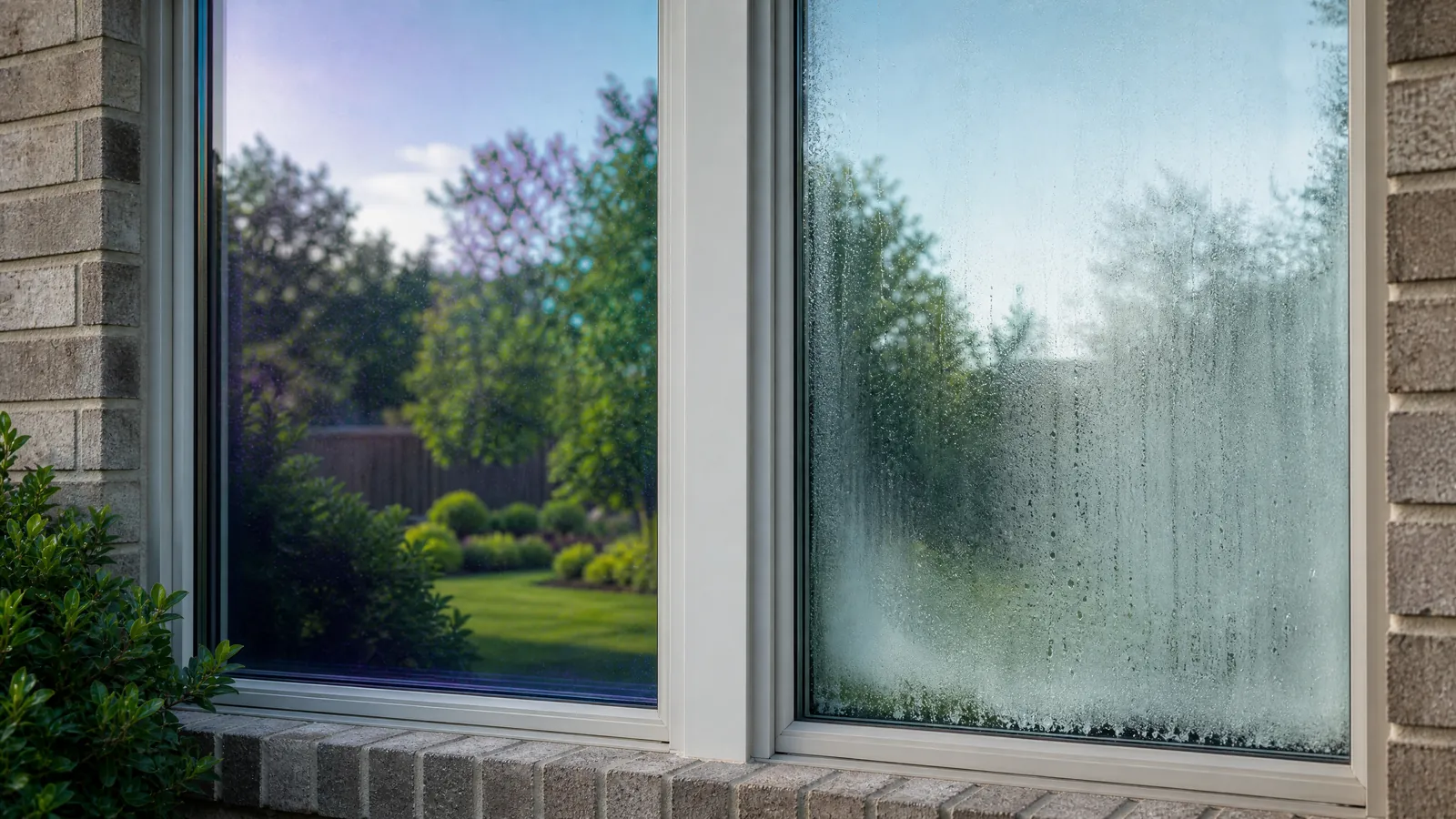
Looking out of a cloudy, discolored window can be frustrating, especially when you are unsure what is causing the problem. In the hot and sunny climate of Dallas–Fort Worth, homeowners often notice a hazy, purplish, or iridescent film developing on their windows. Many people immediately assume this means their window seal has broken and moisture is trapped between the panes. However, this visual distortion could actually be a failing Low-E (low-emissivity) coating rather than a broken seal. Understanding the difference between a broken window seal and a failing Low-E coating is essential because the repair process—and the urgency of the problem—can vary significantly. In this guide, we will explain exactly how to tell the difference between these two common window issues and what you can do to restore your clear view without unnecessarily replacing the entire window frame.
The Confusion: Is It a Broken Seal or a Bad Coating?
It is easy to confuse a broken window seal with a failing Low-E coating because both issues reduce the clarity of your glass. A broken seal allows moisture-laden air to enter the space between your double-pane windows, creating condensation or a milky fog that you cannot wipe away. On the other hand, a failing Low-E coating—which is a microscopic metallic layer applied to the glass to reflect heat—can oxidize over time, creating a hazy, discolored, or iridescent appearance. Because both problems occur on the surfaces inside the insulated glass unit (IGU), homeowners often misdiagnose the issue.
What Does a Broken Window Seal Look Like?
The most obvious sign of a broken window seal is condensation or fog trapped between the panes of glass. This moisture may appear as tiny water droplets, a milky white haze, or even a streaky residue running down the inside of the glass. The appearance of this fog can change depending on the weather and humidity levels. For instance, the window might look perfectly clear on a warm afternoon but become completely clouded over during a cool morning. Over time, as the moisture repeatedly evaporates and condenses, it can leave behind mineral deposits that permanently etch the glass, creating a permanent white haze. If you notice moisture that you cannot wipe off from the inside or outside of your home, you are likely dealing with a broken window seal.
What Does a Failing Low-E Coating Look Like?
A failing Low-E coating looks distinctly different from the moisture caused by a broken seal. When a Low-E coating begins to degrade or oxidize, it typically takes on a hazy, cloudy, or discolored appearance. You might notice a purple, blue, or iridescent tint across the glass, similar to the colorful sheen of oil resting on a puddle of water. Unlike the condensation from a broken seal, this discoloration is consistent and does not appear and disappear with changes in temperature or humidity. The hazy film is often most visible when the sun shines directly on the window. If your window looks permanently tinted, smudged, or iridescent, and there are no water droplets present, a failing Low-E coating is the likely culprit.
Why Low-E Coatings Oxidize and Fail
Low-E coatings are designed to improve the energy efficiency of your windows by reflecting infrared heat while allowing visible light to pass through. These coatings are typically applied to one of the inner surfaces of an insulated glass unit to protect them from the elements. However, if the window seal fails and allows moisture and oxygen to enter the space between the panes, the metallic Low-E coating can begin to oxidize. In other cases, manufacturing defects or improper application of the coating can cause it to degrade prematurely, even if the seal remains intact. The intense heat and UV radiation common in the Dallas–Fort Worth area can also accelerate the degradation of certain types of Low-E coatings over time.
Can You Repair a Low-E Coating, or Do You Need Replacement?
Unfortunately, once a Low-E coating begins to oxidize or fail, it cannot be repaired, cleaned, or reapplied. Because the coating is applied to the glass during the manufacturing process and is sealed inside the insulated glass unit, there is no way to access or restore it. The only solution for a failing Low-E coating is to replace the affected glass. The good news is that you do not need to replace the entire window. If your window frames are still in good condition, a professional glass repair company can simply remove the old, discolored insulated glass unit and install a new, energy-efficient IGU in its place.
| Feature | Broken Window Seal | Failing Low-E Coating |
|---|---|---|
| Appearance | Condensation, water droplets, or a milky white fog. | Hazy, discolored, purple, blue, or iridescent tint. |
| Consistency | May appear and disappear with temperature changes. | Permanent and consistent; does not change with the weather. |
| Location | Moisture is trapped between the panes of glass. | Discoloration is on the coated surface inside the IGU. |
| Solution | Replace the insulated glass unit (IGU). | Replace the insulated glass unit (IGU). |
When to Call a Professional in DFW
Whether you are dealing with a broken window seal or a failing Low-E coating, it is important to address the issue promptly. Both problems compromise the energy efficiency of your windows, which can lead to higher heating and cooling costs in your Dallas–Fort Worth home. If you are unsure which issue is affecting your windows, a professional inspection can provide a definitive answer. At Apex Windows, we specialize in diagnosing and repairing window glass issues. We replace only the insulated glass unit when the frame is serviceable, which offers up to 70% savings compared with full window replacement.
FAQs
What causes a purple or iridescent tint on my window?
A purple, blue, or iridescent tint on your window is typically caused by the oxidation or degradation of a Low-E (low-emissivity) coating. This metallic coating is applied to the glass to improve energy efficiency, but it can discolor over time due to manufacturing defects or exposure to moisture and oxygen if the window seal fails.
Can I clean off a hazy Low-E coating?
No, you cannot clean off a hazy or failing Low-E coating. The coating is permanently applied to the glass during the manufacturing process and is located on an inner surface of the insulated glass unit. Once it begins to oxidize or degrade, the only solution is to replace the glass unit.
Does a failed Low-E coating mean my window seal is also broken?
Not necessarily, but the two issues are often related. A broken window seal allows moisture and oxygen to enter the space between the panes, which can cause the metallic Low-E coating to oxidize and fail. However, a Low-E coating can also fail due to manufacturing defects even if the seal remains intact.
How much does it cost to fix a failed Low-E window in Dallas?
The cost to fix a failed Low-E window depends on the size and type of the window. However, because you only need to replace the insulated glass unit and not the entire window frame, the cost is significantly lower than a full window replacement. For accurate pricing, it is best to request a professional quote.
If you are tired of looking through cloudy, discolored windows, contact Apex Windows today. We proudly serve the DFW area and provide a 10-Year IGU manufacturer warranty + Apex 1-Year workmanship warranty on our glass replacement services. Call us at (214) 263-3008 to schedule an inspection and restore the clear view and energy efficiency of your home. To learn more about window issues, read about what causes window seals to fail, explore our foggy window repair services in Dallas, or discover the benefits of Low-E glass in Texas.
Need Foggy Glass Replacement in Your Area?
We provide expert foggy glass replacement and window repair across the Dallas-Fort Worth metroplex. Click your city below for local pricing, neighborhoods served, and FAQs:
About the Author
Alvin Paulson
Co-Owner & Lead Technician, Apex Windows & Glass
Alvin Paulson co-founded Apex Windows & Glass and brings over 30 years of hands-on expertise in foggy glass replacement, insulated glass unit (IGU) repair, and energy-efficient window upgrades. Born and raised in North Texas, Alvin has personally assessed and repaired thousands of windows across the Dallas-Fort Worth metroplex — from historic McKinney homes to new-build subdivisions in Frisco and Prosper. He is a licensed glazier and holds certifications in Low-E glass installation and argon gas window systems. Alvin's philosophy is simple: replace only what's broken, save the homeowner money, and back every job with a 10-Year IGU manufacturer warranty + Apex 1-Year workmanship warranty.