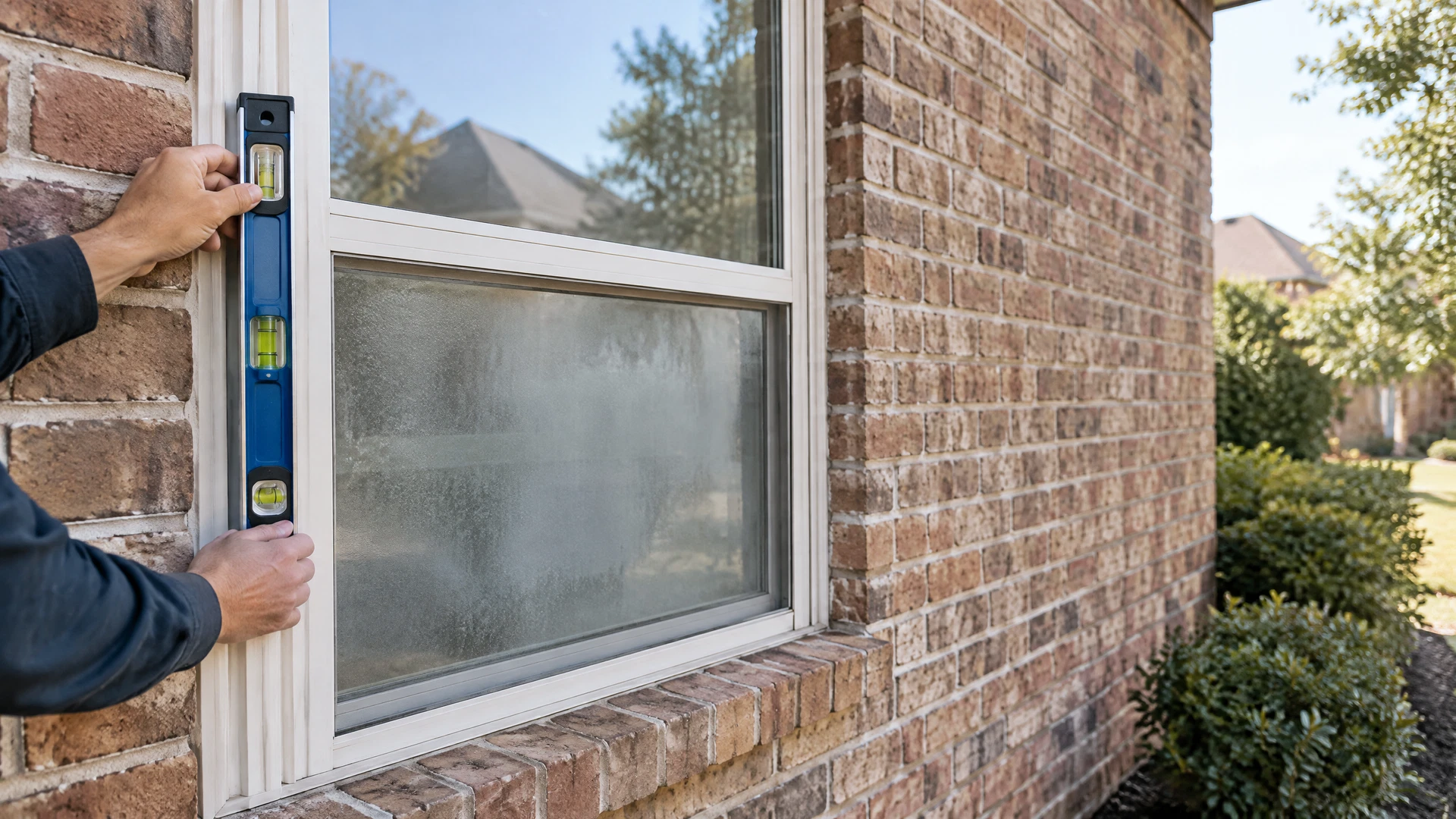
McKinney homeowners face unique challenges due to North Texas geology. The region is characterized by expansive clay soils that shift significantly with moisture changes. While residents often focus on cracks in drywall or brickwork, foundation movement also impacts window performance. When you notice haze or moisture between glass panes, it is important to determine if you are dealing with a standard seal failure or a symptom of structural shifting.
McKinney Soil and Foundation Stress
The Blackland Prairie soil in Collin County is notorious for high plasticity. This clay expands when wet and shrinks during dry summers. As the ground moves, the foundation follows, creating stress points throughout the home. These shifts often lead to differential settlement that can distort window framing.
Expansive Clay Impacts
Expansive clay acts like a sponge, increasing in volume during heavy rain and contracting during droughts. This cycle creates a dynamic environment for rigid structures. For McKinney homeowners, the house is in a slow, perpetual state of motion, which can compromise the tight tolerances required for modern window systems.
Structural Shifts and Window Openings
Windows are designed for rectangular openings. When a foundation shifts, openings can become "racked" or out of square. Even slight deviations put immense pressure on the window frame. Because glass and seals are less flexible than wood or vinyl frames, they bear the brunt of this stress. Understanding how your service area in McKinney is affected by these conditions is the first step in diagnosis.
Signs of Foundation-Related Window Issues
Foggy glass indicates an insulated glass unit (IGU) seal has failed. However, when foundation movement is the cause, other symptoms usually appear. Homeowners should look for windows that are difficult to operate. If a sash that once slid easily now sticks or requires force to open, the frame may be compressed or twisted.
Other signs include gaps between window trim and the wall, or visible daylight around the sash when closed. You might also notice small diagonal stress cracks at the corners of the glass panes. These indicate that the frame is no longer supporting the glass evenly, which is distinct from impact damage.
Seal Failure vs. Frame Racking
It is crucial to distinguish between a failed IGU and a racked frame because repair paths differ. A failed seal occurs when the adhesive or desiccant inside the glass unit degrades. Frame racking is a structural issue where the opening is distorted, putting physical pressure on the glass assembly.
| Symptom | Simple Seal Failure | Foundation-Related Racking |
|---|---|---|
| Glass Clarity | Persistent fog or mineral haze | Foggy panes or diagonal cracks |
| Operation | Window operates smoothly | Window sticks, binds, or won't lock |
| Frame Condition | Square and level | Out of square or visibly tilted |
| Surrounding Area | No nearby drywall cracks | Cracks in nearby walls or masonry |
| Seal Integrity | Natural degradation | Compressed or torn weatherstripping |
Before deciding on a course of action, homeowners should perform a window leak vs seal failure difference check to ensure they are addressing the correct problem. A foggy pane is a glass issue, but a sticking sash suggests a broader structural concern.
Mechanics of Seal Failure Under Stress
Insulated glass units rely on a dual-seal system to keep insulating gas inside and moisture out. When a window frame twists due to foundation movement, it exerts shear stress on the glass unit. While glass is rigid, the seal is only partially flexible.
How Shear Stress Breaks Seals
If a frame continues to rack, the seal can be pulled away from the glass surface. Once a tiny breach occurs, temperature changes draw humid air into the space between the panes. In the McKinney climate, where humidity levels fluctuate, this leads to rapid condensation. This failure is mechanical rather than chemical, meaning the seal was physically forced open by the frame.
Assessing Serviceability for Glass Replacement
At Apex Windows TX, we emphasize that glass-only insulated glass unit replacement can be considered only when the existing frame, sash, hardware, glazing system, and opening are serviceable. If foundation movement has caused the frame to warp or crack, installing new glass will not solve the problem. The new unit would likely fail quickly under the same structural pressure.
When Glass-Only Replacement Fits
If the foundation has been stabilized or the movement was minor and did not permanently distort the frame, replacing foggy glass is a cost-effective way to restore clarity. During an assessment, a technician checks if the window remains square and if the sash sits properly in the tracks. If the frame is sound, a new, high-performance IGU can be installed, providing a clear view once again.
Professional Diagnostic Steps
Next, test every window in the affected area. Open and close them, noting any resistance. If fogging is isolated to windows that also stick, structural shifting is likely a factor. A specialist can determine if the seal failure is due to natural aging or mechanical stress. This clarity allows you to prioritize your home maintenance budget effectively.
Conclusion
Understanding the signs of foundation-related stress allows you to make informed decisions about your home maintenance.
Is every foggy window in McKinney caused by foundation movement?
No, most foggy windows result from natural seal degradation over time. Factors like intense sun exposure or poor drainage in the window sill are common causes. However, if fogging is accompanied by a sticking sash or nearby wall cracks, foundation movement should be investigated as a potential cause.
Can I replace the glass if my window frame is slightly out of square?
It depends on the severity of the racking. A very slight shift might be accommodated by glazing beads and sealants, but a significant distortion puts too much stress on a new IGU. A professional assessment is required to determine if the frame can effectively hold a new glass unit without risking premature seal failure.
How do I tell the difference between interior condensation and a failed seal?
Interior condensation occurs on the glass surface inside your home and can be wiped away. It is usually caused by high indoor humidity. A failed seal results in moisture or haze between the two panes of glass, which cannot be cleaned. If you cannot wipe the fog off, the seal has likely failed.
Should I fix my foundation before replacing foggy glass?
If there is active, significant foundation movement, it is recommended to stabilize the structure first. Installing new glass while the house is still shifting increases the risk that new seals will fail under ongoing stress. Once the foundation is stable, you can proceed with glass replacement to restore window performance.
Need Foggy Glass Replacement in Your Area?
We provide expert foggy glass replacement and window repair across the Dallas-Fort Worth metroplex. Click your city below for local pricing, neighborhoods served, and FAQs:
About the Author
Alvin Paulson
Co-Owner & Lead Technician, Apex Windows & Glass
Alvin Paulson co-founded Apex Windows & Glass and brings over 30 years of hands-on expertise in foggy glass replacement, insulated glass unit (IGU) repair, and energy-efficient window upgrades. Born and raised in North Texas, Alvin has personally assessed and repaired thousands of windows across the Dallas-Fort Worth metroplex — from historic McKinney homes to new-build subdivisions in Frisco and Prosper. He is a licensed glazier and holds certifications in Low-E glass installation and argon gas window systems. Alvin's philosophy is simple: replace only what's broken, save the homeowner money, and back every job with a 10-year warranty.