Introduction: Beating the Texas Summer Heat
When the Texas summer sun beats down on your Dallas–Fort Worth home, keeping your living space cool becomes a top priority. Many homeowners find themselves debating the best way to reduce indoor temperatures and lower their air conditioning bills. Two of the most popular solutions are installing solar screens or upgrading to Low-E replacement glass. But which option provides the best return on investment and long-term comfort?
If your current windows are allowing too much heat inside, you might be considering these upgrades. Solar screens offer a straightforward external barrier, while Low-E glass provides a built-in, energy-efficient solution. In this guide, we will compare solar screens and Low-E replacement glass, helping you determine the most effective and cost-efficient way to beat the Texas heat and protect your home's interior.
What Are Solar Screens and How Do They Work?
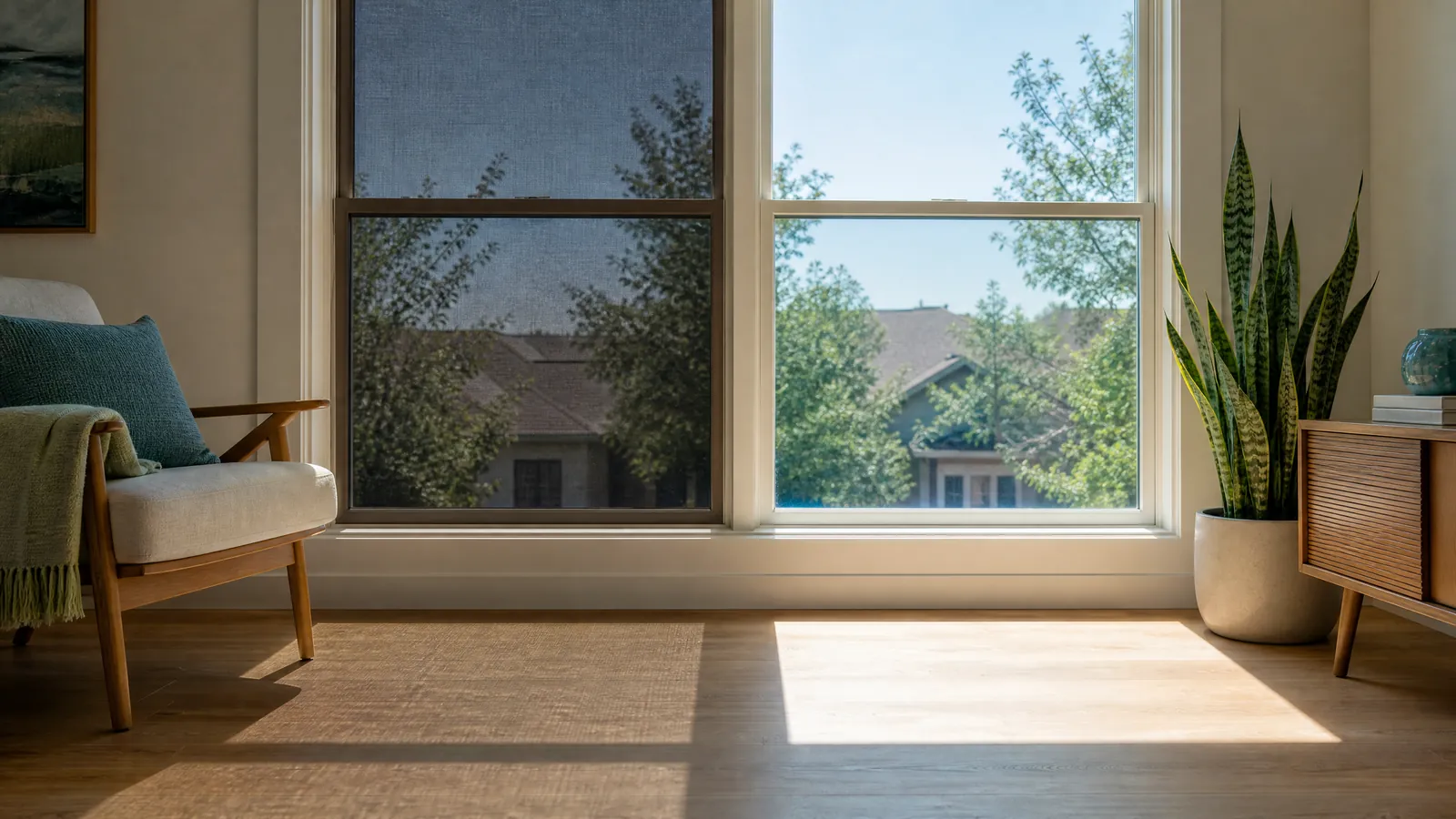
Solar screens are specially designed window screens installed on the exterior of your home. They are made from a tightly woven mesh material, typically fiberglass or polyester, designed to absorb and dissipate the sun's heat and glare before it reaches the window glass.
These screens can block up to 90% of the sun's heat and UV rays, significantly reducing the amount of solar heat gain entering your home. By acting as a first line of defense, solar screens help keep the window glass cooler, which in turn reduces the strain on your HVAC system. They are often considered a cost-effective, temporary or permanent add-on to existing windows, especially for older, single-pane, or non-energy-efficient windows. However, they can also darken the interior of your home and obscure your view out of the window.
Understanding Low-E Replacement Glass
Low-E, or low-emissivity, glass features a microscopically thin, virtually invisible metallic coating applied to the glass surface. This coating is designed to reflect infrared heat while still allowing visible light to pass through.
In the scorching Texas summer, Low-E glass reflects the sun's heat away from your home, keeping the interior cooler. During the winter, it works in reverse, reflecting interior heat back inside. This makes Low-E glass a year-round energy efficiency solution.
If your window frames are still in good condition but the glass is failing or inefficient, you don't need a full window replacement. Apex Windows TX specializes in replacing only the insulated glass unit (IGU) with energy-efficient Low-E glass. This glass-only replacement approach can save you up to 70% compared to the cost of a full window replacement, while providing a permanent upgrade to your home's thermal performance.
Solar Screens vs. Low-E Glass: A Direct Comparison
When deciding between solar screens and Low-E glass, it is helpful to compare their features directly.
| Feature | Solar Screens | Low-E Replacement Glass |
|---|---|---|
| Heat Reduction | High (blocks heat before it hits the glass) | High (reflects infrared heat away) |
| Light Transmission | Reduces natural light; darkens interior | Maintains natural light; clear view |
| Aesthetics | Visible on the exterior; can change home's look | Invisible; maintains original appearance |
| Maintenance | Requires periodic cleaning; can tear | Minimal maintenance; cleans like normal glass |
| Lifespan | 10–15 years (subject to weather damage) | Long-term (protected inside the IGU) |
| Cost | Lower initial cost | Higher initial cost, but better long-term ROI |
While solar screens are a cheaper initial investment, they are a band-aid solution if your window seals are already failing. Upgrading to Low-E glass provides a permanent, integrated solution that improves your home's energy efficiency without compromising your view or natural light.
Can You Use Solar Screens on New Low-E Windows?
A common question among homeowners is whether they can maximize their energy savings by using solar screens in conjunction with new Low-E windows.
Generally, it is not necessary to use solar screens on high-quality Low-E windows. Modern Low-E coatings are highly effective at managing solar heat gain on their own. In some cases, placing a dark solar screen over a Low-E window can actually cause the glass to absorb too much heat, potentially leading to thermal stress cracks or premature seal failure.
If you are upgrading to Low-E glass, the glass itself will provide the necessary heat reduction. Adding solar screens may be redundant and could potentially affect some manufacturers' window warranties. Always verify warranty terms with the applicable authority or manufacturer before combining these treatments.
Making the Right Choice for Your DFW Home
Choosing between solar screens and Low-E glass ultimately depends on your budget, your aesthetic preferences, and the current condition of your windows.
If your windows are old, single-pane, or have broken seals (evident by fog or condensation between the panes), adding solar screens will not solve the underlying inefficiency. In these cases, upgrading to Low-E replacement glass is the superior choice.
By choosing a glass-only replacement with Apex Windows TX, you can enjoy the benefits of modern Low-E technology without the high cost and disruption of tearing out your window frames. Our solutions are designed for the demanding DFW climate, ensuring your home stays comfortable year-round.
FAQ
Do solar screens void window warranties?
Yes, in some cases, installing solar screens can void the manufacturer's warranty on your windows. The screens can alter the thermal dynamics of the glass, potentially causing heat buildup that leads to seal failure or glass breakage. Always verify with your specific window manufacturer before installation.
Are solar screens cheaper than replacement windows?
Yes, solar screens are generally much cheaper than full replacement windows. However, if your window frames are in good shape, a glass-only replacement with Low-E glass offers a more permanent, energy-efficient solution and saves up to 70% compared to a full window replacement.
Do solar screens provide privacy at night?
Solar screens provide excellent daytime privacy, as it is difficult to see in from the outside. However, at night, when the lights are on inside your home, the effect is reversed. People outside will be able to see inside clearly, so you will still need interior blinds or curtains for nighttime privacy.
How long do solar screens last in Texas?
In the harsh Texas climate, solar screens typically last between 10 and 15 years. They are exposed to intense UV rays, high winds, and severe weather, which can cause the mesh to fade, become brittle, or tear over time. Low-E glass, being sealed within the window unit, offers a much longer-lasting solution.
Ready to Upgrade Your Windows?
Don't let the Texas heat drive up your energy bills. If your windows are inefficient or foggy, a glass-only replacement is the smart, cost-effective solution. Apex Windows TX provides expert Low-E glass replacement for DFW homeowners, backed by a 10-Year IGU manufacturer warranty + Apex 1-Year workmanship warranty. We replace only the glass, saving you up to 70% over full window replacement. Call us today at (214) 263-3008 to schedule your consultation and start enjoying a cooler, more comfortable home. For more information, explore our guides on window replacement in Dallas, TX, the benefits of Low-E glass in Texas, and the 7 clear signs your windows are failing.
Need Foggy Glass Replacement in Your Area?
We provide expert foggy glass replacement and window repair across the Dallas-Fort Worth metroplex. Click your city below for local pricing, neighborhoods served, and FAQs:
About the Author
Alvin Paulson
Co-Owner & Lead Technician, Apex Windows & Glass
Alvin Paulson co-founded Apex Windows & Glass and brings over 30 years of hands-on expertise in foggy glass replacement, insulated glass unit (IGU) repair, and energy-efficient window upgrades. Born and raised in North Texas, Alvin has personally assessed and repaired thousands of windows across the Dallas-Fort Worth metroplex — from historic McKinney homes to new-build subdivisions in Frisco and Prosper. He is a licensed glazier and holds certifications in Low-E glass installation and argon gas window systems. Alvin's philosophy is simple: replace only what's broken, save the homeowner money, and back every job with a 10-Year IGU manufacturer warranty + Apex 1-Year workmanship warranty.