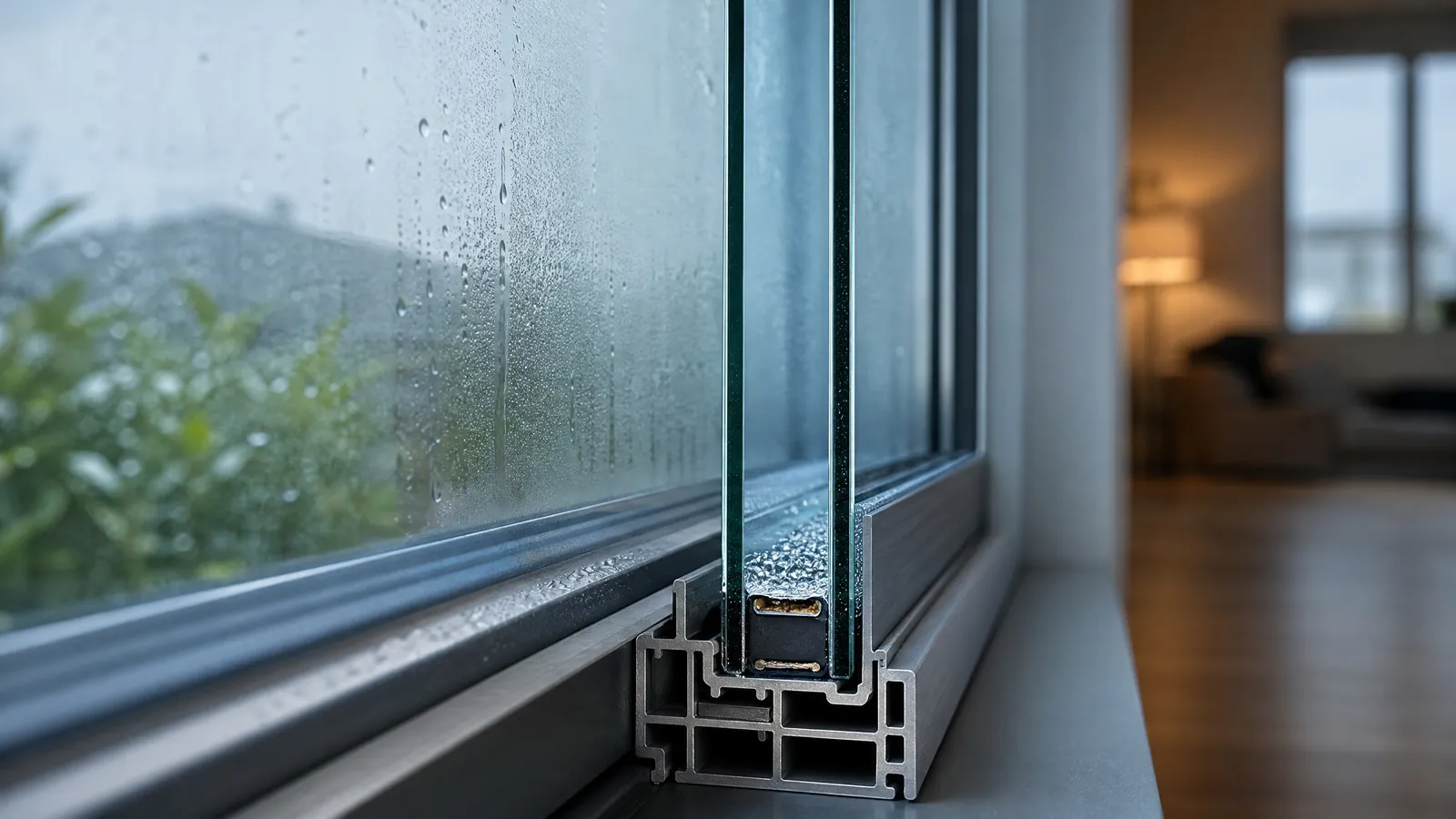
Fogging between double-pane glass is the visible result of a changing sealed system, not simply a dirty window. This technical guide follows the roles of edge sealants, spacers, desiccant, pressure changes, and moisture after the broader causes of seal failure have been established.
Understanding the Anatomy of a Double-Pane Window
Modern energy-efficient windows are complex assemblies known as Insulated Glass Units (IGUs). An IGU consists of two panes of glass separated by a spacer. This spacer creates a sealed cavity between the panes, typically filled with an inert gas like argon or krypton. These gases are denser than regular air, significantly reducing heat transfer and making your home more energy-efficient.
The entire perimeter of this assembly is bound by a high-strength sealant. This seal has a critical job: keeping the inert gas inside while keeping outside air and moisture out.
The Hidden Hero: The Desiccant
Inside the spacer of your double-pane window lies a crucial component called a desiccant. A desiccant is a moisture-absorbing material, similar to the silica gel packets found in new shoe boxes. During manufacturing, the desiccant is placed inside the spacer to absorb any trace moisture trapped inside the unit during assembly. As long as the perimeter seal remains intact, the desiccant keeps the space between the glass panes perfectly dry, ensuring a crystal-clear view.
The Phenomenon of Thermal Pumping
Even well-constructed windows undergo a daily physical stress test known as thermal pumping, driven by thermodynamics.
When the sun shines on your windows, the glass and the gas inside the IGU heat up. As the gas heats up, it expands, increasing pressure inside the sealed unit and causing the glass panes to bow outward slightly. Later, as the sun sets and temperatures drop, the gas cools and contracts. This creates a slight vacuum, causing the glass panes to bow inward.
This continuous cycle of expansion and contraction happens every day. Over years, this constant flexing puts enormous stress on the window's perimeter seal. Eventually, daily thermal pumping causes microscopic fractures in the seal, compromising its integrity.
Why Window Seals Fail in Extreme Climates
While thermal pumping happens everywhere, climate plays a massive role in how quickly a window seal fails. In regions with intense sunlight and dramatic temperature swings, degradation is significantly accelerated.
Intense ultraviolet (UV) radiation constantly bombards the window seals. Over time, UV exposure causes sealant materials to harden, become brittle, and lose elasticity. When a seal loses flexibility, it can no longer stretch and compress to accommodate thermal pumping.
Furthermore, extreme heat cycling exacerbates the issue. When temperatures soar during the day and drop at night, expansion and contraction are severe. This is a common issue for Dallas homeowners dealing with foggy glass, as the intense Texas heat and rapid weather changes create the perfect storm for premature seal failure.
The Process of Desiccant Saturation
Once the perimeter seal develops a micro-fracture, the window's fate is sealed. The inert gas slowly leaks out, and outside air begins to seep in.
Outside air naturally contains humidity. As the window continues its daily cycle of thermal pumping, it literally pumps this humid air into the space between the glass panes. Initially, you will not notice a difference because the desiccant hidden inside the spacer absorbs the incoming moisture.
However, the desiccant has a finite capacity. After years of absorbing moisture, the desiccant eventually reaches its saturation point and can no longer absorb water. At this point, humidity is trapped between the panes. When the glass temperature drops below the dew point, this trapped moisture condenses into water droplets on the inside surfaces of the glass. This is the fog you see. Over time, this cycle of condensation and evaporation leaves behind mineral deposits and a permanent silica haze, making the glass look permanently dirty.
Visualizing the Problem: Before and After
To truly appreciate the impact of a failed seal and the resulting condensation, it helps to see the difference clearly. When a window has succumbed to thermal pumping and desiccant saturation, the view is completely obscured by a milky, opaque haze.
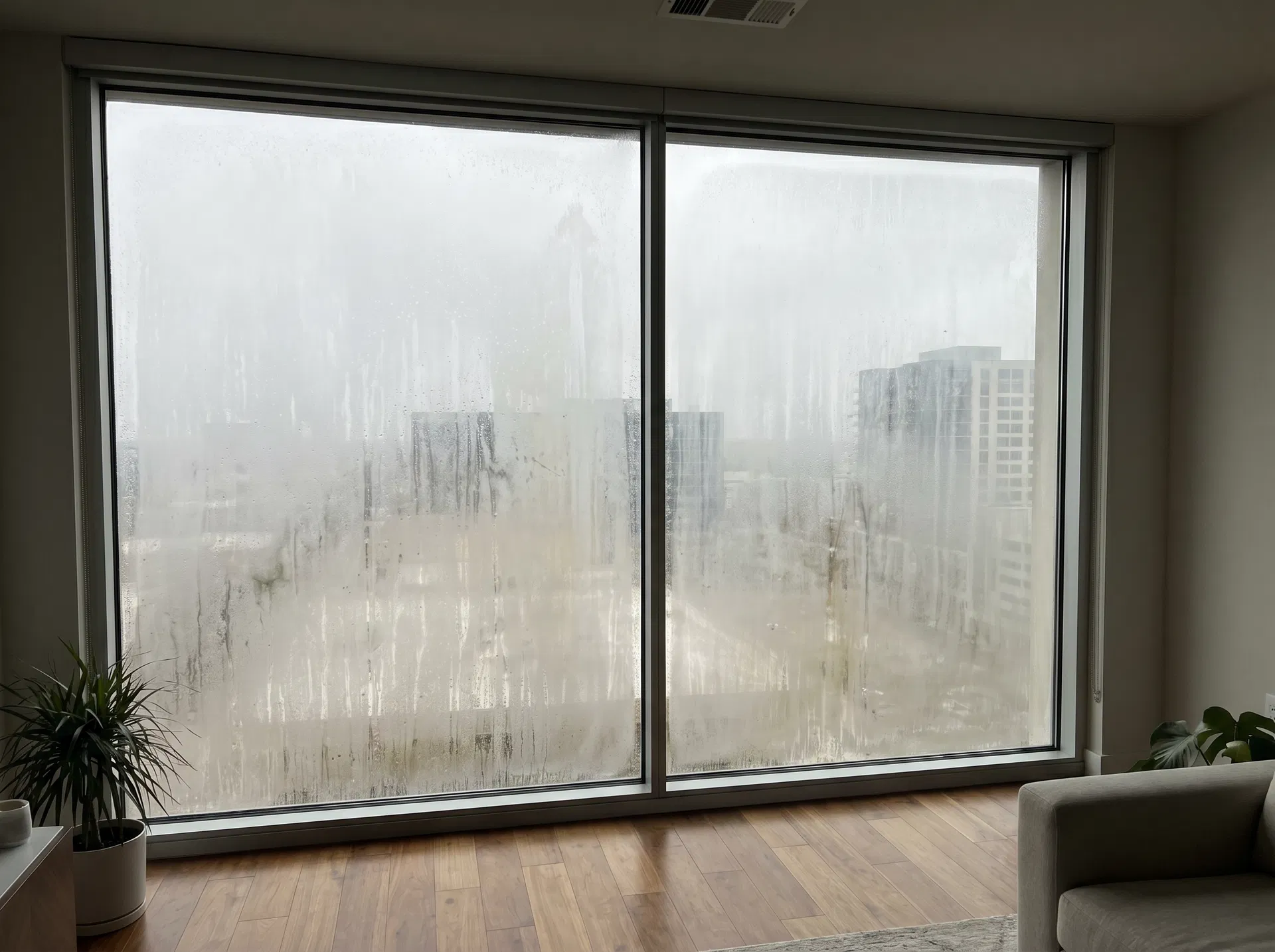
Before: A double-pane window suffering from a failed seal and saturated desiccant, resulting in severe condensation and mineral haze between the panes.
Once the issue is addressed and the compromised glass unit is replaced, the transformation is dramatic. The thermal barrier is restored, and the view is once again pristine.

After: The same window frame with a newly installed, properly sealed insulated glass unit, restoring both clarity and energy efficiency.
Practical Advice for Homeowners
If your windows look hazy, first determine if the condensation is on the outside, the inside, or between the panes.
Condensation on the exterior or interior surfaces is usually a temporary issue related to humidity or weather, and you can simply wipe it away. However, if you clean both sides of the glass and the fog remains, you are dealing with a failed seal. Because the moisture is trapped inside the sealed unit, no amount of scrubbing will fix the problem.
Ignoring a foggy window is an energy efficiency problem. When the seal fails and the insulating gas escapes, the window loses its ability to block heat transfer. Your HVAC system has to work harder to maintain a comfortable temperature, leading to higher energy bills.
If you have a failed seal, the most effective solution is professional foggy glass repair. You do not need to replace the entire window frame. A professional can remove the compromised insulated glass unit and install a brand new, factory-sealed unit into your existing frame, saving you time and money.
Conclusion
The science behind foggy double-pane windows is a fascinating interplay of thermodynamics, material science, and environmental stress. While thermal pumping and UV degradation are inevitable, understanding how they affect your windows helps you make informed decisions about repairs.
When seals fail and the desiccant becomes saturated, the resulting fog indicates your window is no longer performing efficiently. Restoring your view and your home's energy efficiency requires addressing the root cause by replacing the compromised glass unit.
If you are tired of looking through hazy glass and want to restore the beauty and efficiency of your windows, we are here to help. Contact Apex Windows TX today at (214) 263-3008 to speak with our experts and get your windows looking crystal clear once again.
Continue Your Research
For the next step, Read the window-seal failure science guide.
Related guidance: window-seal failure science · desiccant and spacer failure · double-pane repair assessment.
Need Foggy Glass Replacement in Your Area?
We provide expert foggy glass replacement and window repair across the Dallas-Fort Worth metroplex. Click your city below for local pricing, neighborhoods served, and FAQs:
About the Author
Alvin Paulson
Co-Owner & Lead Technician, Apex Windows & Glass
Alvin Paulson co-founded Apex Windows & Glass and brings over 30 years of hands-on expertise in foggy glass replacement, insulated glass unit (IGU) repair, and energy-efficient window upgrades. Born and raised in North Texas, Alvin has personally assessed and repaired thousands of windows across the Dallas-Fort Worth metroplex — from historic McKinney homes to new-build subdivisions in Frisco and Prosper. He is a licensed glazier and holds certifications in Low-E glass installation and argon gas window systems. Alvin's philosophy is simple: replace only what's broken, save the homeowner money, and back every job with a 10-Year IGU manufacturer warranty + Apex 1-Year workmanship warranty.