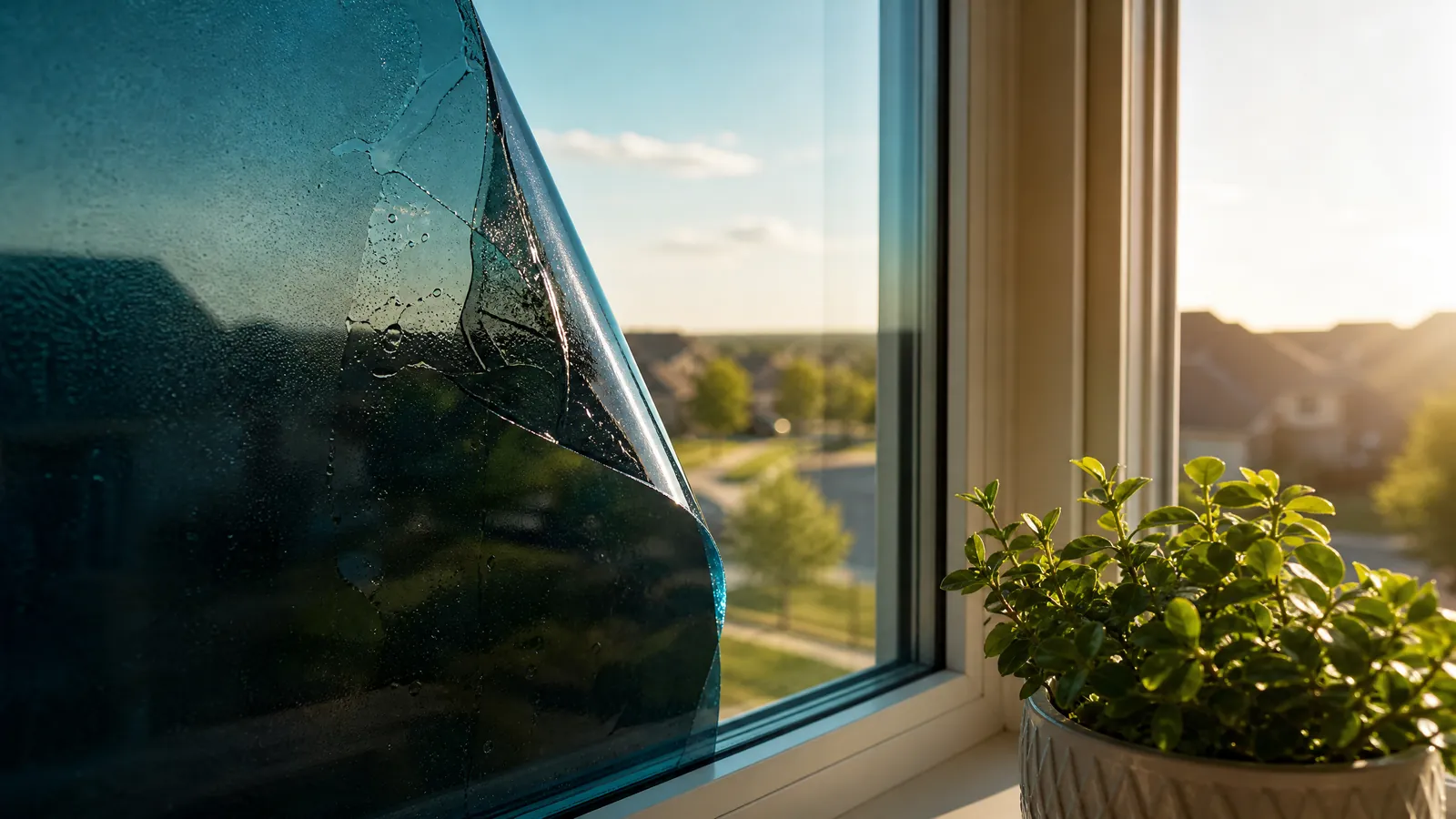
In the intense heat of a Dallas–Fort Worth summer, homeowners are constantly looking for ways to keep their houses cool and lower their air-conditioning bills. Before adding a film, it helps to understand how Low-E glass works in Texas homes. A common, seemingly cost-effective solution is applying aftermarket window tint or film directly to the glass. While this might work well for older, single-pane windows, applying film to modern double-pane or Low-E windows can be a costly mistake. If you are considering window tint for your Texas home, it is crucial to understand the risks of thermal stress, potential warranty voiding, and the long-term impact on your insulated glass units. This guide will explain the science behind these risks and offer better alternatives for energy efficiency.
The Appeal of Window Tint in Texas Heat
It is easy to see why window film is attractive in North Texas. With intense afternoon sun, the sun beating through your windows can make certain rooms uncomfortably hot and fade your furniture. Aftermarket tints promise to block UV rays, reduce glare, and lower solar heat gain, all for a fraction of the cost of full window replacement. For many homeowners, a DIY tint kit from a local hardware store seems like a quick weekend project that will pay for itself in energy savings. However, what works for a car windshield or a single-pane shed window does not apply to the complex engineering of modern residential windows.
How Double-Pane and Low-E Windows Manage Heat
To understand why aftermarket film is risky, you first need to understand how your current windows work. Double-pane windows consist of two pieces of glass separated by a spacer, creating an insulated space filled with air or a specialized gas like argon. This insulated glass unit (IGU) acts as a thermal barrier.
Additionally, many modern windows feature a Low-Emissivity (Low-E) coating. As the U.S. Department of Energy notes, Low-E coatings—especially spectrally selective ones—are designed to reduce summer heat gain and air-conditioning costs without substantially changing visible light. These microscopically thin metallic layers reflect heat rather than absorbing it. The combination of the insulating gas and the reflective coating is precisely engineered to manage heat transfer efficiently.
The Science: Why Aftermarket Film Causes Thermal Stress
When you apply an aftermarket window film to the inside of a double-pane window, you alter its thermal dynamics. Most window tints work by absorbing solar energy rather than reflecting it. When the film absorbs the intense Texas sun, the interior pane of glass heats up significantly.
Because the window is an insulated unit, this trapped heat has nowhere to go. The temperature inside the airspace between the panes spikes, causing the gas to expand and increasing the pressure against the glass and the seals. This excessive heat and pressure lead to thermal stress. The stress can cause the seal to fail prematurely, allowing moisture to enter and resulting in foggy windows. In extreme cases, the uneven heating can even cause the glass pane to crack or shatter.
| Feature | Factory Low-E Glass | Aftermarket Window Film |
|---|---|---|
| Heat Management | Reflects heat away from the window | Absorbs heat into the glass |
| Thermal Stress Risk | Designed and tested as a complete glass system | Depends on film type, glass construction, exposure, and manufacturer approval |
| Warranty Impact | Governed by the original glass warranty | May change or exclude coverage; verify before installation |
| Longevity | Part of the factory-sealed glass unit | Film performance varies by product, installation, and exposure |
Will Window Tint Void Your Manufacturer Warranty?
One of the most significant hidden costs of aftermarket window film is its impact on your window warranty. Because window manufacturers understand the physics of thermal stress and the high likelihood of seal failure or glass breakage when film is applied, many window warranties restrict or change coverage when unapproved aftermarket film is applied.
If your double-pane window develops a broken seal and becomes foggy, a valid warranty might cover the cost of the replacement glass. But if the manufacturer or installer sees that film has been applied, a related claim may be denied. You will be entirely responsible for the repair costs, negating any small energy savings you might have gained from the tint. Always verify your specific warranty terms with the manufacturer before applying any product to your glass.
Alternatives to Tinting: Better Ways to Cool Your Home
If your home is too hot but you want to protect your window seals and warranties, there are safer alternatives to aftermarket film:
- Exterior Shading: Awnings, exterior solar screens, or well-placed shade can reduce direct solar exposure before it reaches the glass.
- Interior Treatments: High-quality cellular shades, thermal curtains, or plantation shutters provide excellent insulation and light control without adhering to the glass and causing thermal stress.
- Proper Ventilation: Ensuring your attic is well-ventilated and your HVAC system is balanced can significantly reduce the cooling load on specific rooms.
When to Consider Upgrading to Factory Low-E Glass
If your current double-pane windows are older, lack a Low-E coating, or have already suffered seal failure (indicated by fog or condensation between the panes), a professional foggy glass replacement evaluation can determine whether a factory-sealed glass upgrade is the right long-term solution.
At Apex Windows, we specialize in replacing just the insulated glass unit when your window frame is still in good condition. This targeted approach offers up to 70% savings compared with a full window replacement. By upgrading to modern, factory-sealed Low-E glass, you get the heat-blocking performance you want without the risks of aftermarket film. Plus, our replacements come with a 10-Year IGU manufacturer warranty + Apex 1-Year workmanship warranty for your peace of mind.
FAQs
Can I put tint on the outside of double-pane windows?
While exterior films are less likely to cause thermal stress than interior films because the heat is absorbed on the outside pane, they are still exposed to harsh Texas weather. They can peel, scratch, and degrade quickly, and many window manufacturers still consider any aftermarket film a violation of the warranty. Verify with your manufacturer before proceeding.
Does window film always cause seal failure?
Not always. Risk depends on the film, pane thickness, Low-E surface, window size, orientation, shading, and manufacturer approval. In a hot climate, an incompatible heat-absorbing film can create uneven temperatures, so verify the glass and warranty requirements before installation.
How do I know if my windows already have Low-E?
You can often check by holding a lighter or a flashlight close to the glass at night. Look at the reflection; if one of the reflected flames or lights appears slightly different in color (often a blue, green, or purple tint), your window likely has a Low-E coating. A professional can also use a specialized meter to test the glass.
Will my homeowners insurance cover tint-related damage?
Coverage varies by policy and cause. Some policies cover sudden accidental breakage but exclude installation, product, or maintenance-related damage. Ask your insurer how the policy treats film-related glass damage before making a claim or scheduling work.
If you are dealing with foggy windows from failed seals or want to upgrade your glass the right way, contact Apex Windows today. We serve the entire DFW area with expert glass-only replacement. Call us at (214) 263-3008 to schedule an evaluation.
Need Foggy Glass Replacement in Your Area?
We provide expert foggy glass replacement and window repair across the Dallas-Fort Worth metroplex. Click your city below for local pricing, neighborhoods served, and FAQs:
About the Author
Alvin Paulson
Co-Owner & Lead Technician, Apex Windows & Glass
Alvin Paulson co-founded Apex Windows & Glass and brings over 30 years of hands-on expertise in foggy glass replacement, insulated glass unit (IGU) repair, and energy-efficient window upgrades. Born and raised in North Texas, Alvin has personally assessed and repaired thousands of windows across the Dallas-Fort Worth metroplex — from historic McKinney homes to new-build subdivisions in Frisco and Prosper. He is a licensed glazier and holds certifications in Low-E glass installation and argon gas window systems. Alvin's philosophy is simple: replace only what's broken, save the homeowner money, and back every job with a 10-Year IGU manufacturer warranty + Apex 1-Year workmanship warranty.