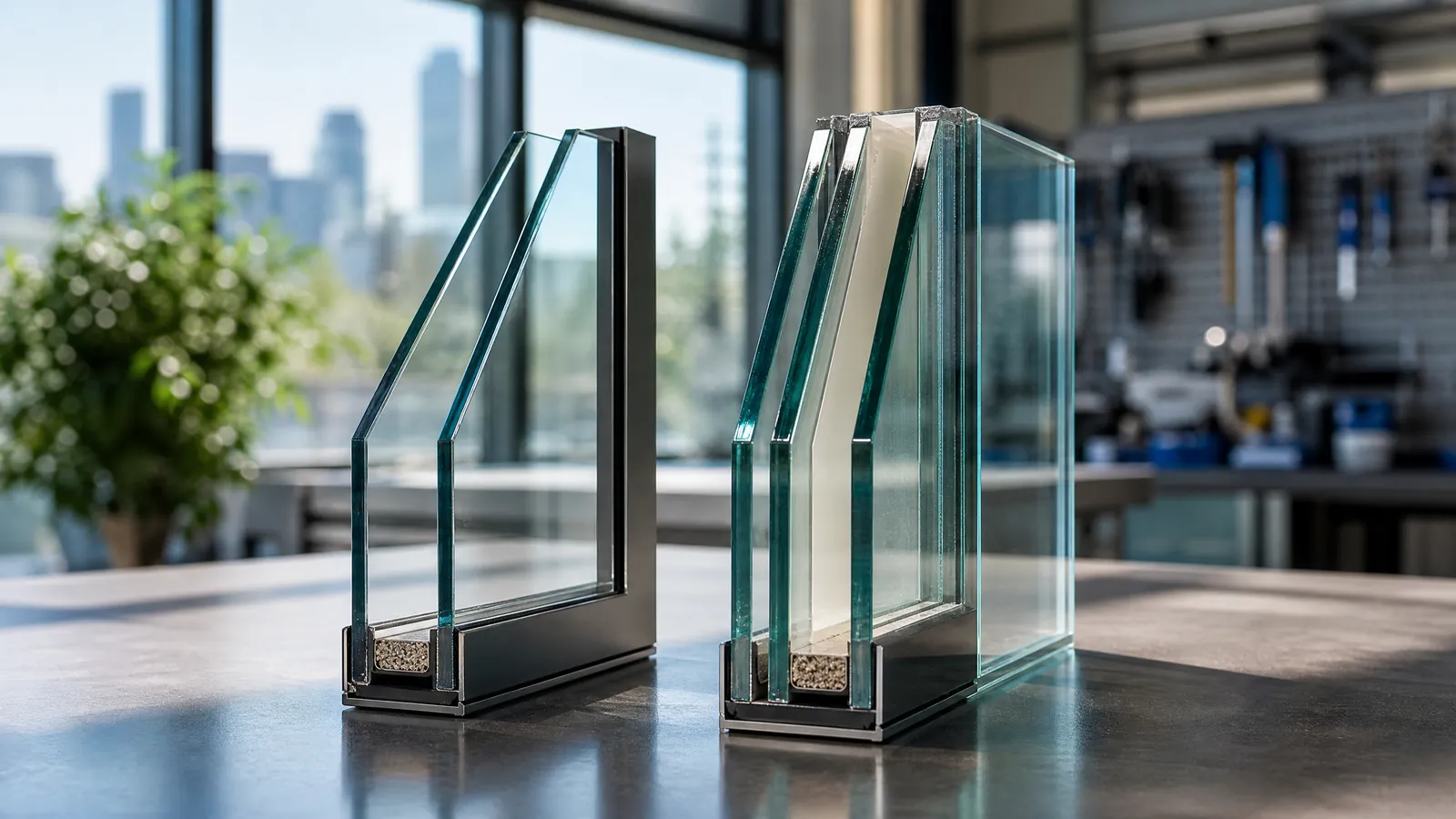
If you live near a busy Dallas highway or under a DFW flight path, standard double-pane windows might not block enough noise to give you peace and quiet. Similarly, if you are concerned about home security, standard glass can be easily shattered by an intruder. This is where the choice between standard insulated glass and laminated glass becomes critical. While both options offer energy efficiency and comfort, laminated glass provides a significant upgrade in soundproofing and forced-entry protection. In this guide, we will compare laminated glass versus standard insulated glass to help you determine which option is best for your home’s noise reduction and security needs. We will cover how they differ, their specific benefits, and what you should consider before upgrading.
The Difference Between Laminated and Standard Insulated Glass
Standard insulated glass units (IGUs), commonly known as double-pane windows, consist of two panes of glass separated by a spacer and sealed to trap air or gas between them. This design is excellent for thermal insulation, keeping your home cooler in the Texas summer and warmer in the winter. The glass used in these units is typically standard annealed glass, which breaks into sharp shards when struck, or tempered safety glass, which shatters into small, blunt pieces.
Laminated glass, on the other hand, is constructed like a sandwich. It features two layers of glass bonded together with a tough, clear inner layer of polyvinyl butyral (PVB) or ethylene-vinyl acetate (EVA). This interlayer holds the glass together even if it shatters, creating a strong barrier. When used in an insulated window, one or both of the panes can be laminated, combining the thermal benefits of double-pane glass with the strength and sound-dampening qualities of the laminated layer.
How Laminated Glass Blocks Dallas Traffic Noise
Sound travels in waves, and blocking it requires mass and a way to disrupt the vibration. Standard insulated glass helps reduce noise compared to single-pane windows, but it can still allow lower-frequency sounds—like the rumble of traffic or airplane engines—to pass through. This happens because the two panes of glass in a standard IGU often vibrate at similar frequencies, transmitting the sound waves into your home.
The PVB interlayer in laminated glass acts as an acoustic dampener. It disrupts the sound waves, absorbing the vibration and significantly reducing the transmission of noise. This makes laminated glass highly effective at blocking the low-frequency noise common in busy urban environments like Dallas and Fort Worth. If you are struggling with highway noise, barking dogs, or loud neighbors, upgrading to laminated glass can create a noticeably quieter indoor environment.
Security Benefits: Shatter Resistance and Forced Entry
Security is a major concern for many homeowners, and windows are often seen as a vulnerable point of entry. Standard annealed glass is easy to break, providing quick access for an intruder. Even tempered glass, while safer when broken, can be shattered completely with a strong impact, leaving the window opening unprotected.
Laminated glass provides superior security because of its shatter-resistant design. If a burglar attempts to break the glass, it will crack and spiderweb, but the tough plastic interlayer will hold the broken pieces firmly in place. This makes it incredibly difficult and time-consuming to breach the window, often deterring intruders who rely on speed and surprise. For homes in areas where security is a priority, laminated glass offers peace of mind by turning a fragile window into a robust barrier.
Does Laminated Glass Improve Energy Efficiency?
While the primary reasons for choosing laminated glass are noise reduction and security, it also offers benefits for energy efficiency and interior protection. The PVB interlayer in laminated glass blocks up to 99% of harmful ultraviolet (UV) rays from the sun. In the harsh Texas climate, this UV protection is invaluable for preventing your furniture, flooring, and artwork from fading over time.
When combined into an insulated glass unit, laminated glass provides excellent thermal performance. It can be paired with Low-E coatings and argon gas fills to maximize energy savings, reducing your reliance on air conditioning during hot Dallas summers. If your existing window frames are still in good condition, Apex Windows can often replace just the glass, upgrading you to a laminated IGU while saving you up to 70% compared to a full window replacement.
Cost Comparison: Is Laminated Glass Worth the Upgrade?
Upgrading to laminated glass does come with a higher upfront cost compared to standard insulated glass. The manufacturing process is more complex, and the materials are more expensive. However, when evaluating the cost, it is important to consider the long-term value.
If you live in a quiet neighborhood and your primary concern is energy efficiency, standard insulated glass with a Low-E coating is likely the most cost-effective choice. But if you are constantly disturbed by outside noise or want enhanced security without installing unsightly bars or grilles, the investment in laminated glass is often worth it. The improved quality of life from a quieter home and the added security can easily justify the higher price tag.
How to Choose the Right Glass for Your DFW Home
Choosing between standard insulated glass and laminated glass depends entirely on your specific needs and location. Assess your environment: Are you near a busy road, an airport, or a commercial area? Do you have security concerns? If the answer is yes, laminated glass is a strong contender.
If you are unsure, consult with a professional window expert. They can assess your home, discuss your priorities, and recommend the best glass package for your situation. Remember that you don't necessarily have to upgrade every window in your house. You can choose to install laminated glass only in the rooms facing the noise source, such as front bedrooms or living areas facing a street, while using standard insulated glass elsewhere.
FAQ
Does laminated glass reduce noise better than triple-pane?
Yes, laminated glass is generally more effective at reducing noise than standard triple-pane windows. While triple-pane windows add an extra layer of glass and an additional air space, they do not have the acoustic dampening interlayer found in laminated glass. The PVB layer in laminated glass specifically targets and disrupts sound vibrations, making it superior for soundproofing against traffic and neighborhood noise.
Can I install laminated glass in my existing window frames?
In many cases, yes. If your existing window frames are structurally sound and not rotting or warping, you can often replace just the glass unit with a new laminated insulated glass unit. This glass-only replacement approach is a specialty of Apex Windows, allowing you to upgrade your home's noise reduction and security while saving up to 70% compared to the cost of full window replacement. Check out our guide on window glass thickness for more details.
How does laminated glass compare to tempered glass for safety?
Both laminated and tempered glass are considered safety glass, but they function differently. Tempered glass is heat-treated to be stronger than standard glass, and when it breaks, it shatters into small, blunt pebbles to prevent deep cuts. Laminated glass, however, stays intact when broken because the inner plastic layer holds the shattered pieces together. While tempered glass is safer than standard glass, laminated glass provides both safety from sharp shards and security against forced entry.
Does laminated glass block UV rays?
Yes, one of the significant secondary benefits of laminated glass is its ability to block up to 99% of harmful ultraviolet (UV) rays. This helps protect your home's interior, preventing fading and sun damage to your carpets, hardwood floors, furniture, and artwork, which is especially beneficial in the sunny Dallas-Fort Worth climate. For more information on energy efficiency, read our comparison of single pane vs double pane vs triple pane windows.
Get the Right Glass for Your Home with Apex Windows
Whether you need standard insulated glass to restore your home's energy efficiency or want to upgrade to laminated glass for superior noise reduction and security, Apex Windows is here to help. We specialize in replacing just the insulated glass unit when your frames are still serviceable, saving you up to 70% compared to a full window replacement. Our services come with a 10-Year IGU manufacturer warranty + Apex 1-Year workmanship warranty, giving you peace of mind in your investment. If you are in the Dallas-Fort Worth area and want to explore your glass options, contact us today at (214) 263-3008 to schedule a consultation and find the perfect solution for your home. You can also learn more about our argon-filled glass replacement options.
Need Foggy Glass Replacement in Your Area?
We provide expert foggy glass replacement and window repair across the Dallas-Fort Worth metroplex. Click your city below for local pricing, neighborhoods served, and FAQs:
About the Author
Alvin Paulson
Co-Owner & Lead Technician, Apex Windows & Glass
Alvin Paulson co-founded Apex Windows & Glass and brings over 30 years of hands-on expertise in foggy glass replacement, insulated glass unit (IGU) repair, and energy-efficient window upgrades. Born and raised in North Texas, Alvin has personally assessed and repaired thousands of windows across the Dallas-Fort Worth metroplex — from historic McKinney homes to new-build subdivisions in Frisco and Prosper. He is a licensed glazier and holds certifications in Low-E glass installation and argon gas window systems. Alvin's philosophy is simple: replace only what's broken, save the homeowner money, and back every job with a 10-Year IGU manufacturer warranty + Apex 1-Year workmanship warranty.